Ancient world · state
Zhou dynasty
The Zhou held the throne for about 790 years, longer than any other Chinese dynasty, and justified their conquest with an idea that outlived them all: the Mandate of Heaven.
The Zhou clan lived in the Wei River valley as vassals of the Shang kings. King Wen moved their capital to Feng, near today's Xi'an. Around 1046 BC his son King Wu and his ally Jiang Ziya led 45,000 men and 300 chariots across the Yellow River and defeated the last Shang king, Di Xin, at the Battle of Muye.
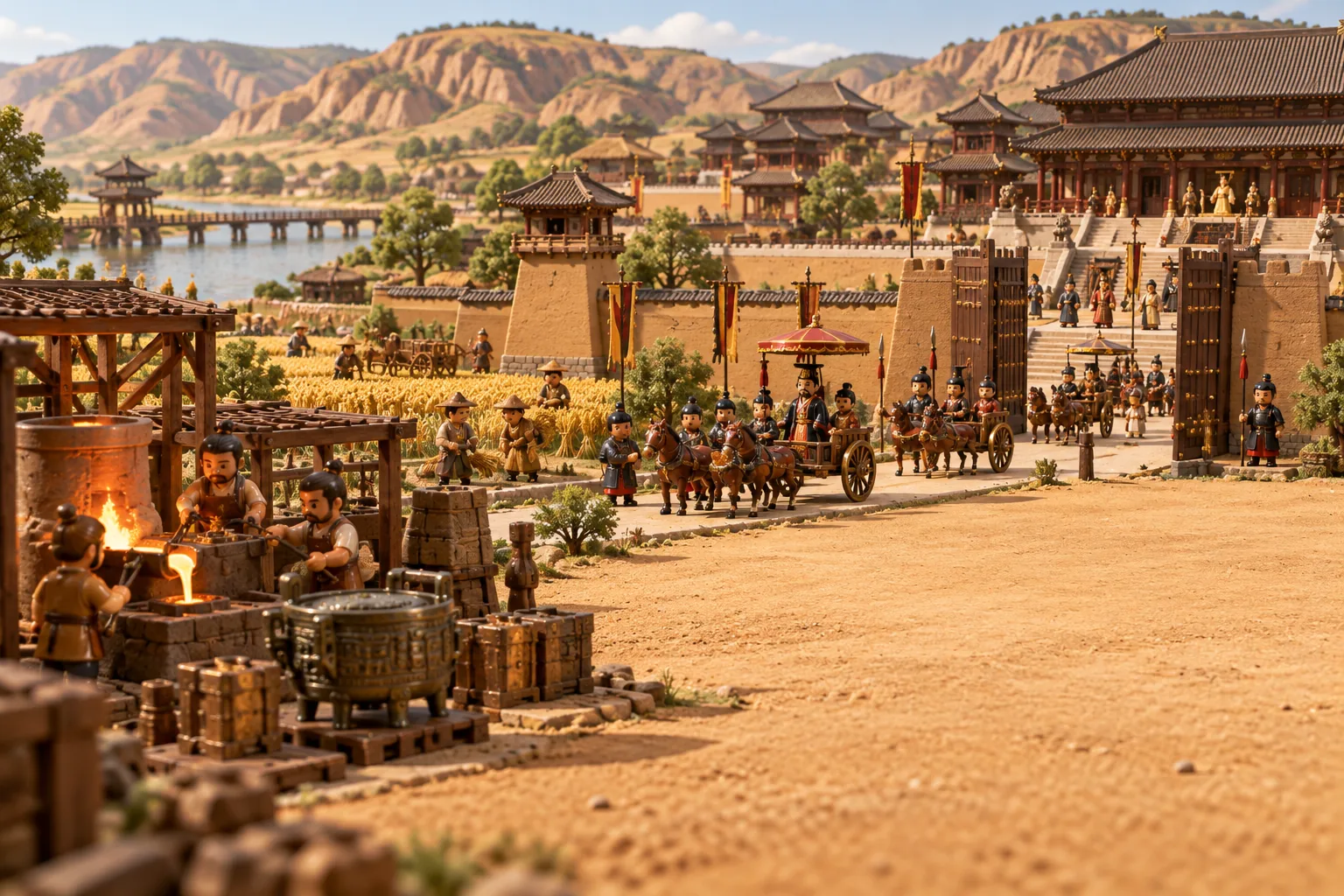
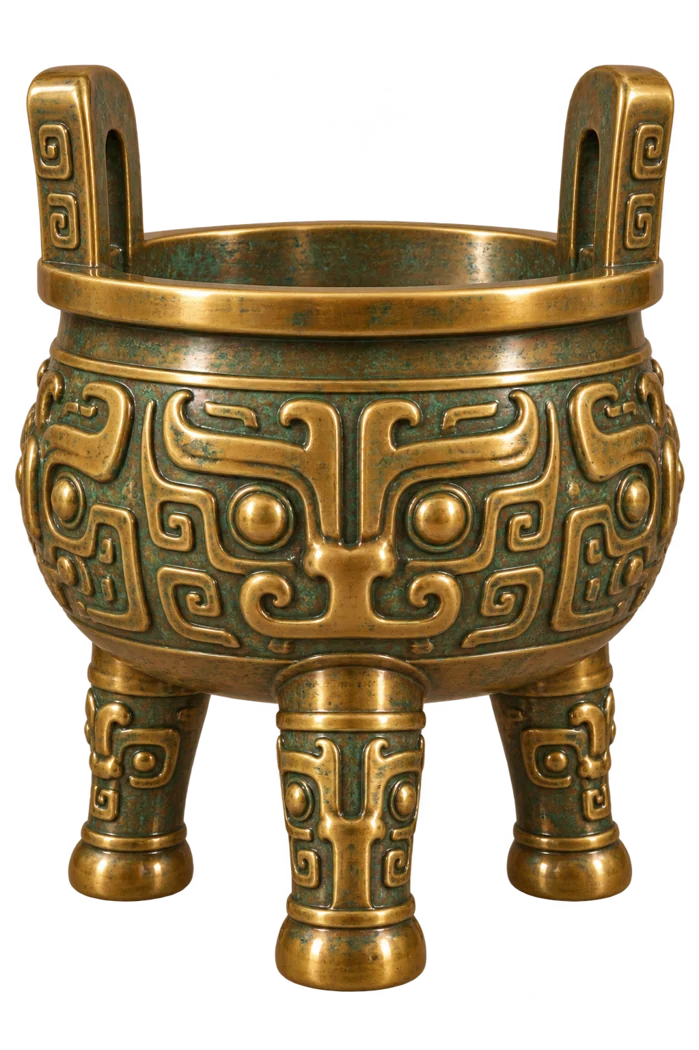
Wu died early, and the Duke of Zhou ruled as regent for the young King Cheng. He crushed a revolt by the Three Guards, princes stationed in the east, and pushed Zhou power across the North China Plain. To hold the land he set up the fengjian system of hereditary fiefs, and he explained the conquest through the Mandate of Heaven: heaven gave power to a just ruler and took it from a wicked one. Zhou workshops cast bronze ritual vessels, and the period is often seen as the high point of Chinese bronzework.
In 771 BC the Quanrong, allied with the Marquis of Shen, sacked the capital Haojing and killed King You. King Ping moved the court east to Wangcheng, near Luoyang. In the Eastern Zhou the kings kept only ritual power while their former vassals fought the Spring and Autumn and Warring States wars, and Confucius taught. Qin captured Wangcheng in 256 BC, ending the dynasty, and in 221 BC it unified China.
Read more on Wikipedia
Sources: en.wikipedia.org/wiki/Zhou dynasty


