Our time · state
Zaire
Mobutu renamed the country and its great river Zaire, made every citizen a party member at birth and told people to drop their Christian names.
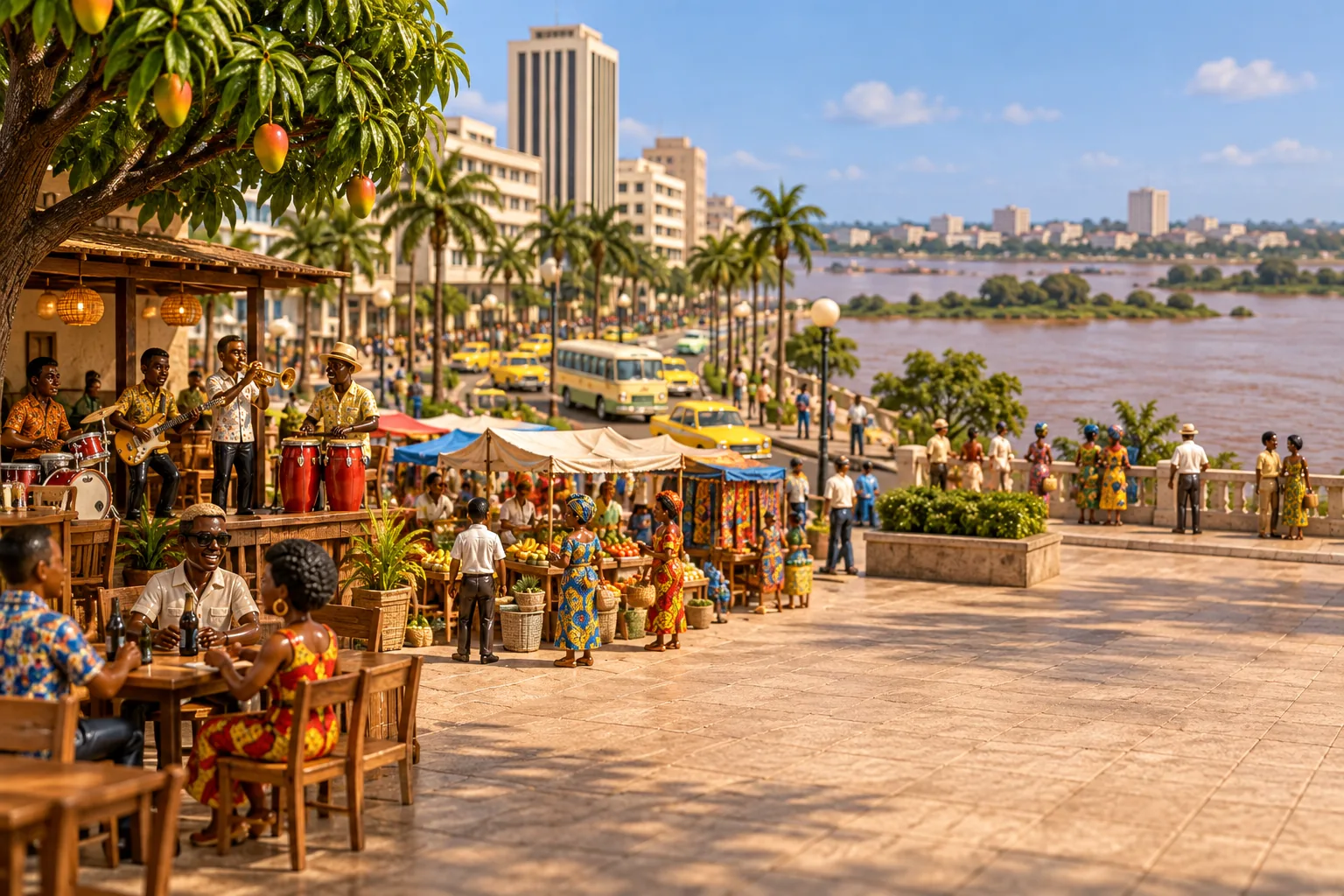
Joseph-Désiré Mobutu seized power in the Congo in 1965 after five years of turmoil since independence from Belgium. In 1967 he created a single party, the Popular Movement of the Revolution, and every citizen became a member at birth. On 27 October 1971 he renamed the country the Republic of Zaire, from an old Portuguese name of the Congo River that came from the Kikongo language. It was Africa's third-largest country and, with over 23 million people, its most populous French-speaking one.
Under the policy of authenticity Zairians had to adopt African names instead of Christian ones, and Mobutu became Mobutu Sese Seko. Western dress gave way to the abacost. From 1973 citizens owed the state one afternoon a week of unpaid work, called salongo. The West backed Mobutu against Soviet influence. On 30 October 1974 Muhammad Ali beat George Foreman in Kinshasa in the Rumble in the Jungle.
Corruption, debt and Mobutu's own vast embezzlement hollowed out the economy. When the Cold War ended, American support dried up. In 1990 Mobutu allowed other parties, and in 1991 unpaid soldiers looted Kinshasa. In 1996 the war from neighbouring Rwanda spilled over the border, and rebels led by Laurent-Désiré Kabila marched west. In 1997 Mobutu fled, the country became the Democratic Republic of the Congo again, and he died in exile in Morocco a few months later.
Read more on Wikipedia
Sources: en.wikipedia.org/wiki/Zaire, en.wikipedia.org/wiki/Mobutu Sese Seko, en.wikipedia.org/wiki/The Rumble in the Jungle