Antiquity · state
Yuezhi
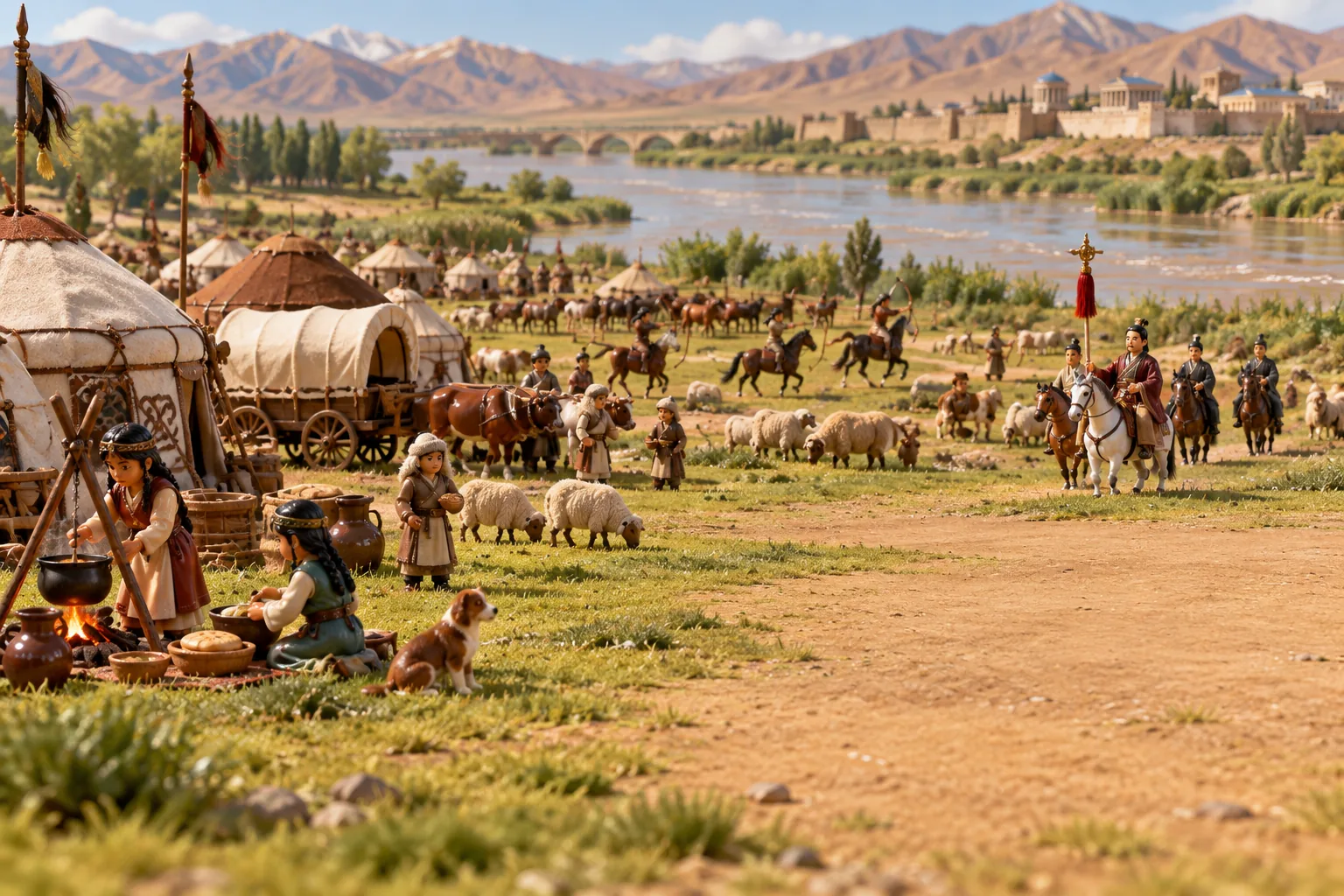
Driven out of western China by the Xiongnu, these horse nomads crossed Central Asia to Bactria, where their descendants built the Kushan Empire.
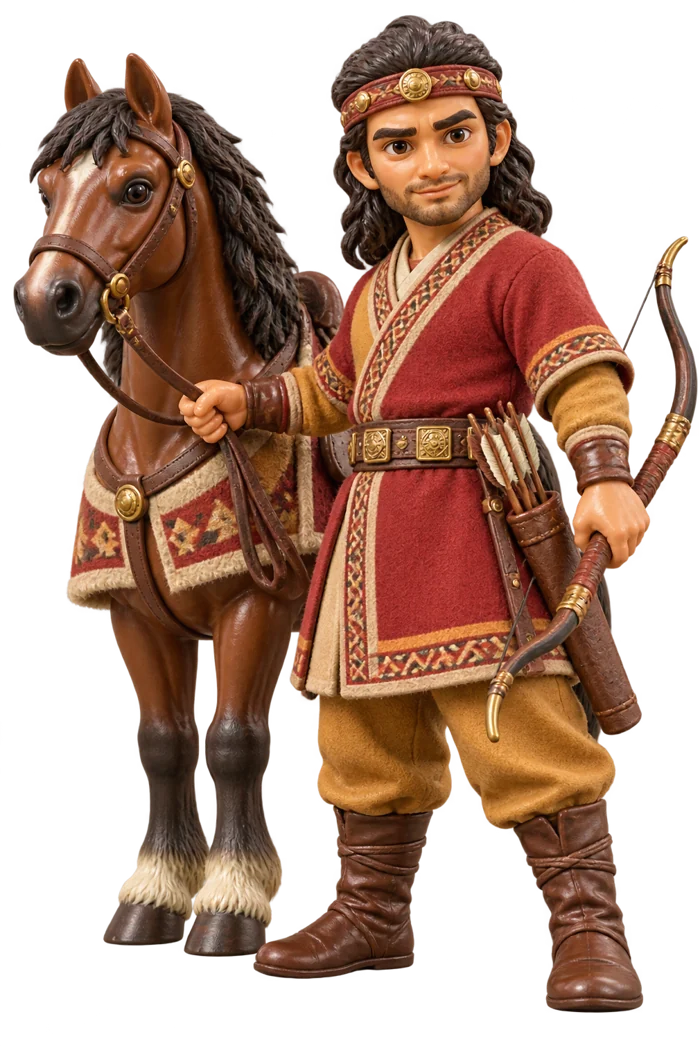
Chinese histories describe the Yuezhi as nomadic herders on the dry grasslands of western Gansu. The historian Sima Qian tells how the Qin dynasty bought jade and fine war horses from them and paid in silk, which they sold on to their neighbours, perhaps the first record of trade along the Silk Road. Many scholars believe they spoke an Indo-European language.
Their neighbours the Xiongnu grew stronger and fought at least four wars with them. Around 176 BC the Yuezhi were crushingly defeated, and the Xiongnu ruler Laoshang is said to have killed a Yuezhi king and made a drinking cup of his skull. The Lesser Yuezhi fled south into the mountains, while the Greater Yuezhi rode north-west around 165 BC to the Ili valley and drove out the Saka. In 132 BC the Wusun, allied with the Xiongnu, pushed them out again, and they passed through Ferghana to settle on the north bank of the Oxus.
In 126 BC the Chinese envoy Zhang Qian reached them, hoping for an alliance against the Xiongnu. The Yuezhi, now living in peace, said no. They took the Greek cities of Bactria south of the river under their rule, and by the 1st century BC they formed five tribes there. In the 1st century AD one of them, the Kushans, took over the others and founded the Kushan Empire.
Read more on Wikipedia
Sources: en.wikipedia.org/wiki/Yuezhi, en.wikipedia.org/wiki/Greco-Bactrian Kingdom, en.wikipedia.org/wiki/Zhang Qian

