
Industrial age · person
Yuan Shikai
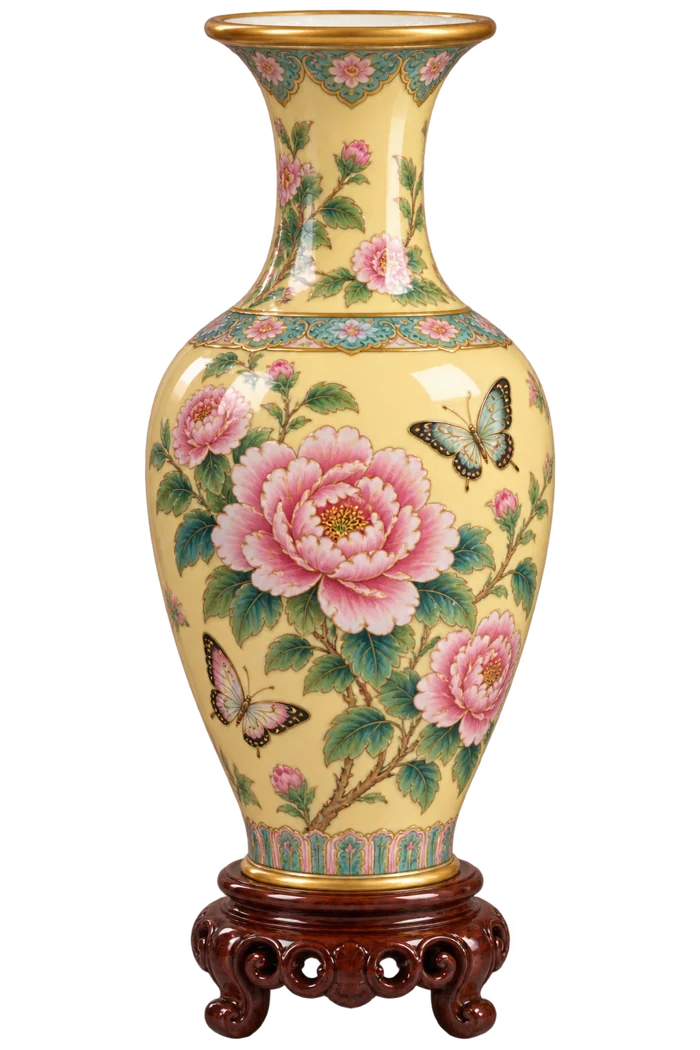
Four years after China threw out its emperors, its president ordered 40,000 pieces of imperial porcelain and two dragon robes and took the throne himself.
Yuan Shikai was born on 16 September 1859 in the village of Zhangying, in Xiangcheng county, Henan, into a wealthy family. He failed the imperial examinations and joined the Huai Army instead, which sent him to Korea in 1882. In December 1884, aged 26, he led his troops against the Japanese-backed Kapsin Coup and restored King Gojong, and he became China's resident and chief adviser in Seoul. Recalled in 1894, he trained the New Army that grew into his Beiyang Army. Reformers accused him of betraying them to Ronglu in 1898, which won him the favour of Empress Dowager Cixi, and as viceroy of Zhili from 1902 he backed modern schools and the end of the examination system.
After the Wuchang Uprising of October 1911 the court called him back as prime minister. Instead of crushing the revolutionaries he made a deal: he arranged the abdication of the child emperor Puyi, and in return Sun Yat-sen stepped aside and Yuan became president of the Republic. When the Kuomintang won the 1913 elections, its leader Song Jiaoren was assassinated, and Yuan was accused of involvement. He crushed the Second Revolution, outlawed the Kuomintang and dissolved parliament.
On 12 December 1915 he proclaimed himself emperor under the era name Hongxian. Provinces rose against him, beginning with Yunnan, and his own generals deserted. He gave up the throne on 22 March 1916 after 83 days, never having been crowned, and died of kidney failure in Beijing on 6 June, aged 56.
Read more on Wikipedia
Sources: en.wikipedia.org/wiki/Yuan Shikai