Middle Ages · state
Yuan dynasty
A Mongol khan built a new capital where Beijing stands, paid his empire in paper money and dazzled a young Venetian named Marco Polo.
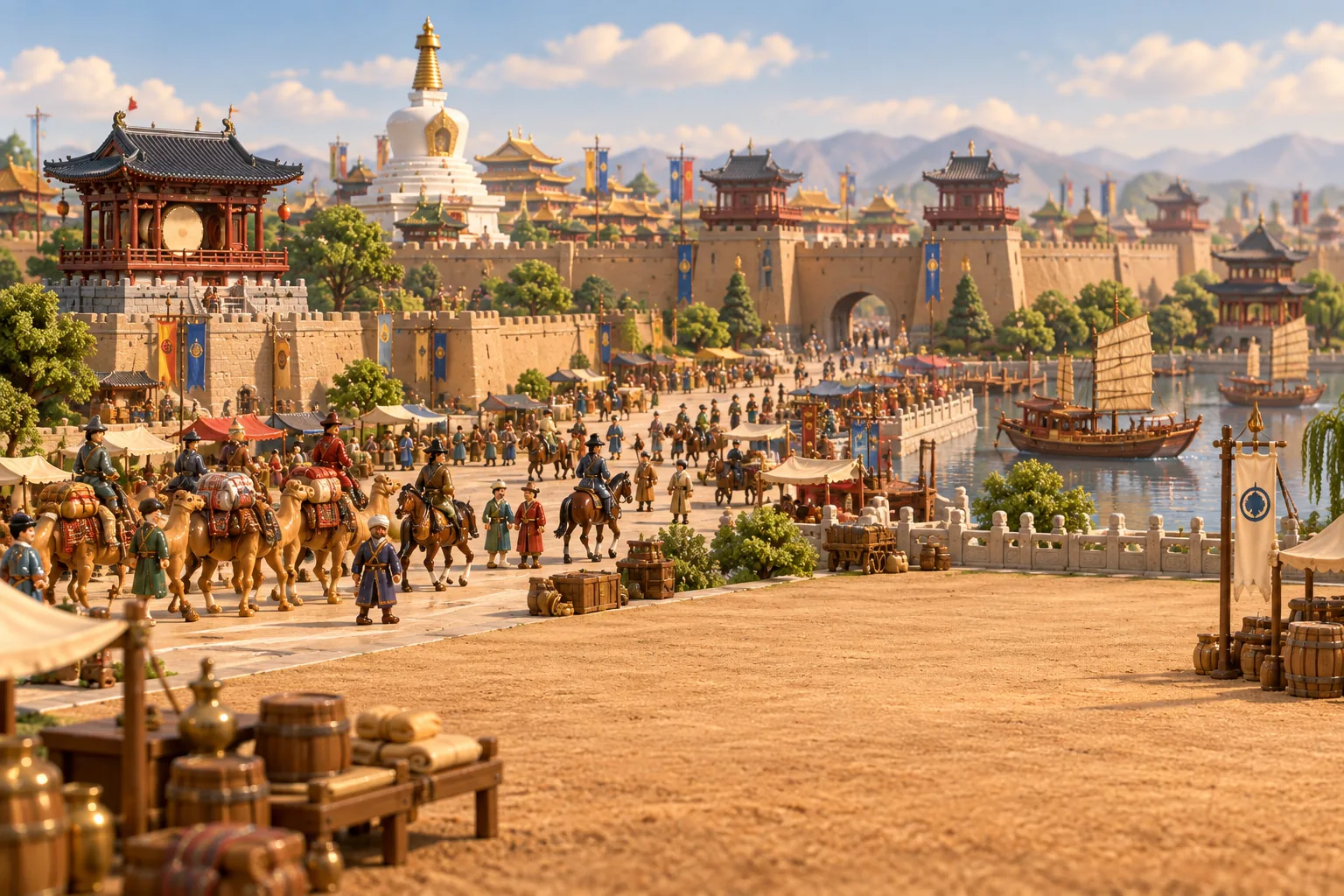
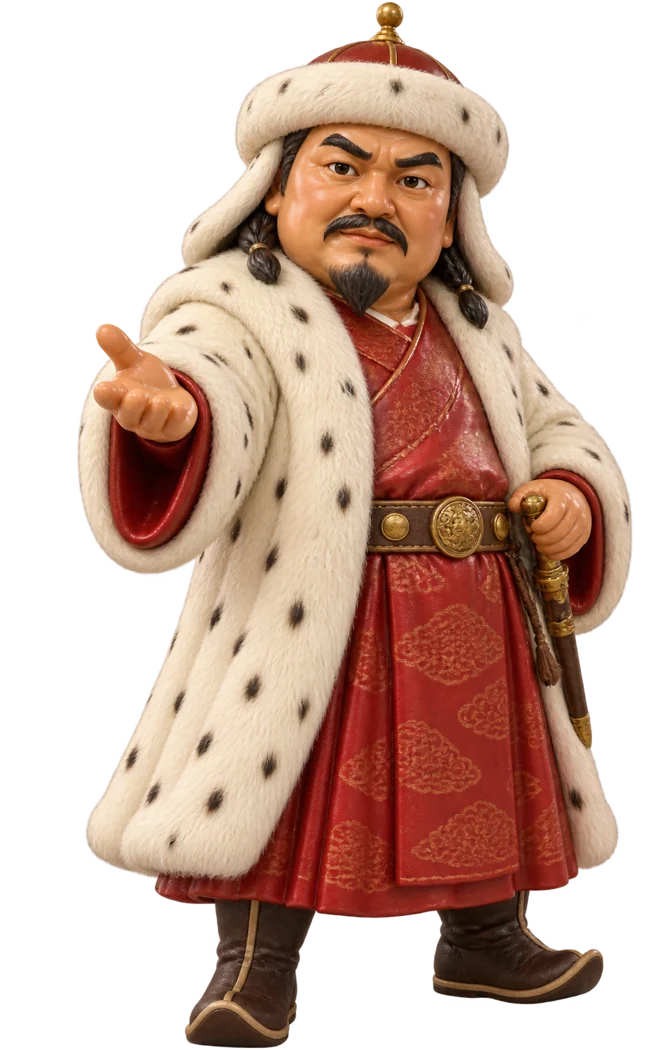
Kublai, a grandson of Genghis Khan, became great khan of the Mongols in 1260. In 1264 he began moving the capital from Karakorum to a new city near today's Beijing, Khanbaliq, which he named the Great Capital. In 1271 he proclaimed the Great Yuan in the Chinese style, and in 1279 his fleet destroyed the last of the Southern Song at the Battle of Yamen. It was the first dynasty founded by a non-Han people to rule all of China proper.
Kublai issued paper money, extended the Grand Canal north to his capital and protected the trade and postal routes. Society was ranked in four groups: Mongols, western immigrants called semuren, northern Chinese and southerners. Foreigners came to court, and the account of the Venetian Marco Polo, which appeared around 1299, astonished Europe. Kublai's invasions of Japan failed in 1274 and again in 1281, when a typhoon wrecked the fleet.
Kublai died in 1294, and his successors fought over the throne. From the late 1340s droughts, floods and famine turned the countryside against the court, and the Red Turban Rebellion broke out in 1351. In 1368 the rebel commander Zhu Yuanzhang founded the Ming dynasty, and the last emperor, Toghon Temür, fled north from Khanbaliq. His heirs ruled the steppe as the Northern Yuan until 1635.
Read more on Wikipedia
Sources: en.wikipedia.org/wiki/Yuan dynasty


