Our time · politics
Yalta Conference
The leaders of the three great Allied powers met in palaces on the Black Sea, partly because Stalin said his doctors would not let him travel far.
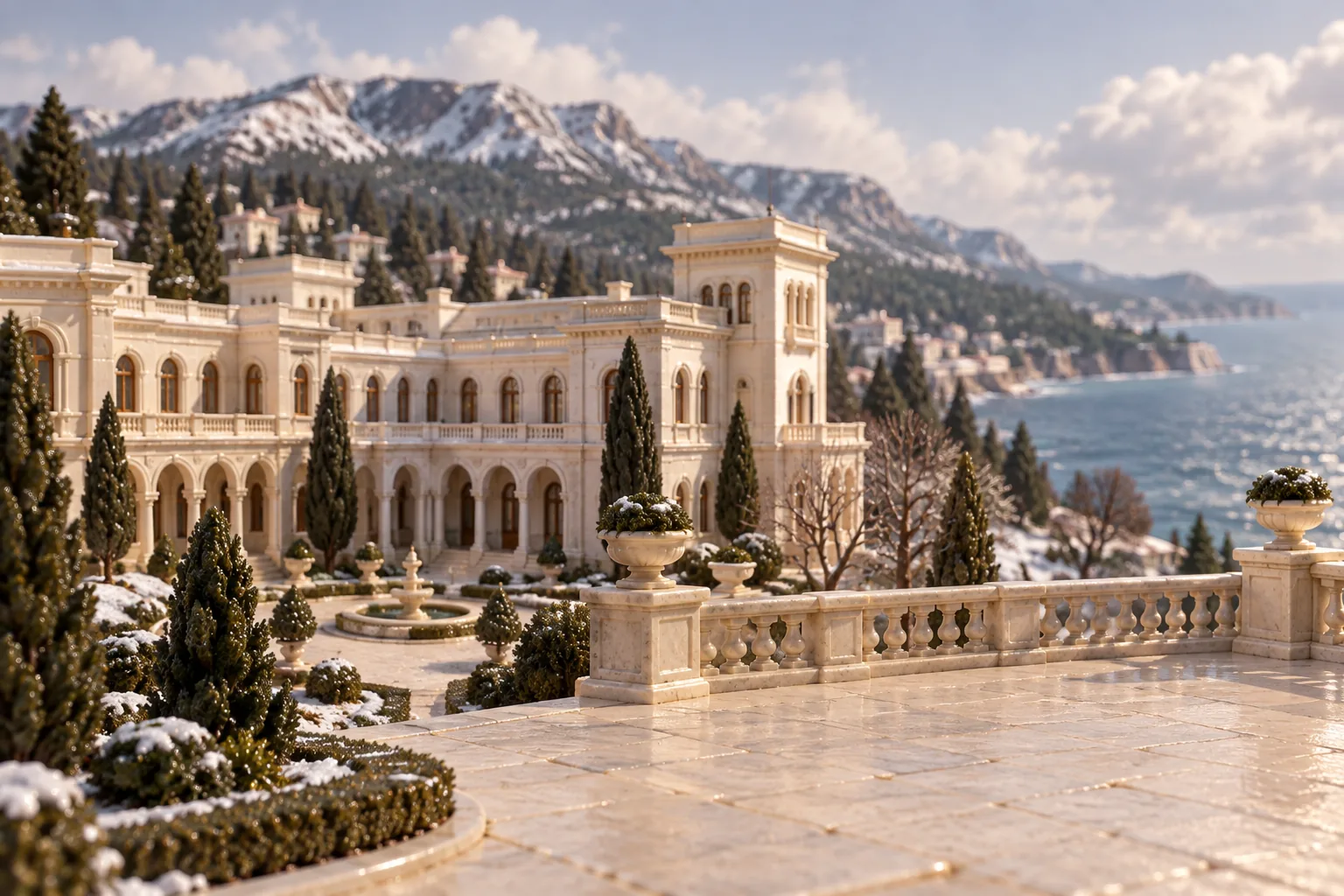
By February 1945 the Western Allies had freed France and Belgium, and Soviet troops stood 65 kilometres from Berlin. Germany's defeat was certain; the question was the shape of Europe after the war. Roosevelt had wanted to meet somewhere in the Mediterranean, such as Malta, Cyprus or Athens, but Stalin said his doctors forbade long trips and proposed the Black Sea resort of Yalta. From 4 to 11 February President Franklin D. Roosevelt, Prime Minister Winston Churchill and Joseph Stalin met there, in the Livadia, Yusupov and Vorontsov palaces.
Each came with his own aims. Roosevelt wanted the Soviet Union to join the war against Japan and the new United Nations. Churchill pressed for free elections in Central and Eastern Europe, above all Poland. Stalin wanted a Soviet sphere of influence there. They agreed to divide Germany into zones of occupation, with one also for France. Poland's eastern border would follow the Curzon Line, with land taken from Germany in the west, and Stalin promised free elections in Poland. He also pledged to enter the war against Japan three months after Germany's defeat.
Within a few years the Cold War split Europe in two, and Yalta became one of the most argued-over meetings of the century. In the United States especially, Roosevelt's terms came to be seen as far too generous to Stalin, whose army already held Poland and much of Eastern Europe.
Read more on Wikipedia