Industrial age · culture
World's Columbian Exposition
Twenty-two years after fire destroyed much of Chicago, the city built a shining white dream city in a swampy park and invited the whole world.
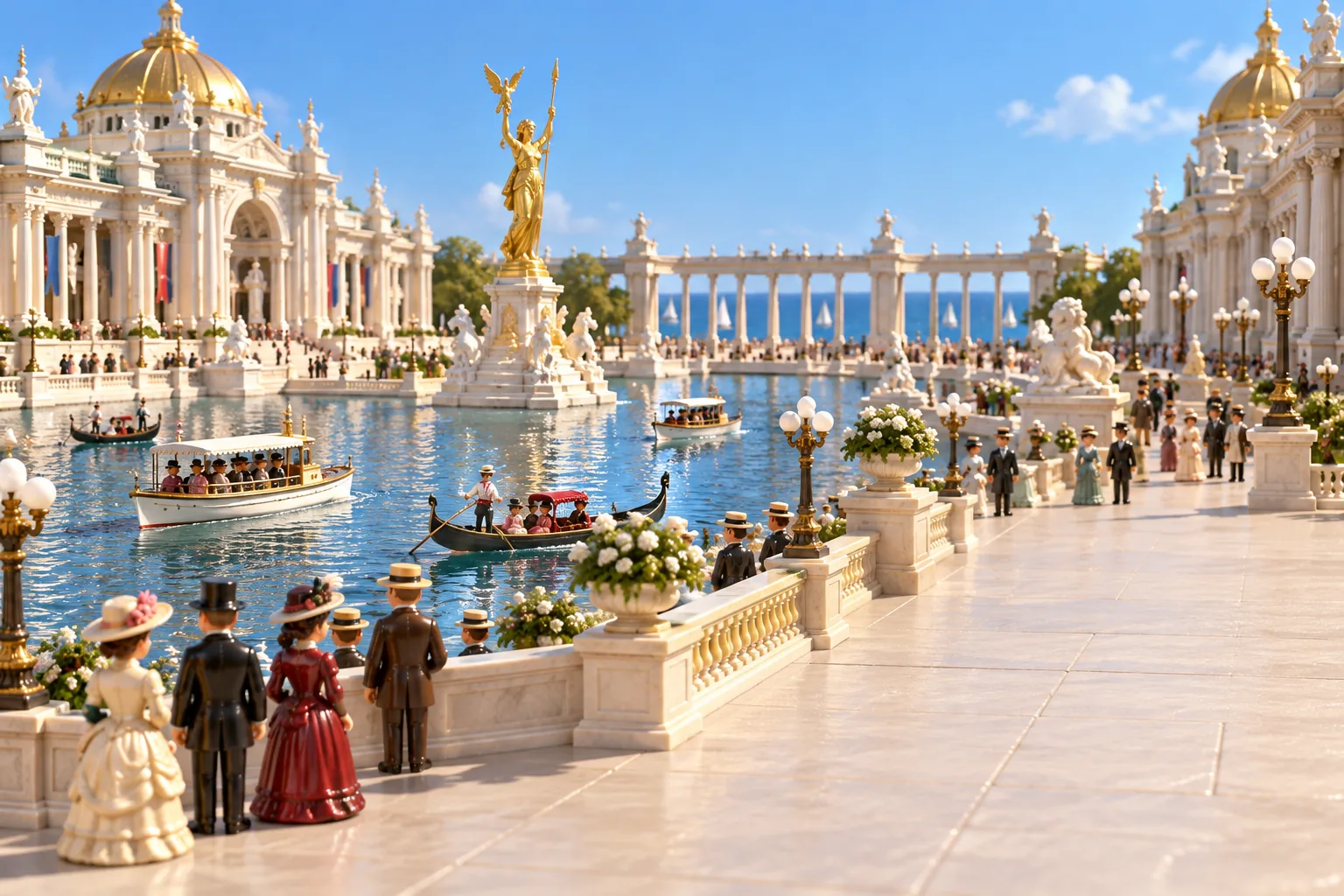
To mark 400 years since Columbus reached the New World in 1492, several American cities fought to host a world's fair, and Congress chose Chicago over New York and other rivals. The city wanted to show it had risen again after the Great Fire of 1871. Daniel Burnham directed the works, the landscape architect Frederick Law Olmsted shaped the grounds in Jackson Park, and top architects designed 14 great buildings around canals and lagoons. Their neoclassical fronts were made not of stone but of 'staff', a mix of plaster, cement and jute painted white, which gave the fair its nickname, the White City.
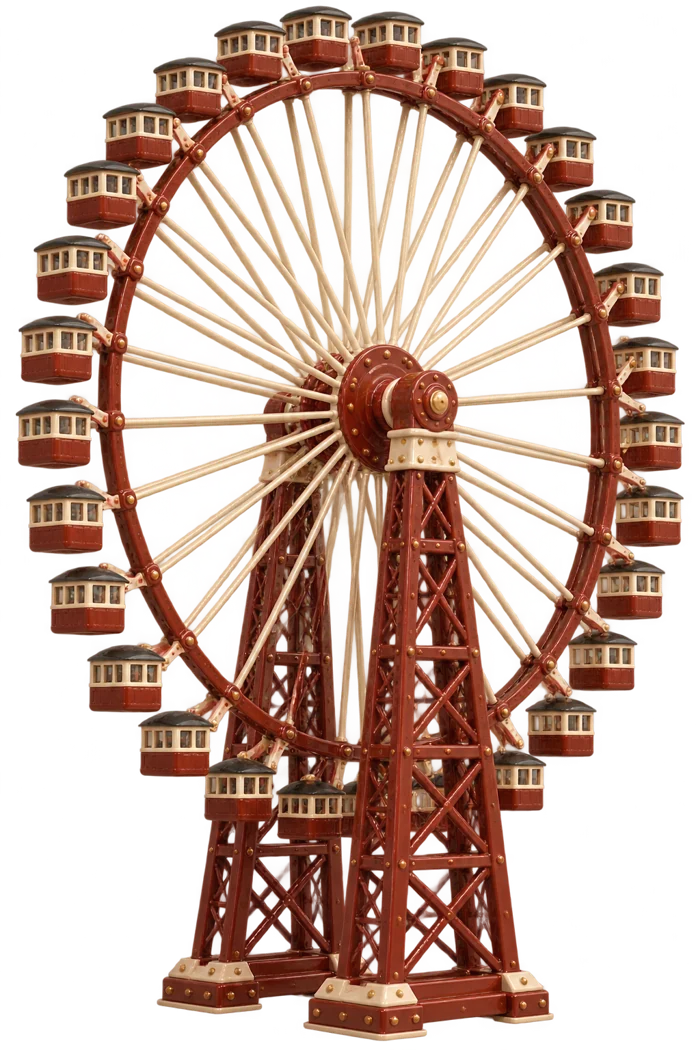
The fair ran from 1 May to 30 October 1893, with 46 nations taking part, and drew more than 27 million visitors. It was the first world's fair to be lit entirely by electricity: George Westinghouse won the contract with Nikola Tesla's alternating current system and powered over 200,000 lamps. On the amusement strip, the Midway Plaisance, stood the first Ferris wheel, built by George Washington Gale Ferris Jr.: 264 feet high, with 36 cars that each held 40 people. On Chicago Day, 9 October, 751,026 people came, a world record for an outdoor event.
The fair also drew protest. Frederick Douglass and Ida B. Wells wrote a pamphlet against the exclusion of African Americans. Two days before the end, Chicago's mayor Carter Harrison III was assassinated, and the closing ceremony became a memorial. Almost every building was temporary. The Palace of Fine Arts survived, rebuilt in stone, and is today the Museum of Science and Industry.
Read more on Wikipedia