Industrial age · war
World War II
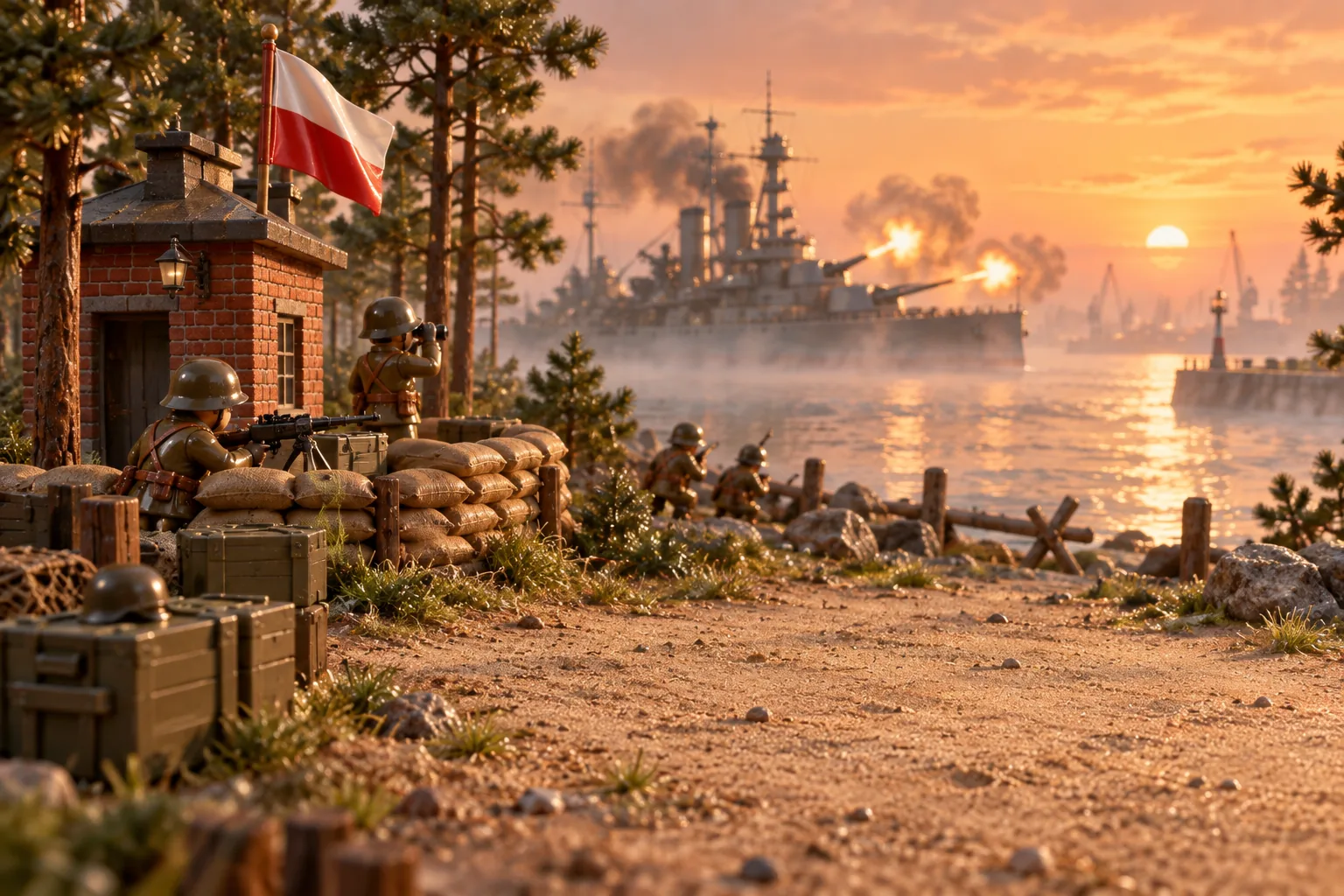
At 4:45 in the morning an old German battleship opened fire on a small Polish fort on the Baltic, and the deadliest war in history began.
On 1 September 1939 the old pre-dreadnought battleship Schleswig-Holstein opened fire on the Polish depot at Westerplatte, on the edge of the Free City of Danzig, now Gdańsk. The same morning German troops crossed into Poland from the north, west and south. Two days later Britain and France, bound by their promises to Poland, declared war on Germany. On 17 September the Soviet Union invaded from the east, as agreed in a secret protocol of the Molotov–Ribbentrop Pact signed a week before the war. By 6 October Poland had been carved up between the two dictatorships.
The war then spread across the globe. Germany overran Denmark, Norway, the Low Countries and France in 1940, and in June 1941 turned on the Soviet Union. In December 1941 Japan struck Pearl Harbor and British and American territory across Asia, bringing the United States into the war. The tide turned in 1942 and 1943 at Midway, Stalingrad and in North Africa. In 1944 the Allies landed in Normandy while the Red Army pushed west.
Germany surrendered unconditionally on 8 May 1945. After the atomic bombings of Hiroshima and Nagasaki, Japan announced its surrender on 15 August and signed it on 2 September. Between 60 and 75 million people had died, most of them civilians, killed by massacres, hunger, disease and genocide. The victors founded the United Nations to keep it from happening again.
Read more on Wikipedia
Sources: en.wikipedia.org/wiki/World War II, en.wikipedia.org/wiki/Invasion of Poland

