Industrial age · war
Winter War
When Soviet bombs fell on Finnish cities, Molotov claimed his planes were dropping food to the starving Finns, so the Finns nicknamed the bombs 'Molotov bread baskets'.
In the autumn of 1939, with the Second World War just begun, the Soviet Union demanded that Finland hand over border land near Leningrad, only 32 kilometres from the frontier, in exchange for territory elsewhere. Finland refused. On 30 November 1939 the Red Army invaded, without a declaration of war, and the League of Nations expelled the Soviet Union for the attack. Moscow had expected victory within a few weeks and set up a puppet Finnish communist government.
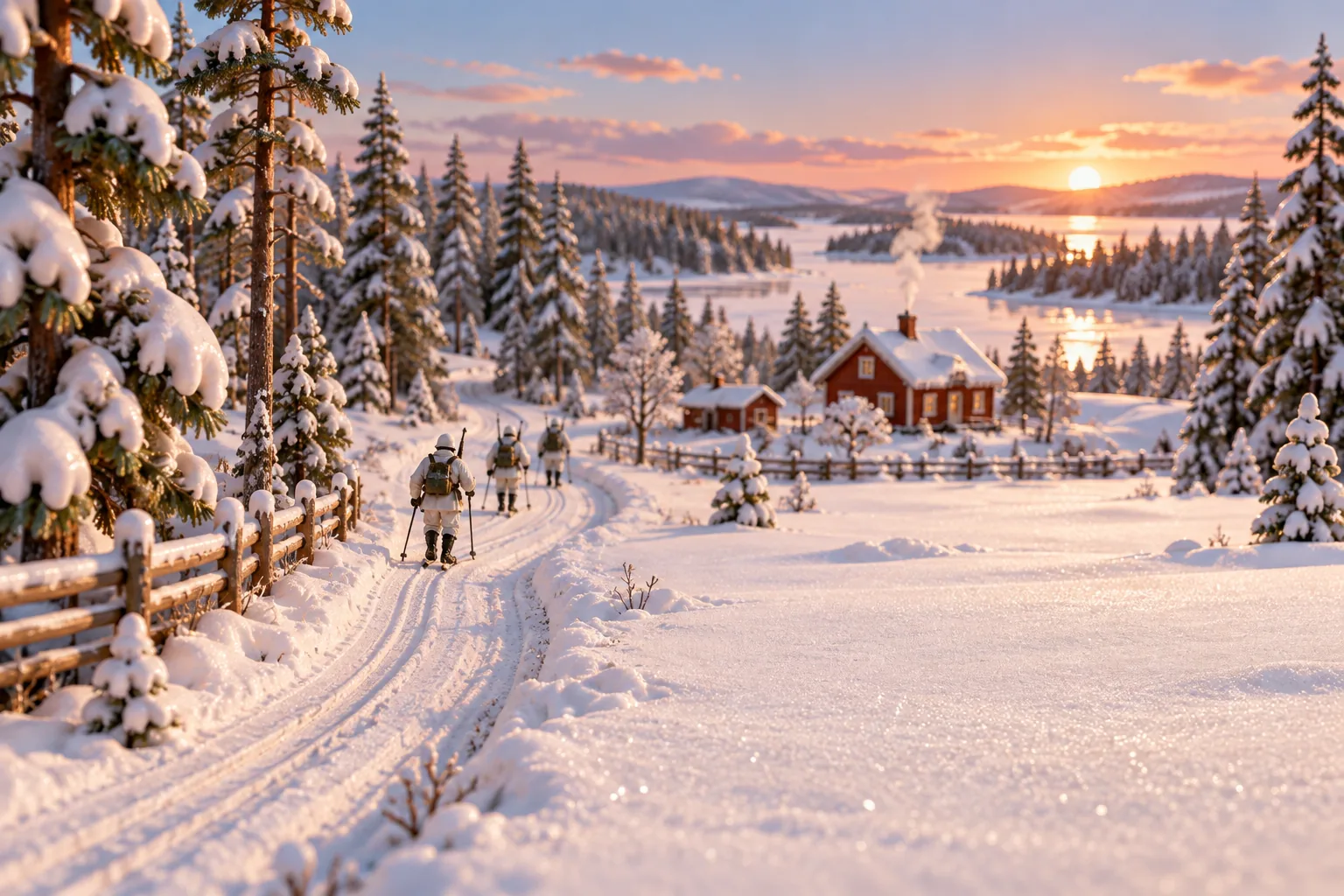
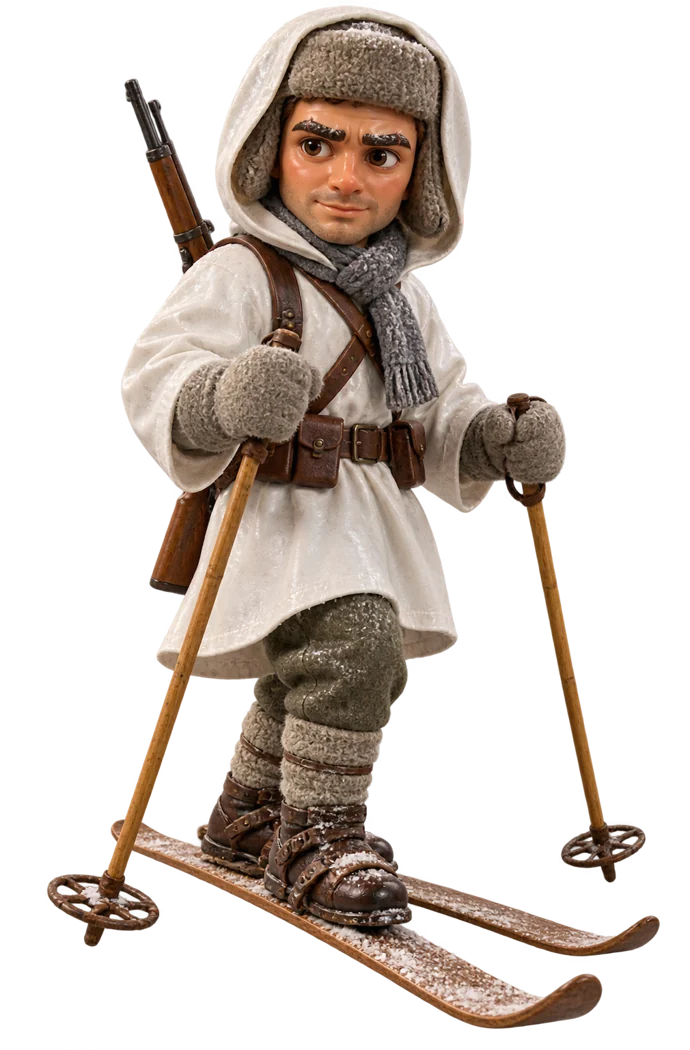
The Finns fought back for more than two months in temperatures as low as −43 °C. Their soldiers were reservists, many in their own warm civilian clothes, skilled at cross-country skiing and almost invisible in white snow capes. In the forests of Suomussalmi and on the Raate Road they cut Soviet columns into isolated pockets called motti and destroyed them one by one. At Kollaa the motto 'Kollaa holds' became a legend.
In February 1940 the reorganised Red Army broke through the Mannerheim Line on the Karelian Isthmus, and Marshal Carl Gustaf Emil Mannerheim urged peace while Finland could still bargain. By the Moscow Peace Treaty of 13 March 1940 Finland gave up 9 per cent of its territory, and 422,000 to 450,000 Karelians lost their homes. But it kept its independence, and the Red Army's poor showing encouraged Hitler to believe that an attack on the Soviet Union would succeed.
Read more on Wikipedia
Sources: en.wikipedia.org/wiki/Winter War