Industrial age · person
Winston Churchill
On the morning German armies poured into Belgium and the Netherlands, a 65-year-old politician many had written off became prime minister, and refused to give in.
Winston Leonard Spencer Churchill was born on 30 November 1874 at Blenheim Palace, the family's ancestral home in Oxfordshire. He got into the Royal Military College at Sandhurst on his third try, joined the army in 1895 and rode in one of the British Army's last cavalry charges, at Omdurman in 1898. Sent to the Boer War as a correspondent for the Morning Post, he was captured after his train was derailed, then escaped from a prison camp in Pretoria by hiding on freight trains and in a mine.
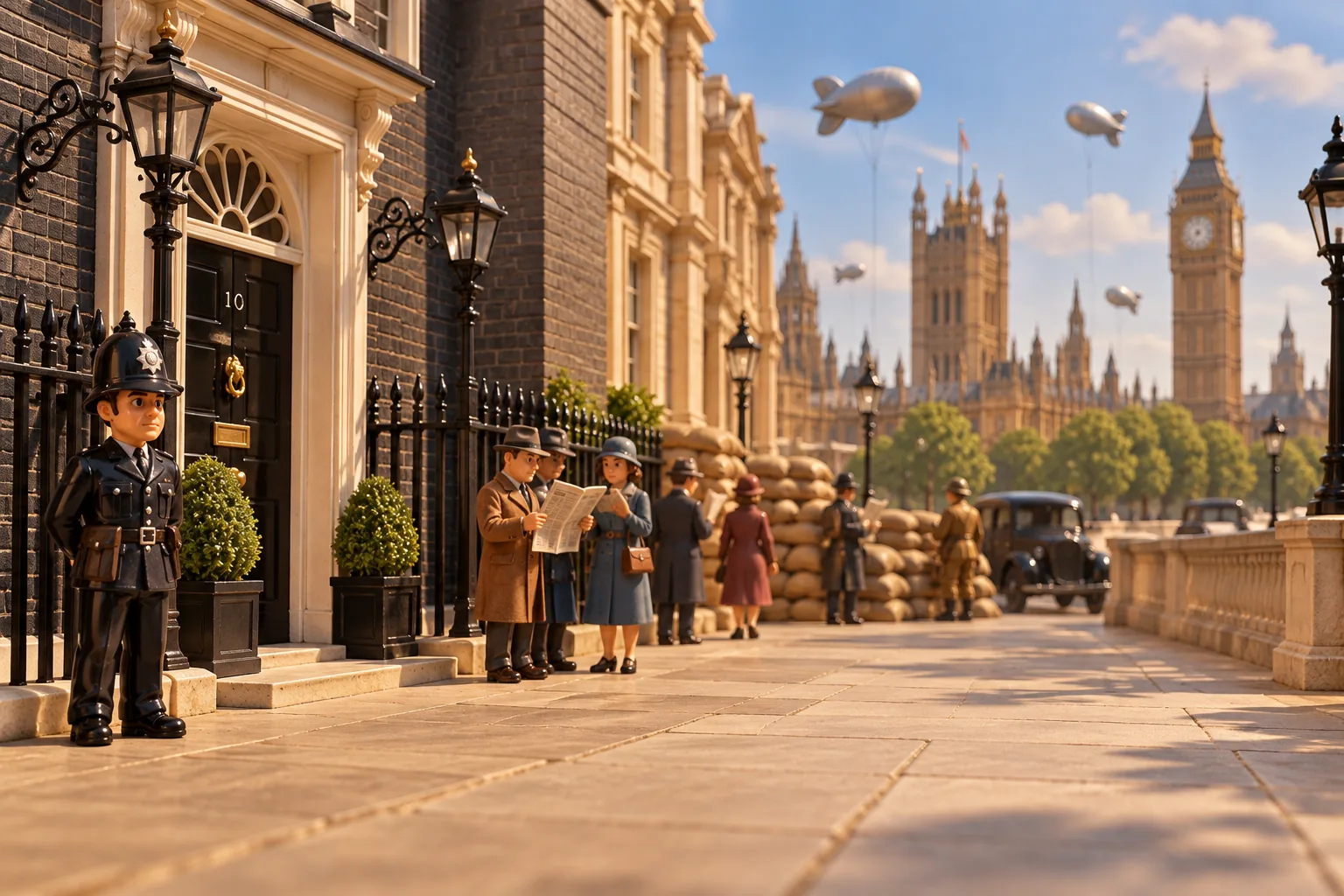
He entered Parliament in 1900 and rose fast. As First Lord of the Admiralty in the First World War he backed the attack on the Dardanelles, and after the disaster at Gallipoli he resigned in November 1915 and went to serve on the Western Front. Through the 1930s he warned against Hitler from the back benches. On 10 May 1940, the day Germany invaded the Low Countries, he became prime minister. His speeches, "blood, toil, tears and sweat" and "we shall fight on the beaches", carried Britain through the year it stood almost alone.
He lost the 1945 election weeks after victory in Europe, gave his "Iron Curtain" speech at Fulton, Missouri, in 1946, and was prime minister again from 1951 to 1955. He died at his London home on 24 January 1965 and was given a state funeral before burial at Bladon, near Blenheim.
Read more on Wikipedia


