Middle Ages · person
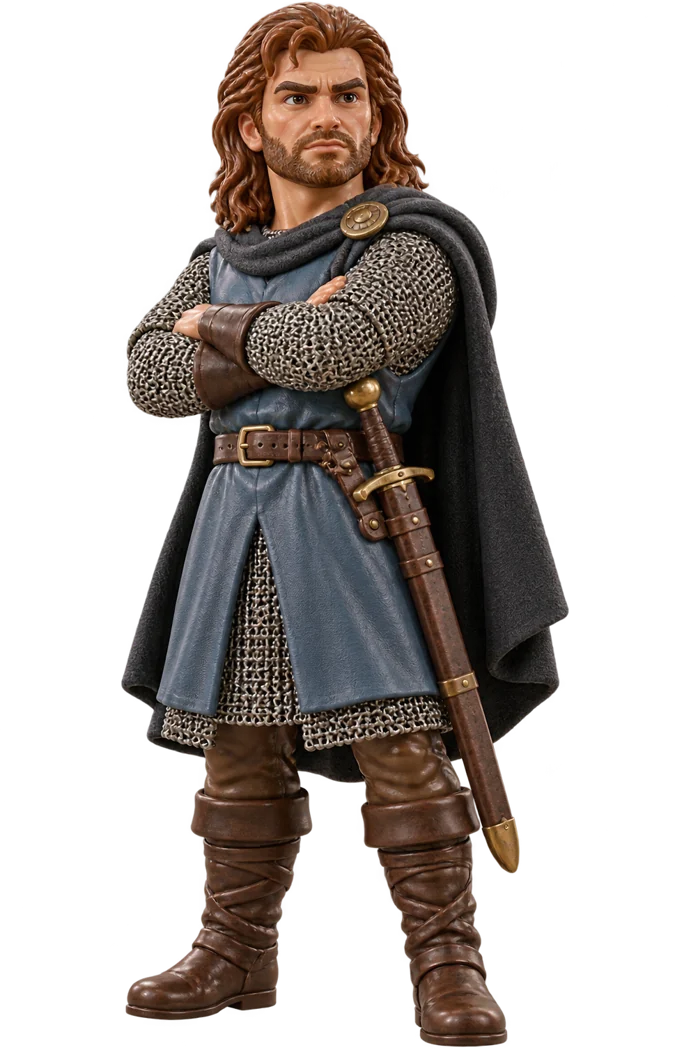
William Wallace
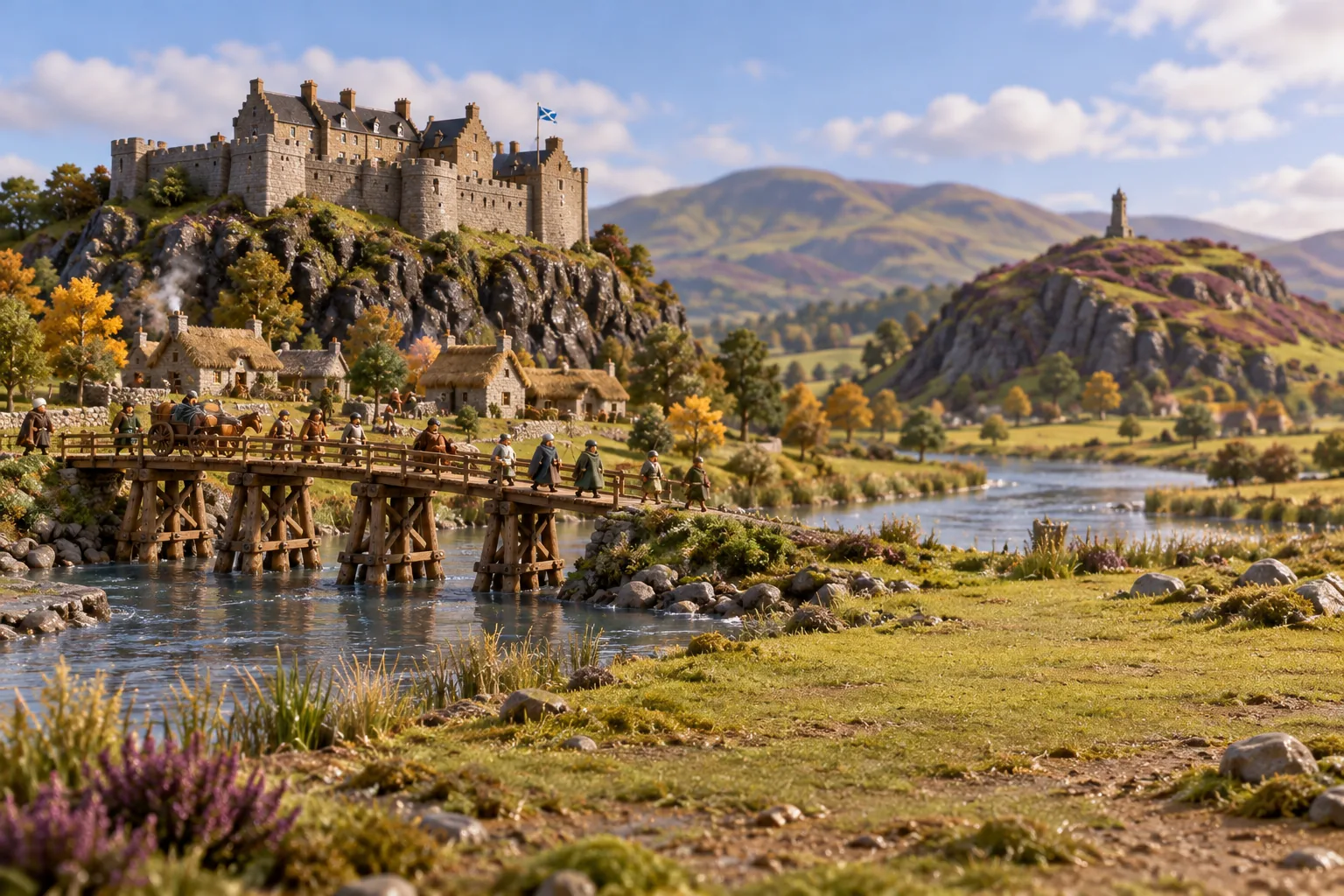
On 11 September 1297, vastly outnumbered, he and Andrew Moray routed an English army at the narrow wooden bridge over the Forth below Stirling Castle.
William Wallace was born around 1270 into the lesser nobility of Scotland, but little is known for certain about his family. His own seal, on a letter sent to the Hanseatic city of Lübeck in 1297, names his father as Alan Wallace. Scotland was then in crisis: after the deaths of Alexander III and the young Margaret, Maid of Norway, Edward I of England treated the kingdom as a vassal, invaded in 1296 and forced King John Balliol to abdicate.
The first act certainly known of Wallace is the killing of William de Heselrig, the English sheriff of Lanark, in May 1297. He joined the uprisings spreading across Scotland, raided from the Ettrick Forest and joined forces with Andrew Moray. On 11 September 1297 their army, though vastly outnumbered, routed the Earl of Surrey's English army at the Battle of Stirling Bridge. Wallace was knighted and named Guardian of Scotland, but in July 1298 Edward himself invaded with more than 25,000 foot soldiers and defeated him at the Battle of Falkirk. Wallace resigned the guardianship and was later reported in France.
On 5 August 1305 the Scottish knight John de Menteith handed him over to English soldiers at Robroyston near Glasgow. Tried for treason in London, he was executed at Smithfield on 23 August 1305, and his head was set on London Bridge. Blind Harry's 15th-century poem The Wallace, Walter Scott and the film Braveheart made him a legend, and the Wallace Monument rose near Stirling in 1869.
Read more on Wikipedia
Sources: en.wikipedia.org/wiki/William Wallace, en.wikipedia.org/wiki/Battle of Stirling Bridge


