Our time · state
West Germany
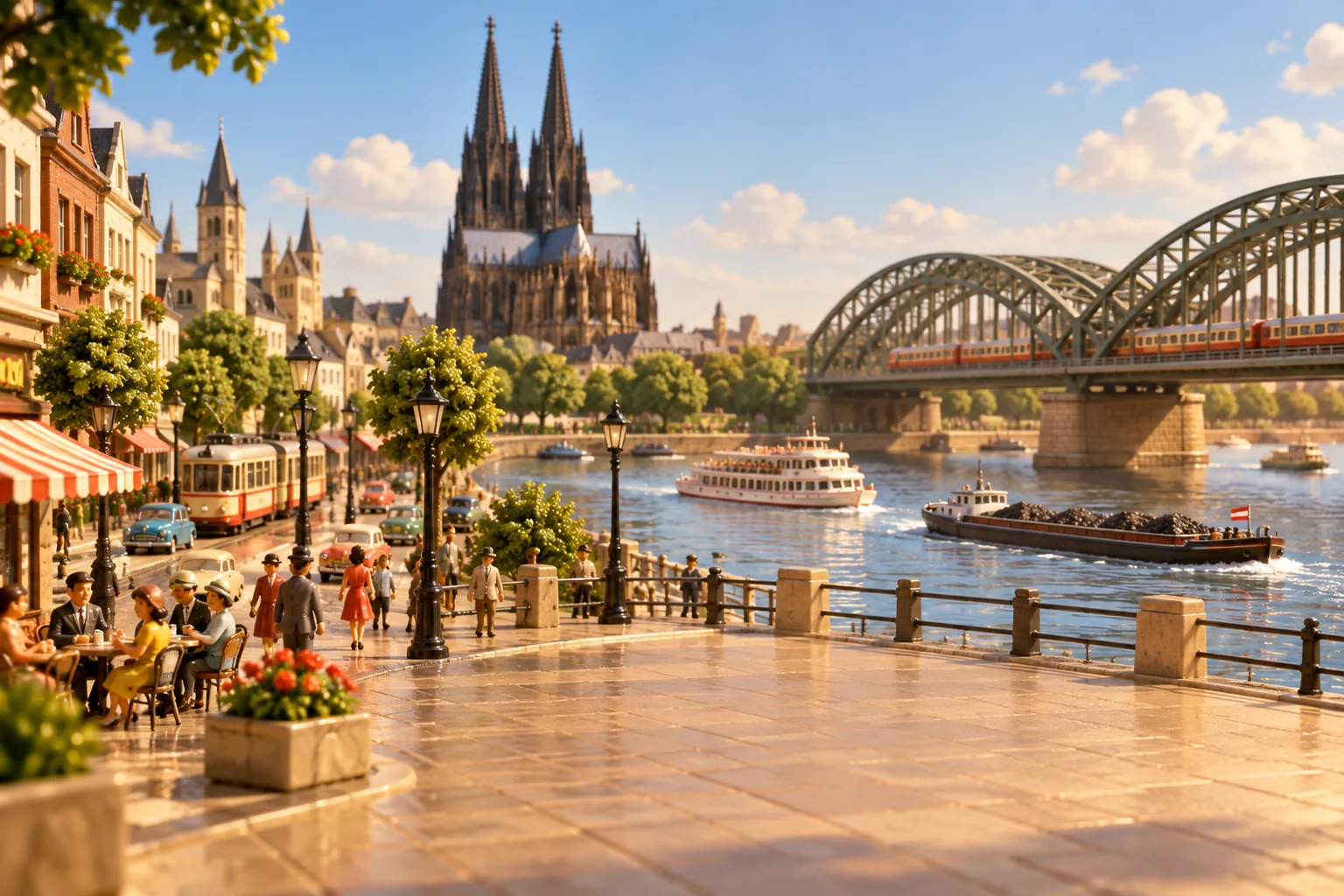
Rebuilt from the rubble of the Second World War, it turned a new currency and Marshall Plan aid into an economic miracle and became one of the strongest economies on earth.
After 1945 Germany was occupied by the Allies, and in 1948–1949 the Soviet blockade of West Berlin was beaten by the Berlin airlift. A currency reform in 1948 replaced the Reichsmark with the Deutsche Mark. On 23 May 1949 the Federal Republic of Germany was founded from twelve states in the American, British and French zones, with Bonn as its capital, and it claimed to speak for all of Germany.
Chancellor Konrad Adenauer, in office until 1963, tied the country to the West: it joined the European Coal and Steel Community in 1952 and NATO on 9 May 1955. The economic miracle began in 1950, helped by the Marshall Plan and later by guest workers from abroad, and the Saarland joined in 1957. In 1963 about twenty Auschwitz guards were tried in Frankfurt. Willy Brandt became chancellor in 1969 and opened Ostpolitik towards the East; in Warsaw in 1970 he knelt in silence at the memorial to the Ghetto Uprising. By 1973 West Germany had the world's fourth-highest GDP.
Brandt resigned in 1974 after his aide Günter Guillaume was exposed as a Stasi spy, and Helmut Schmidt and then Helmut Kohl led the government. After the Berlin Wall opened in 1989, the two states formed a currency union in July 1990, and on 3 October 1990 East Germany joined the Federal Republic, which carried on as united Germany.
Read more on Wikipedia
Sources: en.wikipedia.org/wiki/West Germany


