Industrial age · war
War of 1812
The most famous American victory of the war, at New Orleans, was won after the peace treaty had already been signed.
Britain, locked in its long war with Napoleon, restricted American trade with France and stopped American ships at sea to press their sailors into the Royal Navy, including men the United States considered its citizens. Americans also blamed Britain for backing the Indigenous confederacies that resisted settlers in the Old Northwest. On 18 June 1812 Congress, split along party lines, declared war. Critics called it "Mr. Madison's War", after President James Madison.
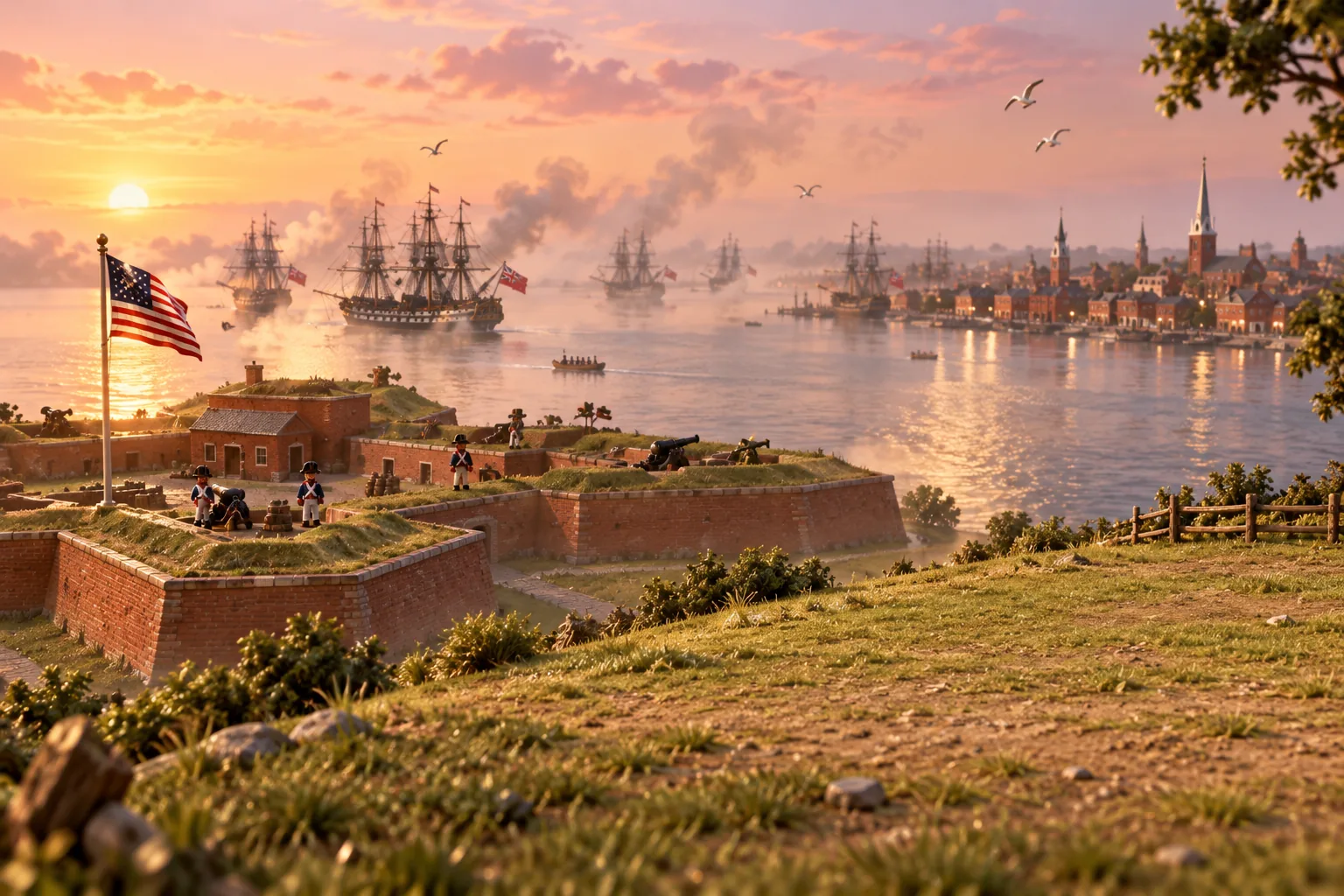
American invasions of Canada, then British North America, mostly failed against British troops, Canadian militia and Indigenous allies such as Tecumseh's confederacy; Tecumseh himself was killed at the Battle of the Thames in October 1813. At sea, American frigates won famous duels, such as USS Constitution against HMS Guerriere on 19 August 1812. After Napoleon's exile in April 1814 Britain sent more troops. On 24 August 1814 they set fire to public buildings in Washington, including the White House and the Capitol. In September they turned on Baltimore, where Fort McHenry held out under bombardment.
Peace terms were agreed in the Treaty of Ghent in December 1814, which simply restored things as they had been before the war. News travelled slowly, and in January 1815 Andrew Jackson's army threw back a British attack on New Orleans. The war officially ended when the US Senate ratified the treaty on 17 February 1815.
Read more on Wikipedia
Sources: en.wikipedia.org/wiki/War of 1812