Prehistory · culture
Walls of Jericho
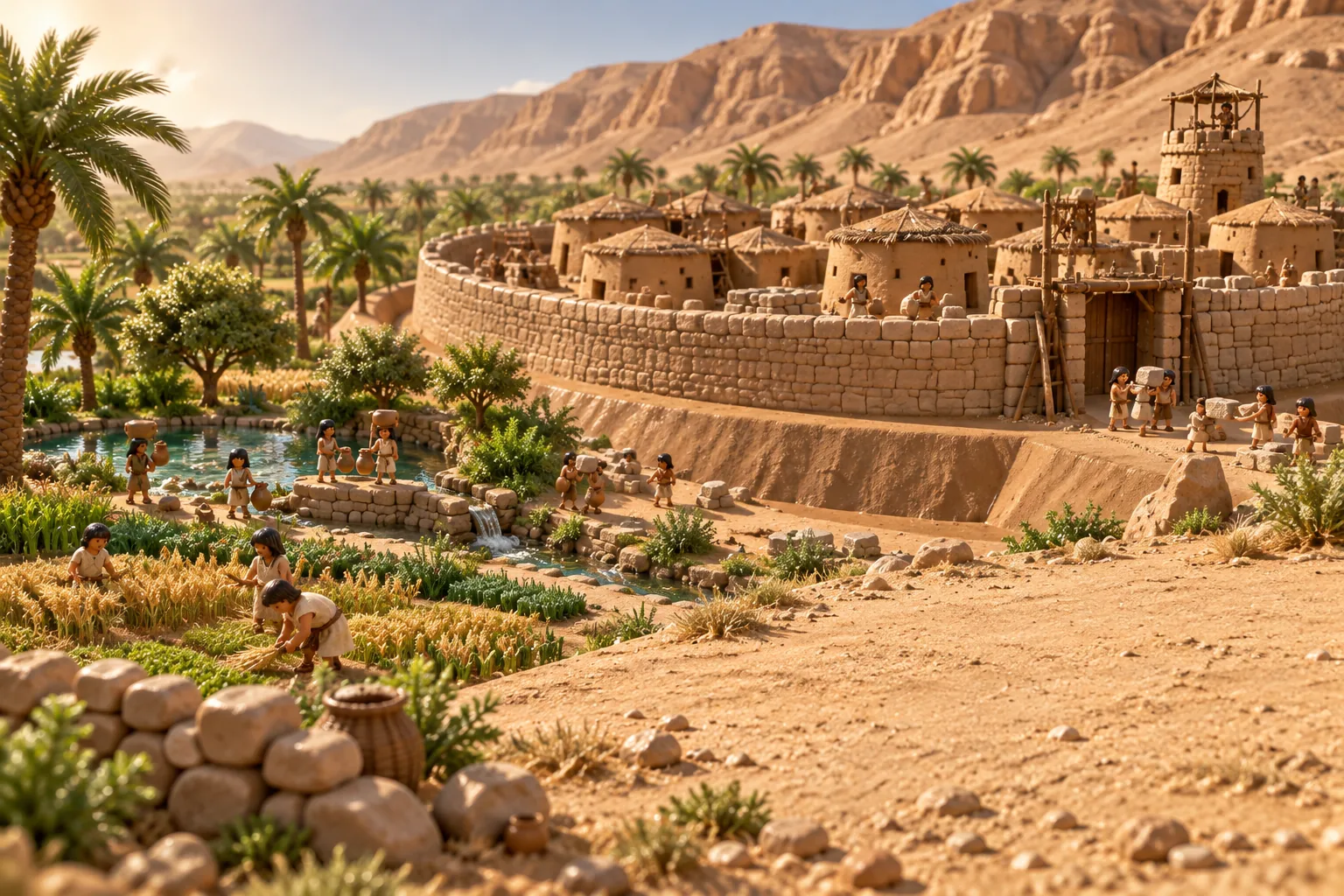
Ten thousand years ago, farmers beside a spring in the Jordan Valley built a stone tower 8.5 metres tall, with a staircase inside, and ran a wall around their town.
Jericho grew up beside the spring of Ein es-Sultan, in the hot, low Jordan Valley. Hunter-gatherers camped there for generations, and when the cold, dry spell of the Younger Dryas ended around 9600 BC they began to stay for good. Their houses were round, about five metres across, built of sun-dried mud brick and roofed with brush smeared in mud. They grew emmer wheat, barley and pulses and still hunted wild animals.
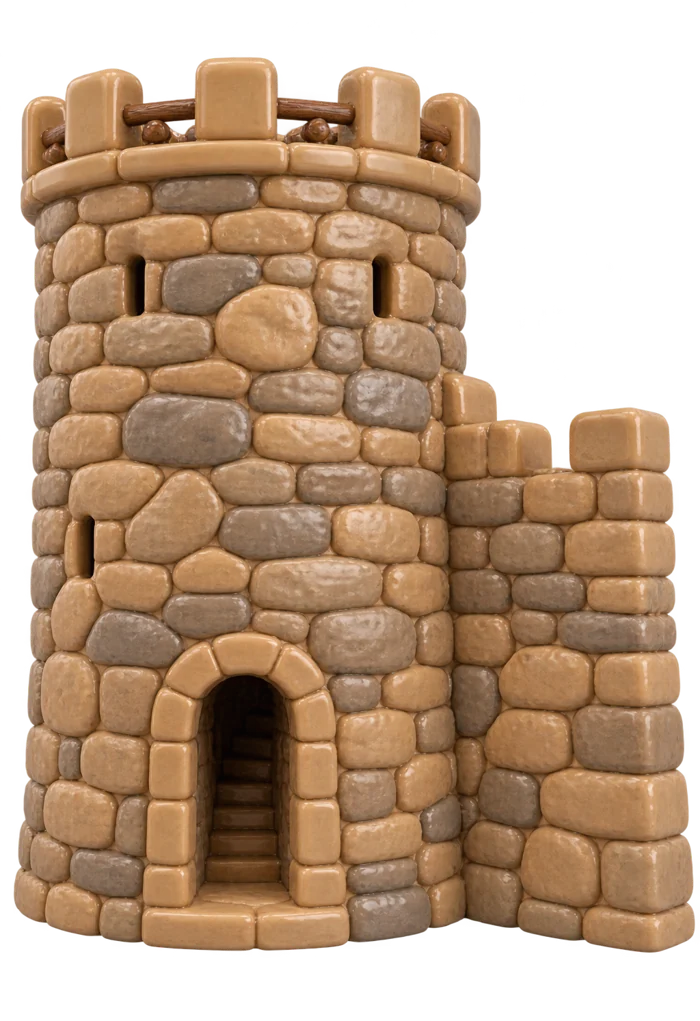
Around 8000 BC the townspeople did something no one had done before: they surrounded their settlement with a massive stone wall over 3.6 metres high and cut a ditch 8.2 metres wide and 2.7 metres deep into the solid bedrock outside it. Against the inside of the wall rose a cone-shaped stone tower, 8.5 metres tall and almost nine metres across at the base, with a staircase of 22 stone steps inside. Carbon dates suggest it went up around 8300 BC and stayed in use for five centuries. Archaeologists reckon the work took a hundred men more than a hundred days, which means someone was organising labour. Whether the wall kept out enemies or floodwater, and what the tower was for, is still argued over.
The town may have held a few hundred people or a few thousand. For decades diggers searched the mound for the walls of the Bible story. Kathleen Kenyon, excavating from 1952 to 1958, showed that this wall and tower were Neolithic, thousands of years older than that. In 2023 UNESCO listed Tell es-Sultan as the oldest fortified city in the world.
Read more on Wikipedia
Sources: en.wikipedia.org/wiki/Jericho, en.wikipedia.org/wiki/Tell es-Sultan


