
Early modern · person
Vitus Bering
On 16 July 1741 his crew saw a great snow-capped volcano rise out of the sea: Alaska. Five months later the captain was buried on a desert island.
Vitus Jonassen Bering was baptised on 5 August 1681 in the Danish port of Horsens. At 15 he signed on as a ship's boy, sailed as far as India and the Dutch East Indies, and trained as a naval officer in Amsterdam. In 1704 he joined the fast-growing navy of Tsar Peter I as a sub-lieutenant and rose to second captain by 1720. In 1713 he married Anna Christina Pülse at Vyborg; of their nine children, four survived childhood.
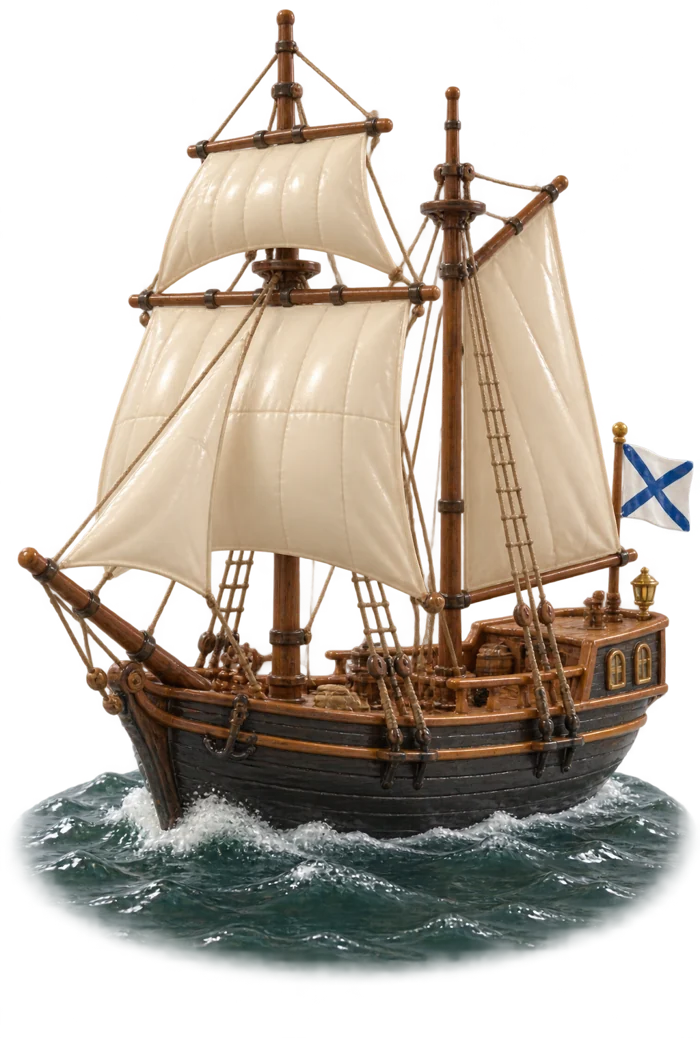
In January 1725, shortly before he died, Peter the Great ordered Bering to find out whether Asia and America were joined by land. The First Kamchatka Expedition crossed Siberia, built the ship St. Gabriel in Kamchatka and in August 1728 sailed north past the cape where the Asian coast turns west. His second voyage was part of the vast Great Northern Expedition. In 1741 he sailed from Petropavlovsk, the settlement he had named after his ships St. Peter and St. Paul, and on 16 July his crew sighted Mount Saint Elias in Alaska.
On the way back, sick with scurvy like many of his men, he handed command to Sven Waxell. Storms drove the battered St. Peter to an uninhabited island in the Commander Islands, and there Bering died on 19 December 1741. The survivors built a smaller vessel from the wreck and reached Avacha Bay in August 1742; only 46 of the 77 men came home. The Bering Strait, the Bering Sea and Bering Island carry his name.
Read more on Wikipedia
Sources: en.wikipedia.org/wiki/Vitus Bering, en.wikipedia.org/wiki/Great Northern Expedition