Middle Ages · state
Vikings
In longships built for speed, Scandinavian farmers became raiders, traders and kings from Newfoundland to Baghdad.
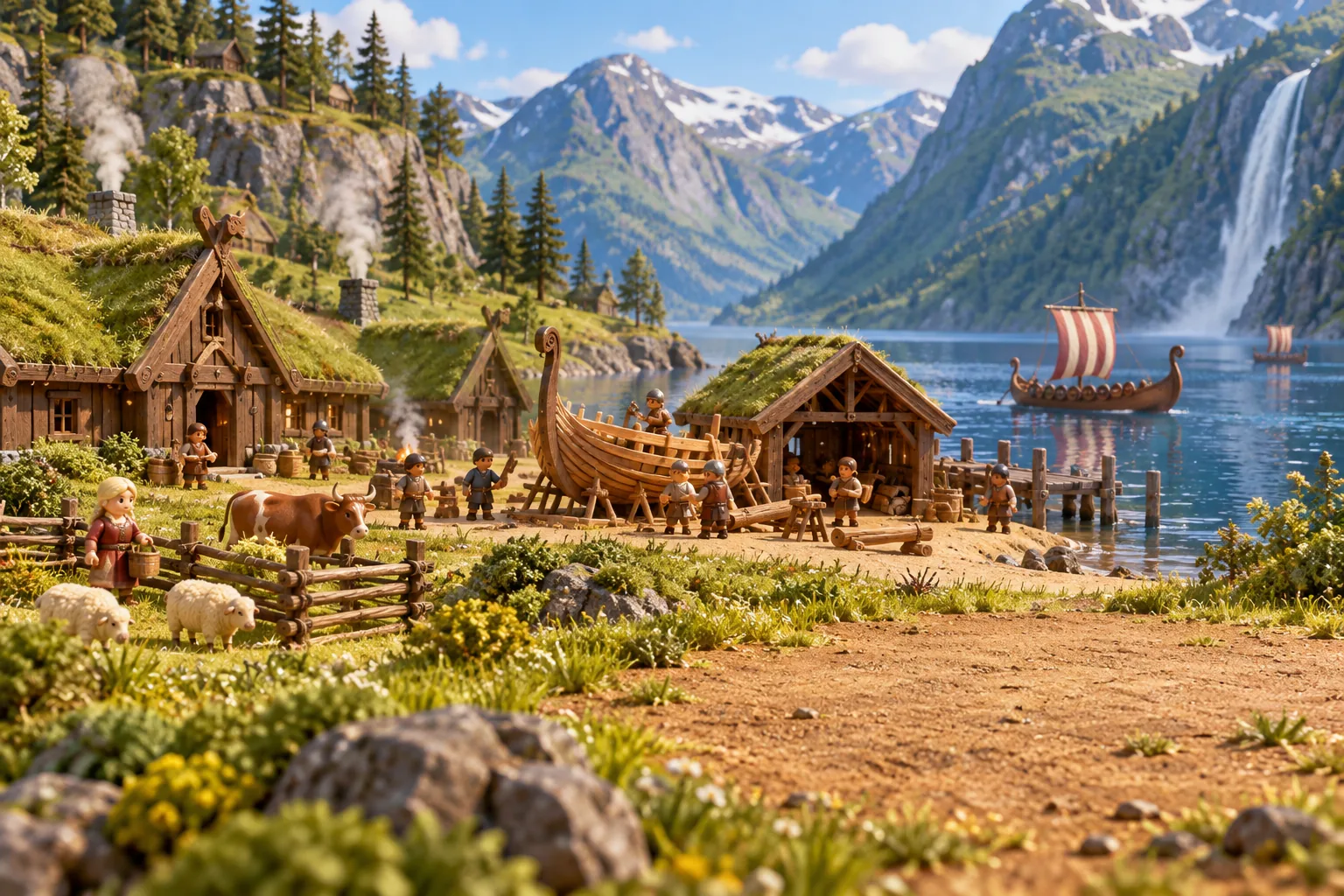
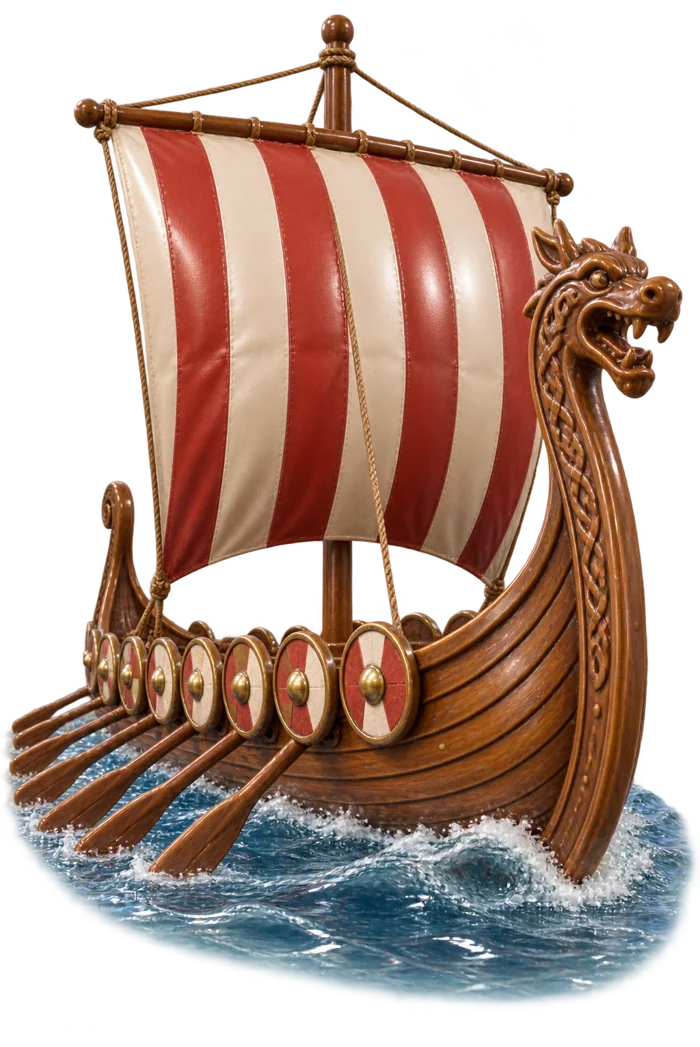
Vikings were seafarers from Denmark, Norway and Sweden. In England their age began on 8 June 793, when Norsemen destroyed the abbey on the island of Lindisfarne, an attack that coloured how Europeans saw them for centuries. Their longships, long and narrow with a shallow draught, could cross seas under sail and row up rivers to land troops almost anywhere.
They raided, traded and settled. In England they ruled the Danelaw from Scandinavian York, and Sweyn Forkbeard and his son Cnut the Great, king of England from 1016 to 1035, sat on the English throne. In the 10th century Vikings received land in northern France that became the Duchy of Normandy. In the east, known as Varangians, they travelled the Dnieper and Volga, helped found Kievan Rus' and sold captives for Arab silver dirhams, and archaeology suggests some reached Baghdad. Others settled Iceland and, around 980, Greenland, and Leif Erikson's men built a short-lived camp at L'Anse aux Meadows in Newfoundland, the first Europeans in North America.
Christianity spread through Scandinavia and the homelands became the kingdoms of Denmark, Norway and Sweden. The Viking Age is usually taken to end with the Norman conquest of England in 1066.
Read more on Wikipedia
Sources: en.wikipedia.org/wiki/Vikings


