
Our time · politics
Velvet Revolution
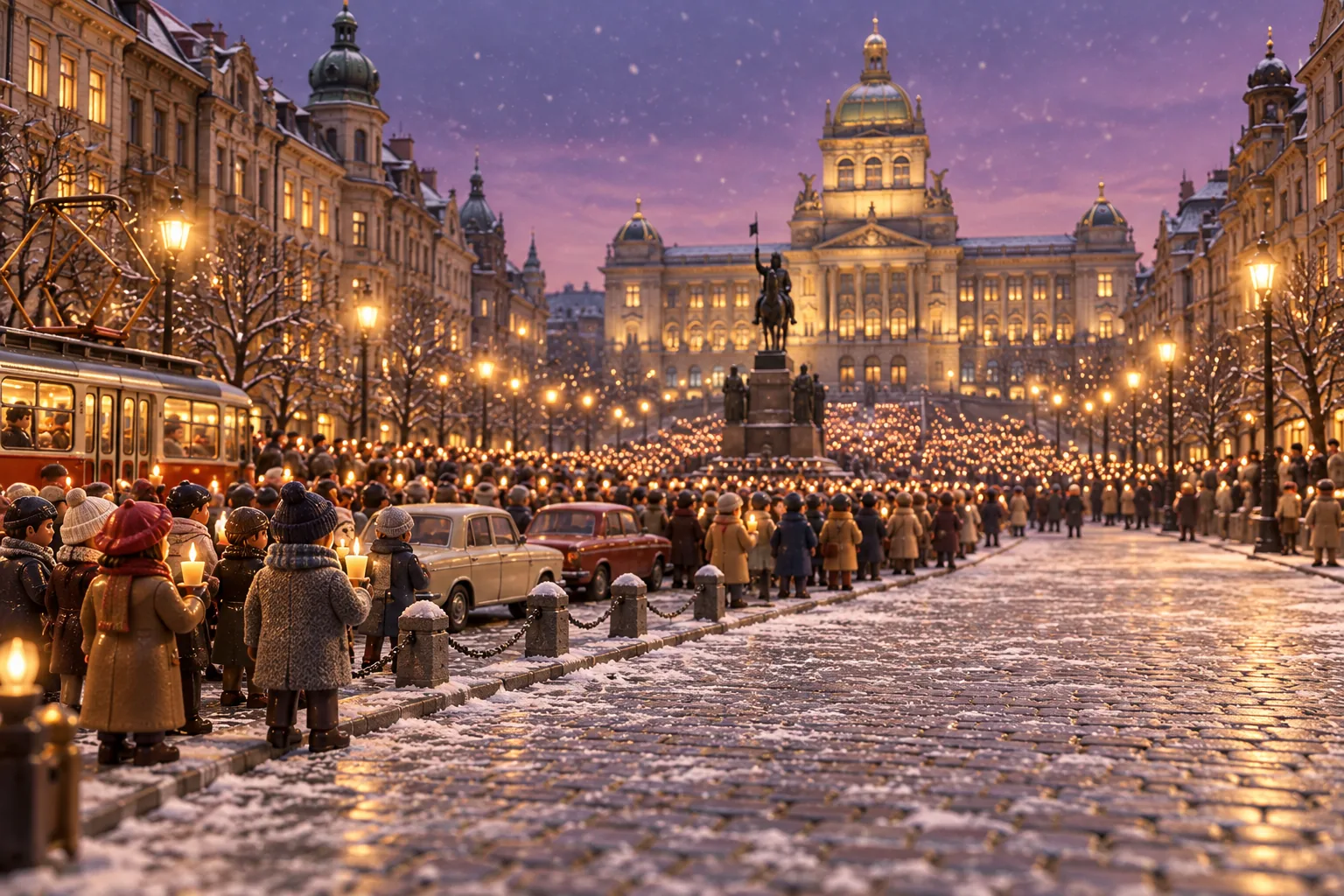
Hundreds of thousands of people stood in the squares of Prague and jingled their keys at the government: time to go home.
The Communist Party had ruled Czechoslovakia since February 1948, with no legal opposition. Dissidents of Charter 77, among them the playwright Václav Havel, were persecuted and spread their writing in home-made samizdat. In 1989 the Communist governments of the Warsaw Pact were falling one after another. On 17 November, International Students' Day, a march marked 50 years since the Nazis crushed student protests in Prague. About 15,000 people joined, and when they turned towards the city centre chanting anti-Communist slogans, riot police trapped and beat them on Národní Street.
A false rumour that a student had been killed spread fast and angered the country. Students and theatre actors went on strike that same evening. In a Prague theatre Havel and other dissidents founded the Civic Forum, and in Slovakia Public Against Violence was formed. Crowds in Prague grew from 200,000 on 19 November to an estimated 500,000 the next day, and later about 800,000 gathered on Letná plain. On 24 November the entire party leadership, including General Secretary Miloš Jakeš, resigned, and on 27 November the whole country joined a two-hour general strike.
On 28 November the party agreed to give up its monopoly of power. Barbed wire came down along the borders with Austria and West Germany. President Gustáv Husák appointed a largely non-Communist government on 10 December and resigned. On 29 December 1989 the federal assembly elected Václav Havel president.
Read more on Wikipedia


