
Middle Ages · state
Uyghur Khaganate
The Uyghur Khaganate made Manichaeism its state religion and rescued the Tang dynasty from rebellion in return for silk.
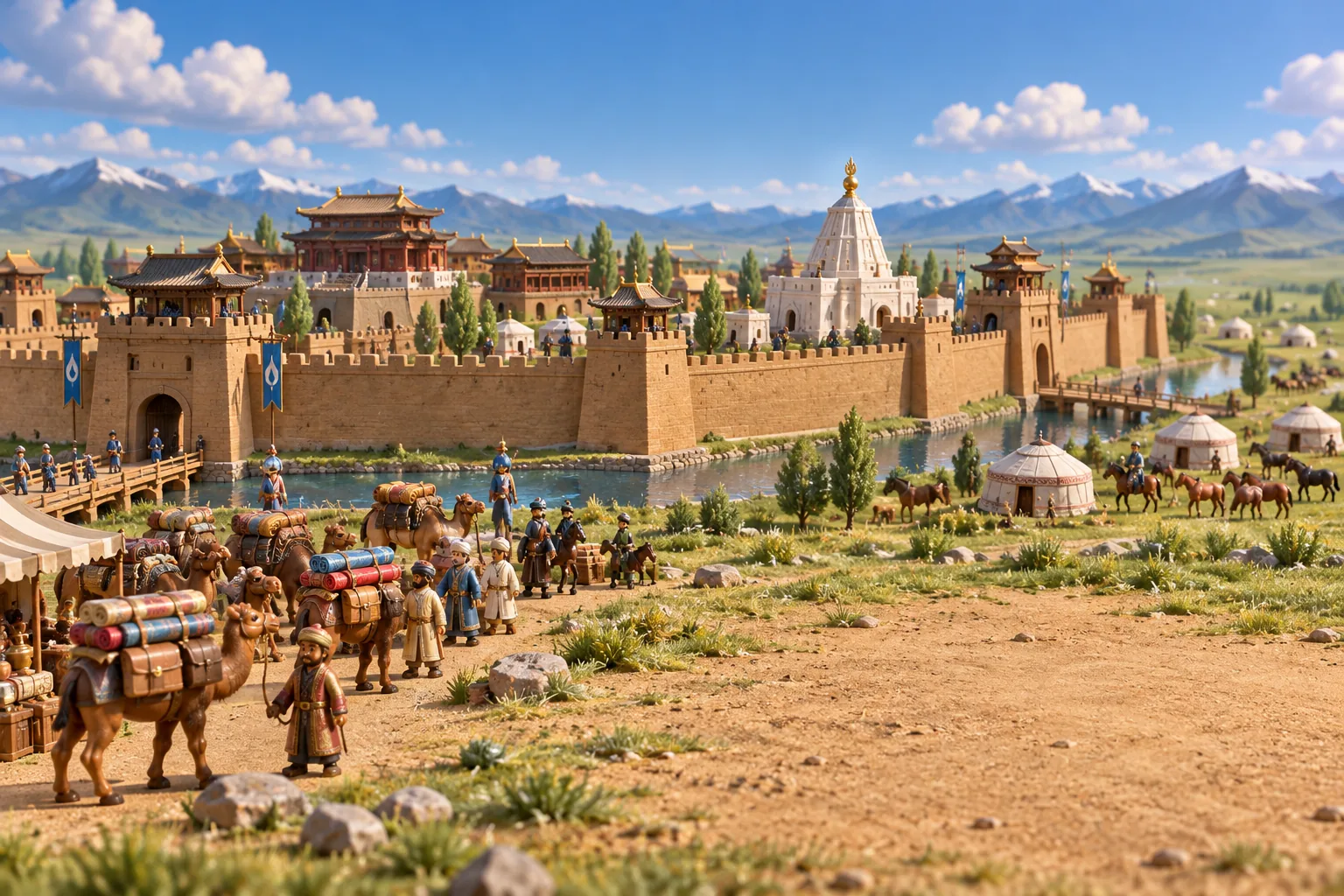
In 744 the Uyghurs, allied with the Tang, destroyed the last Göktürk khaganate, and their leader Kutlug I Bilge Khagan claimed to be supreme ruler of all the tribes. His son Bayanchur, khagan from 747, brought the Sekiz Oghuz, the Kyrgyz, the Karluks and others under Uyghur rule. With the profits of trade with China he built a capital, Ordu-Baliq, with a palace inside fortified walls, moats and watchtowers.
When An Lushan rebelled against the Tang, Emperor Suzong turned to Bayanchur, and in 757 about 4,000 Uyghur horsemen helped retake Chang'an and Luoyang. The Uyghurs looted Luoyang for three days and stopped only after large amounts of silk were handed over. Princesses were exchanged to seal the alliance, and the horse trade was fixed at 40 rolls of silk for every horse. In 762 Bögü Qaghan, who had planned to invade China, changed sides and helped crush the rebels again. On that campaign he met Manichaean priests, and Manichaeism became the official religion of the khaganate.
Sogdian merchants and advisers were powerful at court. In 839 famine, an epidemic and a terrible winter killed much of the livestock, and in 840 a rival minister invited the Yenisei Kyrgyz to invade. The khaganate fell, and Uyghurs moved south to found the kingdoms of Ganzhou in Gansu and Qocho near Turpan.
Read more on Wikipedia
