Early modern · politics
US Declaration of Independence
The men who declared that all men are created equal included Thomas Jefferson, who held some six hundred people in slavery.
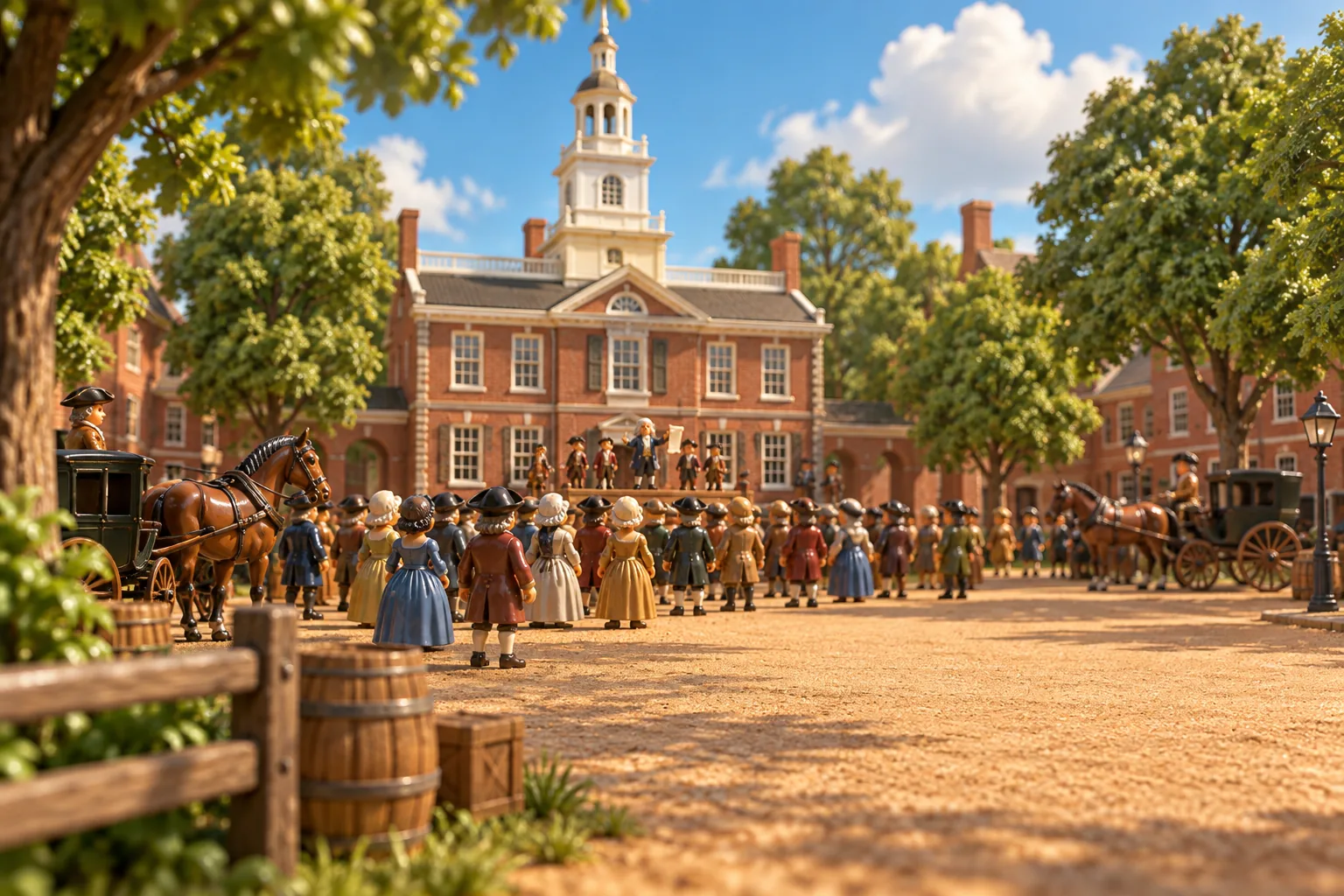
War between Britain and its American colonies had begun in April 1775 at Lexington and Concord, and in August King George III proclaimed the colonies in rebellion. In June 1776 the Second Continental Congress, meeting in the Pennsylvania State House in Philadelphia, appointed a committee of five, John Adams, Benjamin Franklin, Thomas Jefferson, Robert Livingston and Roger Sherman, to draft a declaration. Adams persuaded the others to let Jefferson write it, and he produced the draft between 11 and 28 June.
On 2 July Congress voted for independence. Over the next two days it edited Jefferson's text and on 4 July adopted it unanimously. A handwritten copy then went a few blocks away to the print shop of John Dunlap, and printed copies spread through the colonies. Its second sentence reads: "We hold these truths to be self-evident, that all men are created equal, that they are endowed by their Creator with certain unalienable Rights, that among these are Life, Liberty and the pursuit of Happiness."
The words sat uneasily with reality. Congress cut Jefferson's claim that George III had forced slavery on the colonies, to appease South Carolina and Georgia, and critics asked how slaveholders could proclaim equality without freeing their slaves. Even so, the Declaration became one of the most circulated and influential documents in history, and its second sentence is counted among the most famous lines ever written.
Read more on Wikipedia
Sources: en.wikipedia.org/wiki/United States Declaration of Independence


