Prehistory · culture
Uruk period
Five and a half thousand years ago one city on the Euphrates grew to tens of thousands of people, and its clerks began keeping their accounts in writing.
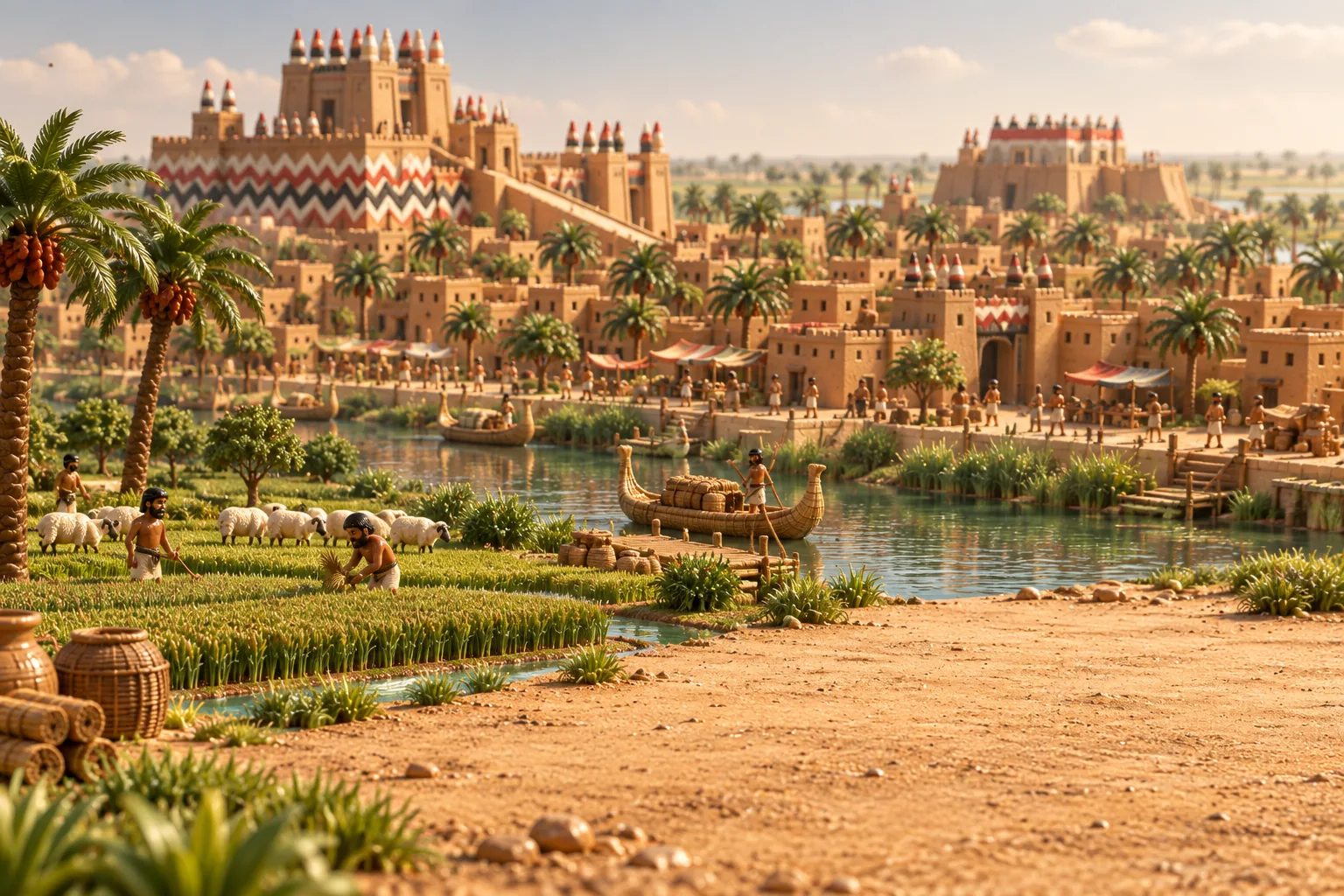
The Uruk period, named after the city of Uruk in southern Mesopotamia, runs roughly from 4000 to 3100 BC, between the Ubaid and Jemdet Nasr periods. It is the time of the 'urban revolution'. In the river plain of today's southern Iraq, farmers dug irrigation canals for barley, kept flocks of sheep for wool and lived in ever larger towns. Potters began to use the wheel, and bricks and pots were made in standard sizes and huge numbers. Large organisations needed to track workers, rations and goods.
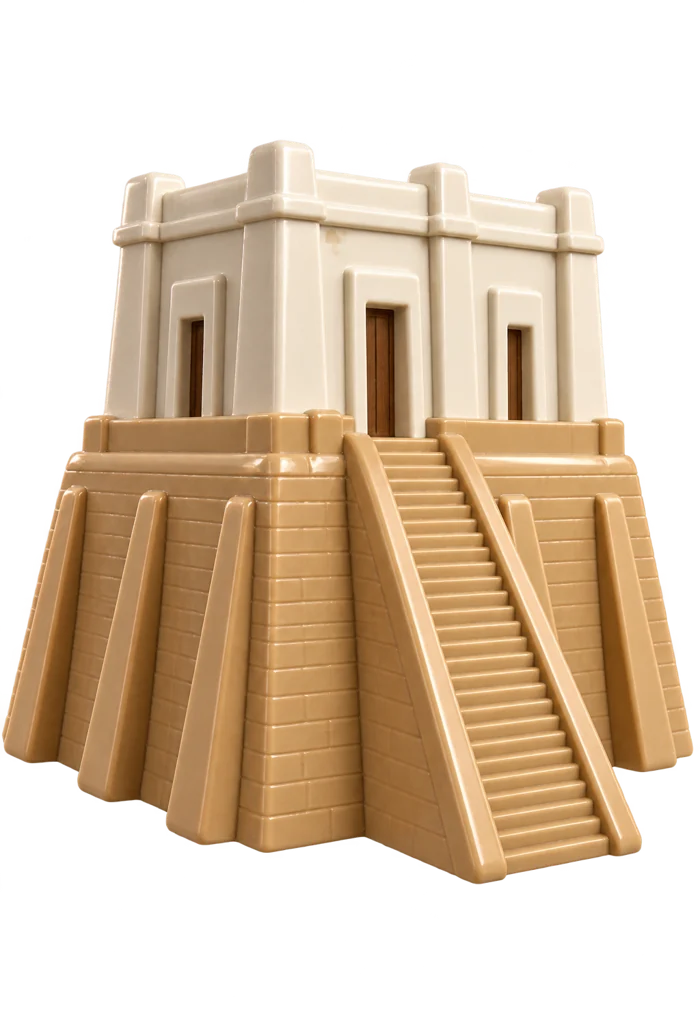
Uruk itself became by far the largest settlement known. In the Late Uruk phase it may have covered 230 to 250 hectares, with between 25,000 and 50,000 inhabitants. At its heart were two great monumental quarters 500 metres apart. In the Eanna quarter rose buildings of a size never seen before, one decorated with mosaics of painted clay cones; in the other stood the 'White Temple' on a high terrace, named for the white plaster on its walls. It was probably at Uruk, around 3400 to 3300 BC, that the first writing, called proto-cuneiform, appeared, mostly for keeping accounts.
Uruk's culture also spread far upriver. Colonies and outposts such as Habuba Kabira in Syria, a walled and planned town of about 22 hectares, carried southern pottery, seals and buildings to Syria, Iran and Anatolia. After about 3300–3200 BC this expansion stopped, and the region broke into separate regional cultures.
Read more on Wikipedia
Sources: en.wikipedia.org/wiki/Uruk period