Industrial age · politics
Unification of Germany
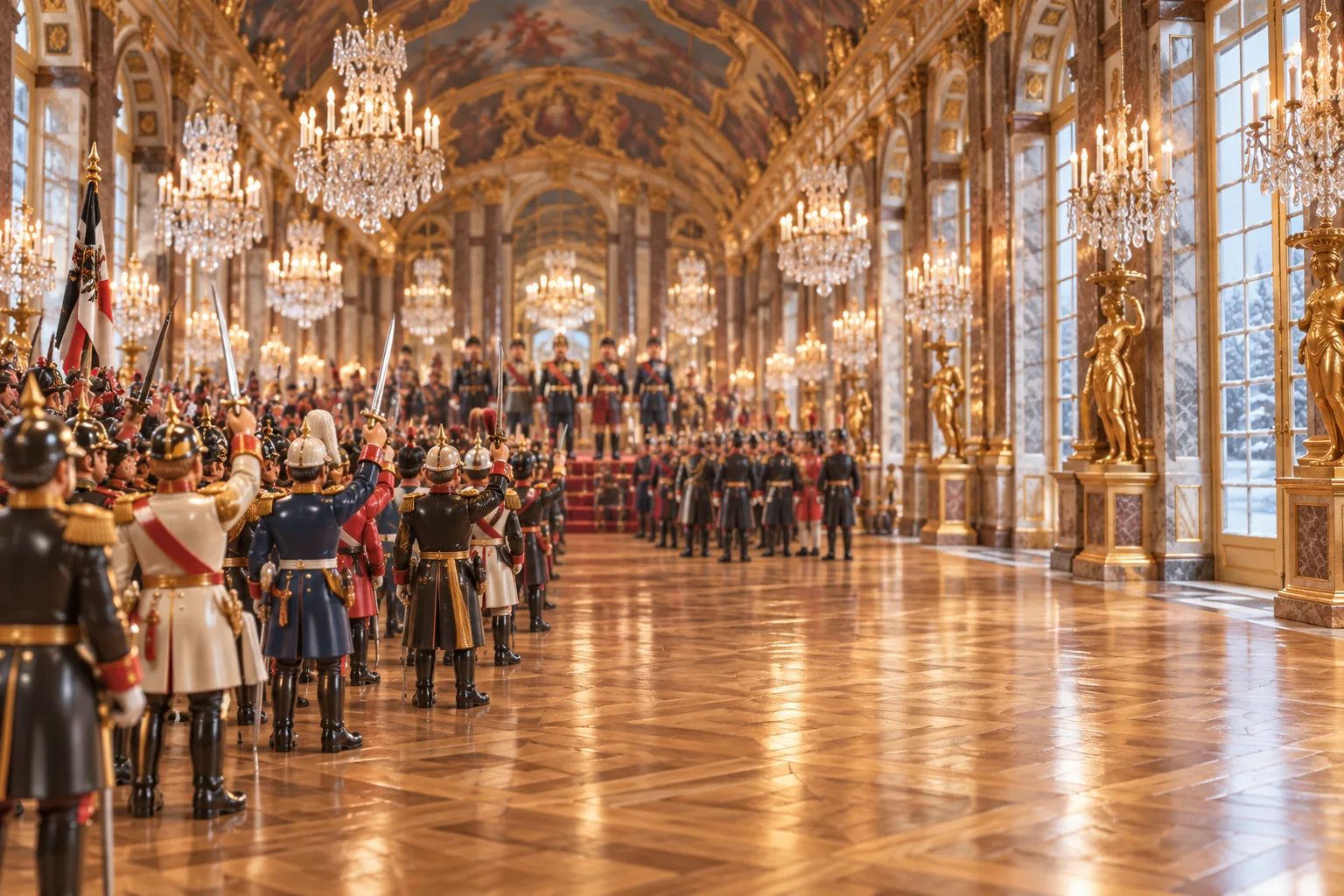
The German Empire was proclaimed not in Berlin but in the palace of the enemy it had just defeated, Versailles.
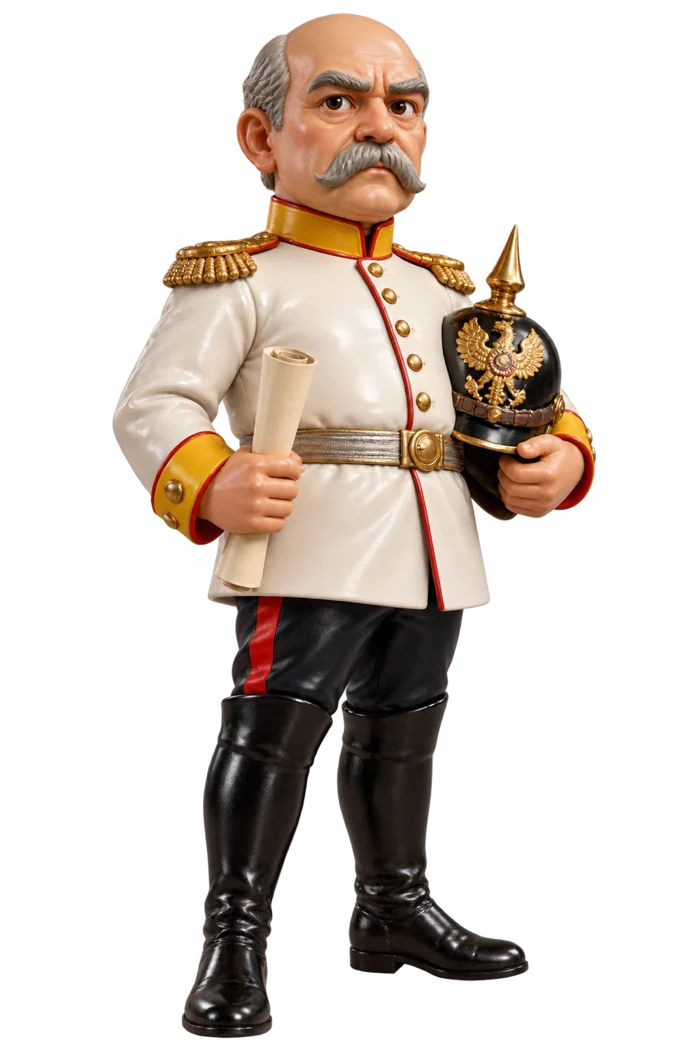
For centuries the German lands were a patchwork of kingdoms, duchies and free cities. The Holy Roman Empire was dissolved in 1806, and after 1815 a loose German Confederation took its place, dominated by Austria and Prussia. A Prussian-led customs union, the Zollverein, created in 1818, tied the economies together, and the revolutions of 1848 failed to unite the country from below. On 30 September 1862 the new Prussian minister-president, Otto von Bismarck, told a committee of the Prussian parliament that the great questions of the day would be decided "not by speeches and majority decisions" but "by iron and blood".
He kept his word. In 1864 Prussia and Austria together fought Denmark over Schleswig and Holstein. In 1866 Prussia defeated Austria in the Austro-Prussian War, the decisive day being the Battle of Königgrätz, and pushed it out of German affairs. On 18 August 1866 the North German Confederation was founded under Prussian leadership. In 1870–1871 the southern states joined Prussia in the Franco-Prussian War, and their armies won crushing victories over France.
On 18 January 1871, with Paris still under siege, the German princes and senior commanders proclaimed King Wilhelm I of Prussia "German Emperor" in the Hall of Mirrors at Versailles. The new empire had 25 member states and was led by Prussia; it was a "Lesser Germany" that left out Austria. France recognised it in the Treaty of Frankfurt on 10 May 1871.
Read more on Wikipedia