Middle Ages · state
Umayyad Caliphate
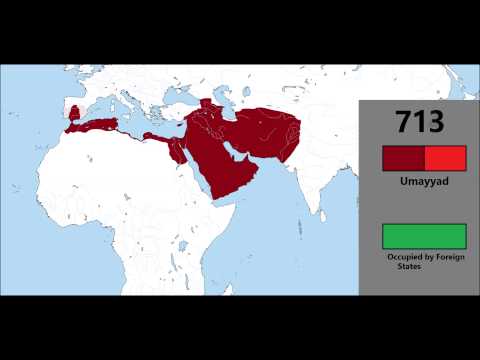
Within a century of the Prophet's death, caliphs in Damascus ruled from the Atlantic coast of Spain to the Indus.
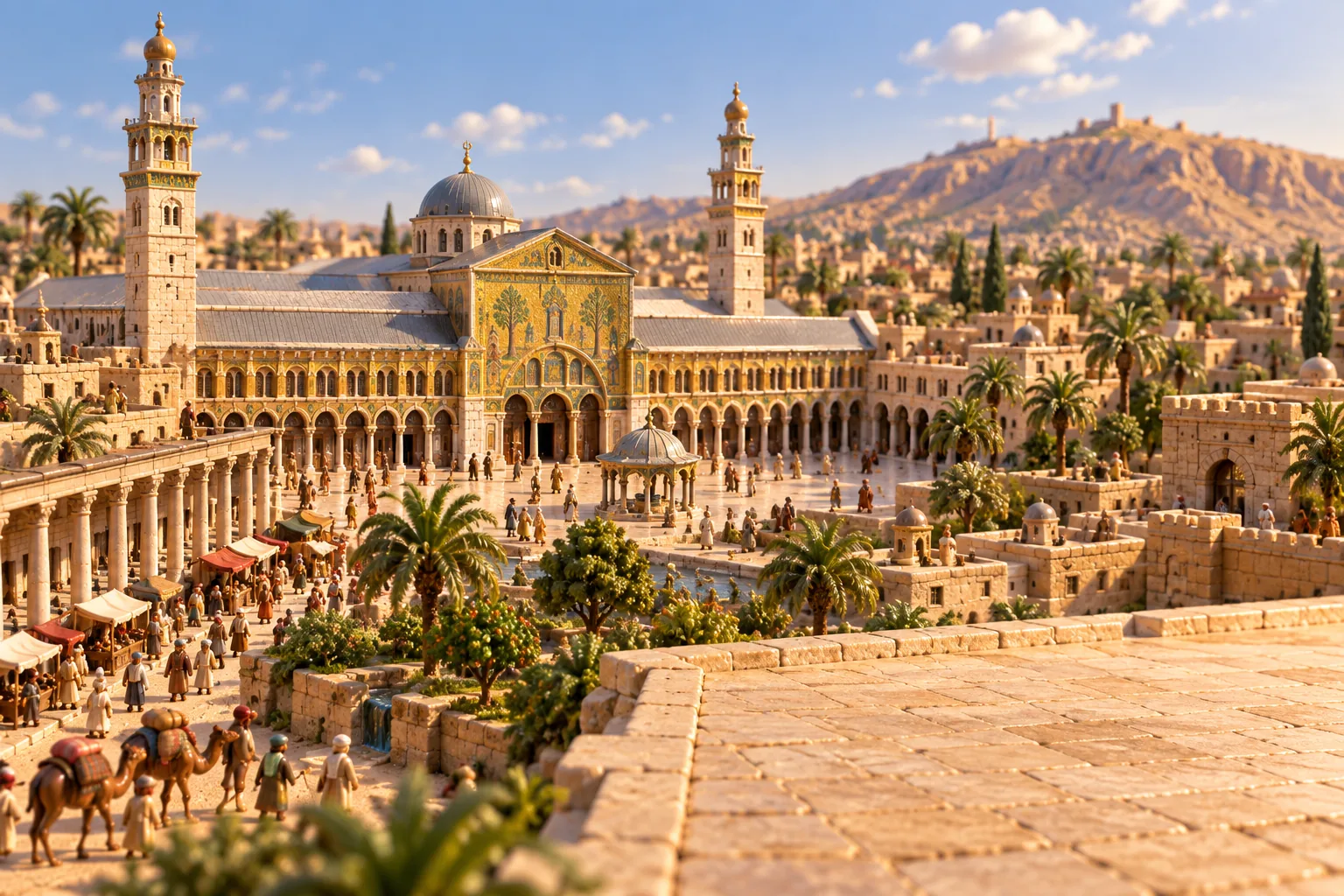
Mu'awiya ibn Abi Sufyan, the long-time governor of Syria, won the First Fitna, the civil war after the murder of the caliph Uthman, and became caliph in 661. He made rule hereditary in his Umayyad family and Damascus the capital. When his son Yazid succeeded him in 680, Muhammad's grandson Husayn rose against him and was killed at the Battle of Karbala, a death still mourned by Shia Muslims.
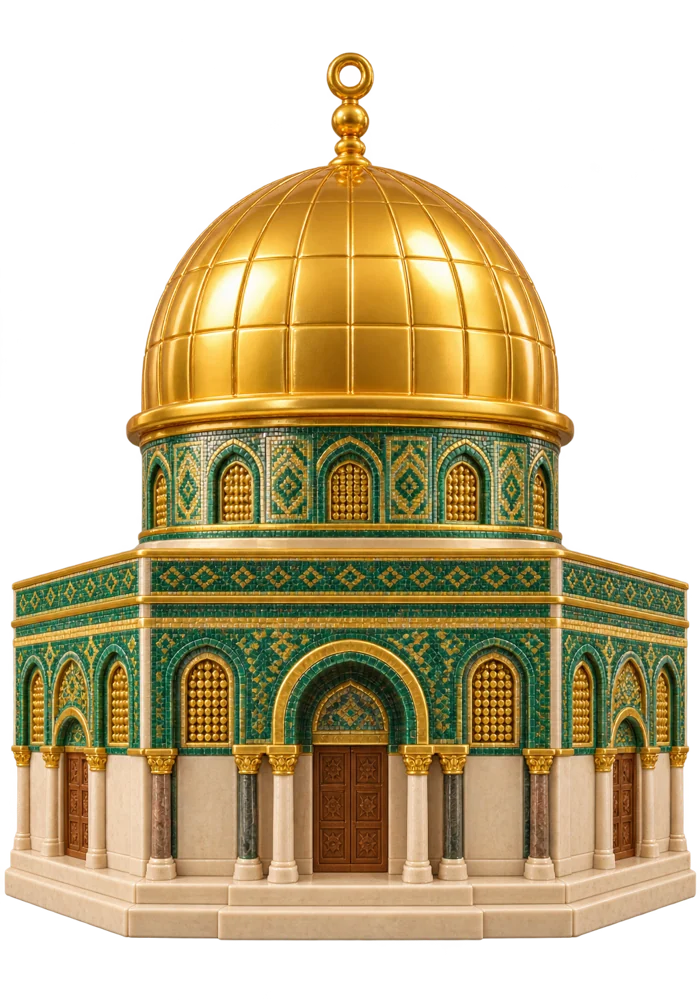
Abd al-Malik, who restored Umayyad control by 692, completed the Dome of the Rock in Jerusalem in 691 or 692, replaced Byzantine gold coins with the dinar and made Arabic the language of government. Umayyad armies kept advancing: Tariq ibn Ziyad invaded Visigothic Spain in 711, Muhammad ibn al-Qasim conquered Sindh in India from 708, and at its greatest extent the caliphate covered 11 to 15 million square kilometres. In the west, expansion stopped after the Franks won at Tours in 732.
Constant war drained the treasury, and tribal feuds and revolts weakened the state. In January 750 the Abbasids defeated the last Umayyad caliph, Marwan II, at the Battle of the Zab, and most of the family was killed. One survivor, Abd al-Rahman I, founded an independent Umayyad state in al-Andalus in 756, with its capital at Córdoba.
Read more on Wikipedia