Prehistory · culture
Ubaid period
Thousands of years before the first cities, farmers in the marshes of southern Iraq were already building temples, digging canals and trading pots down the Gulf.
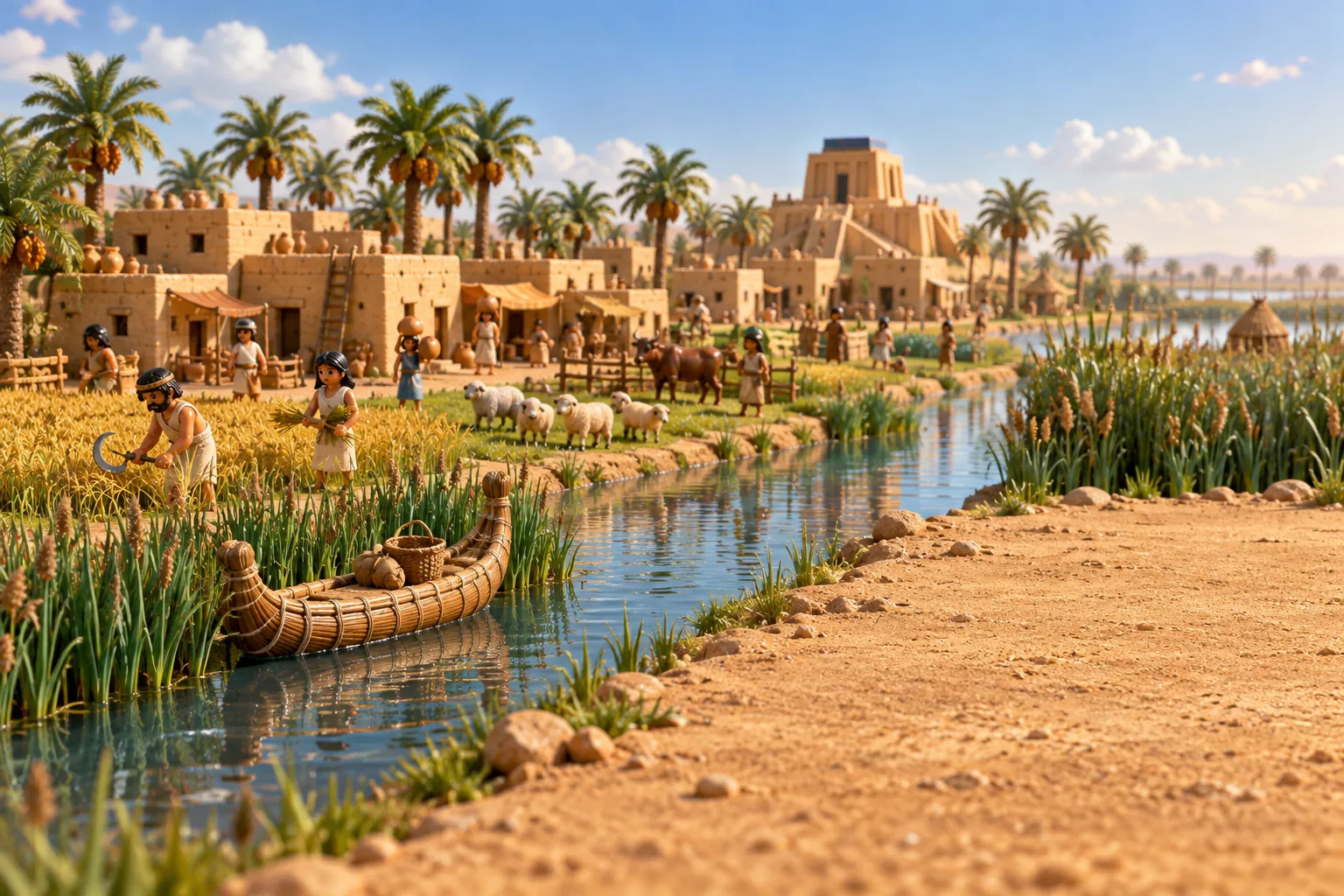
The Ubaid period, from about 6500 to 3800 BC, is the time of the first known settlements on the alluvial plain of southern Mesopotamia, between the lower Tigris and Euphrates. The land then was wetter and greener than today, with marshes, poplars and date palms, and the shore of the Persian Gulf crept north until it reached Ur around 4000 BC. The oldest known Ubaid site is Tell el-'Oueili. The period is named after Tell al-'Ubaid near Ur, dug by Henry Hall in 1919 and Leonard Woolley in 1922–23.
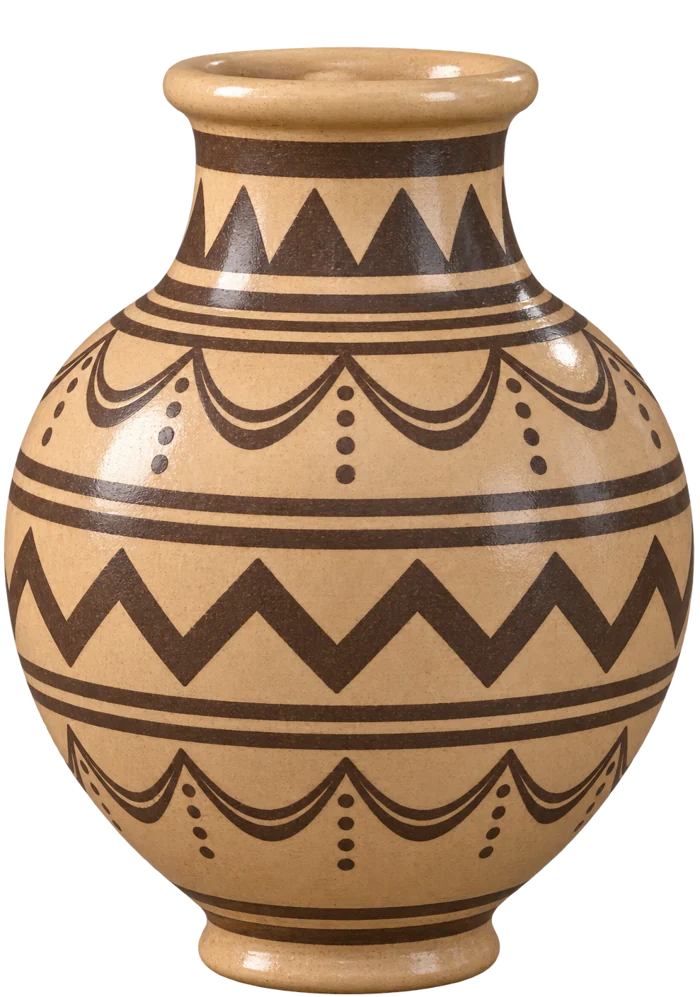
Ubaid people lived in large unwalled villages of many-roomed mud-brick houses and built the first temples of public architecture in Mesopotamia. In the south they farmed with irrigation and the plough, and even made their sickles of hard-fired clay. Potters, weavers and metalworkers worked alongside farmers and herders. Their trademark was fine buff or greenish pottery painted with geometric designs in brown or black, later shaped on a slow potter's wheel. Graves show that some families were becoming richer and more powerful than others.
Ubaid culture spread north into Syria and south-east Turkey and along the Gulf coast, where its pottery was traded as far as the United Arab Emirates. Around 3800 BC it gave way to the Uruk period and the first true cities.
Read more on Wikipedia
Sources: en.wikipedia.org/wiki/Ubaid period