Ancient world · people
Tutankhamun
He was a minor king who died at nineteen and was buried in a borrowed tomb, and that is exactly why his treasure survived.
Tutankhamun was born around 1342 BC, during the reign of Akhenaten, the pharaoh who had replaced Egypt's many gods with the worship of a single sun disc, the Aten. The boy was named Tutankhaten, "living image of Aten". He came to the throne around 1332 BC, still a child, and reigned for about nine years.
His government undid Akhenaten's revolution. The cult of Amun at Thebes was restored, the court left Akhenaten's new capital at Amarna, and the young king and his wife changed their names to Tutankhamun and Ankhesenamun, dropping the Aten. He died around 1323 BC, at about nineteen; in 2012 researchers suggested that malaria combined with a broken leg killed him. His own royal tomb was unfinished, so he was buried in a small tomb adapted for the purpose in the Valley of the Kings. His successors, Ay and then Horemheb, took over his monuments, and the kings of the Amarna period were struck from the record.
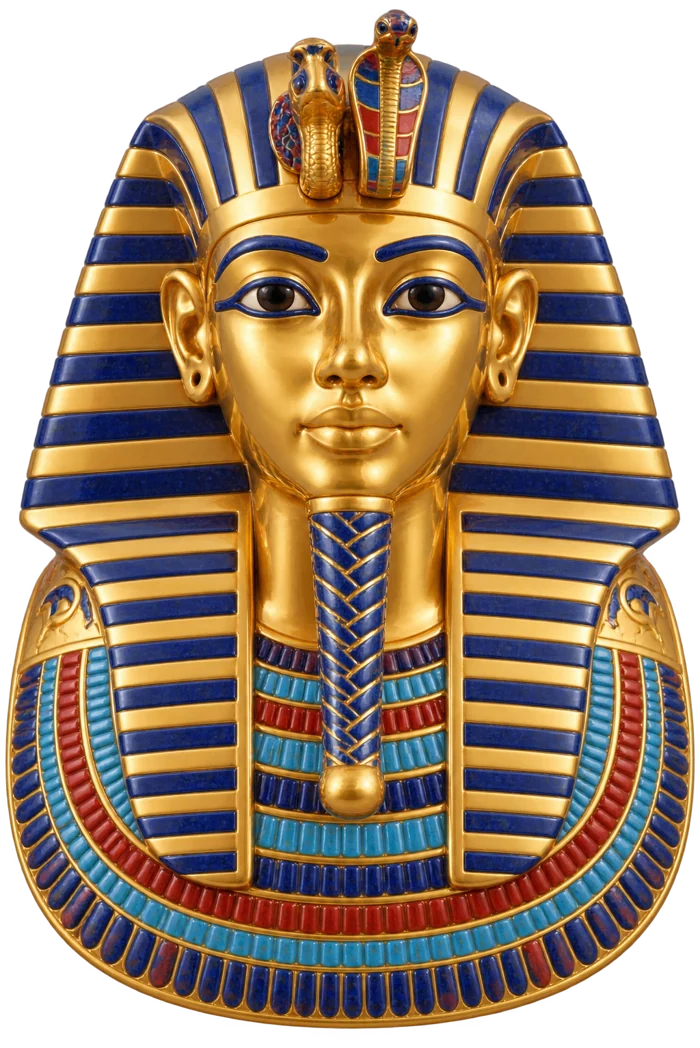
That obscurity protected him. Robbers broke into the tomb at least twice soon after the burial, but over time it disappeared under debris from later tombs, and workmen's huts were built over its entrance. In November 1922 Howard Carter, working for the Earl of Carnarvon, found it. Inside, along with more than 5,000 artefacts, lay the king's undisturbed mummy and the gold mask that has become a symbol of ancient Egypt.
Read more on Wikipedia
Sources: en.wikipedia.org/wiki/Tutankhamun


