Ancient world · war
Trojan War
For centuries scholars treated Troy as pure myth, until a German businessman dug a trench through a hill in Turkey and found city upon city.
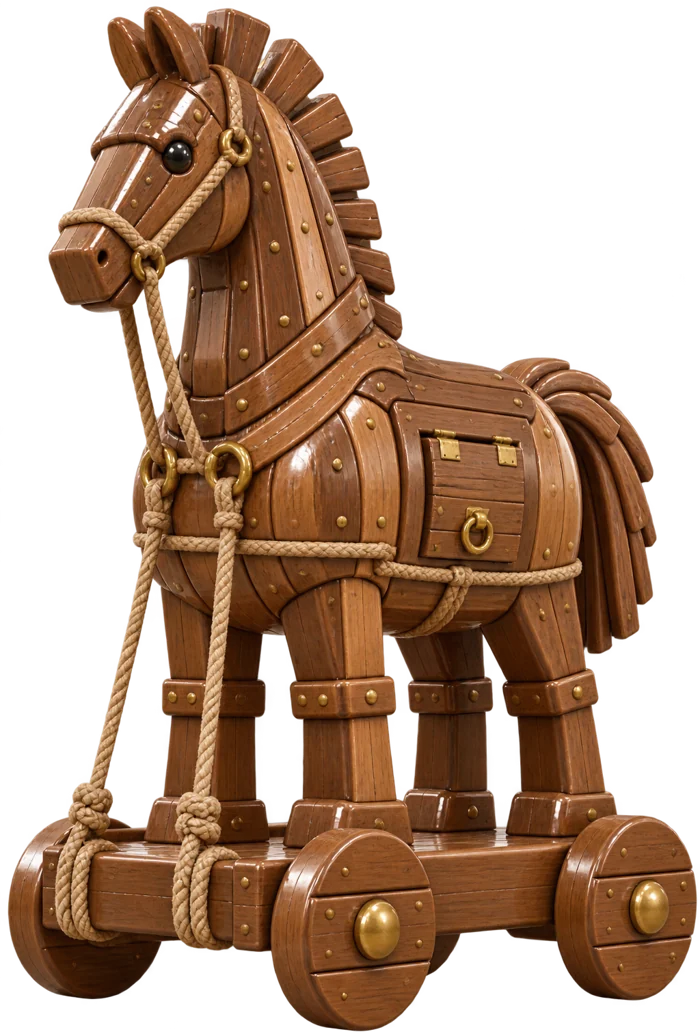
In the Greek legend, the war began when Paris, a prince of Troy, carried off Helen, wife of King Menelaus of Sparta. The Greeks, whom Homer calls Achaeans, sailed to Troy and besieged it for ten years. Heroes died on both sides, Achilles and Ajax among the Greeks, Hector and Paris among the Trojans, until Odysseus devised the trick of a hollow wooden horse and the city fell. Homer's Iliad and Odyssey are the most famous tellings, and the story fed Greek tragedy and Roman poets such as Virgil and Ovid.
The ancient Greeks treated the war as real history and argued about its date: Herodotus put it around 1250 BC, Eratosthenes at 1194–1184 BC. By the nineteenth century most scholars thought both the war and the city were invented. Then, in 1868, the German businessman Heinrich Schliemann met Frank Calvert, who believed Troy lay under the mound of Hisarlık near the Dardanelles. From 1871 they excavated it and found the ruins of a series of cities built one on top of another.
Most scholars now accept Hisarlık as Troy. Hittite records mention a city in this part of Anatolia called Wilusa, which matches the Greek name Ilios. In layers from the early twelfth century BC archaeologists found bronze arrowheads and fire-damaged human remains. Whether there was ever one Trojan War is still an open question; the legend may blend memories of many Bronze Age raids and sieges. The site has been on the UNESCO World Heritage list since 1998.
Read more on Wikipedia
Sources: en.wikipedia.org/wiki/Trojan War, en.wikipedia.org/wiki/Troy