Industrial age · politics
Treaty of Versailles
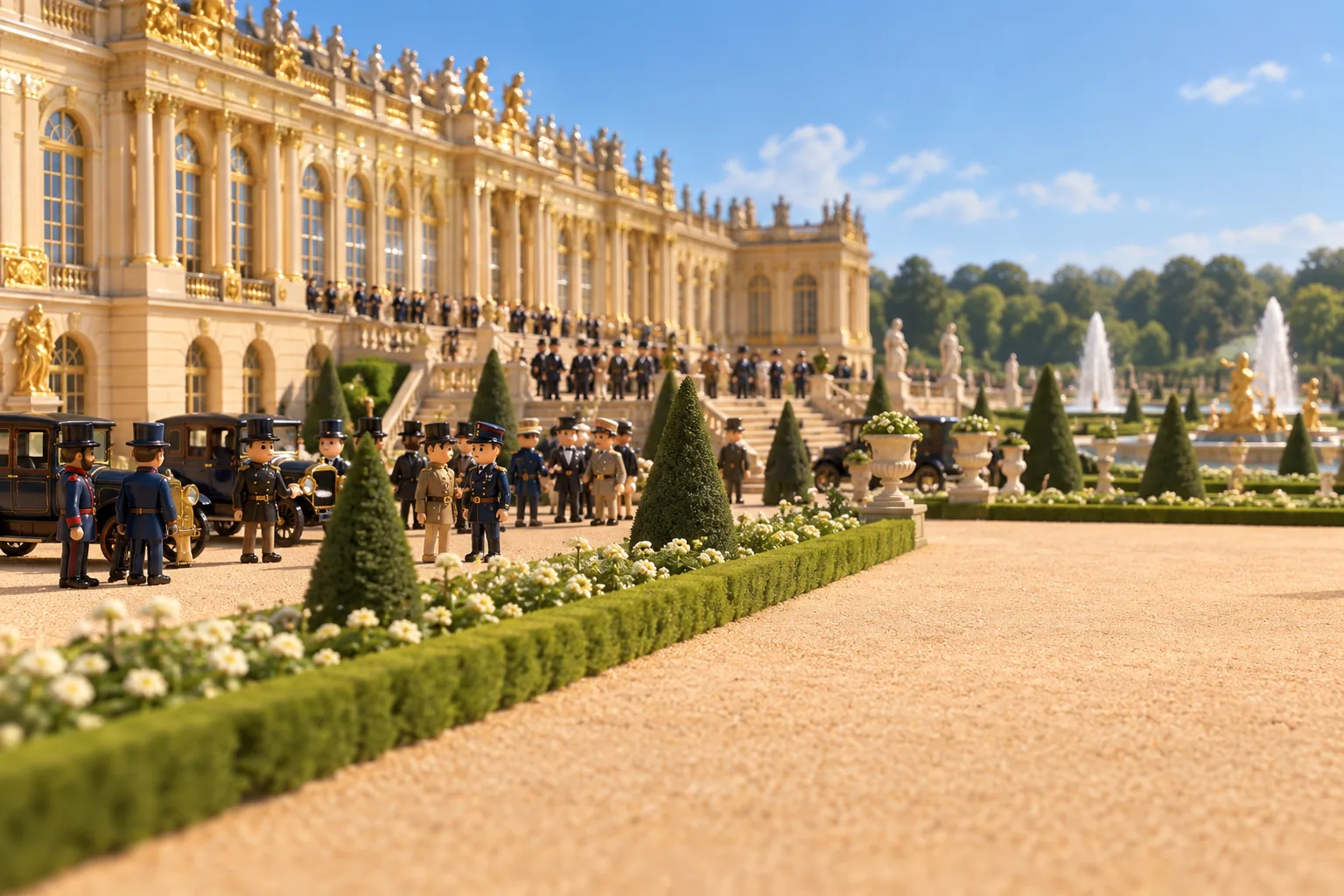
France chose to sign the peace in the very room where, 48 years earlier, the German Empire had been proclaimed.
The armistice of 11 November 1918 stopped the fighting of World War I, but writing the peace took six months of talks at the Paris Peace Conference. The decisions were made by the "Big Four": Georges Clemenceau of France, David Lloyd George of Britain, Woodrow Wilson of the United States and Vittorio Emanuele Orlando of Italy. Wilson came with his Fourteen Points, which called for self-determination and a League of Nations; Clemenceau wanted security against Germany. Germany itself was not allowed to take part in the negotiations.
The treaty was signed on 28 June 1919, five years to the day after the assassination of Archduke Franz Ferdinand, in the Hall of Mirrors at Versailles, where the German Empire had been proclaimed in 1871. Hermann Müller and Johannes Bell signed for Germany. It returned Alsace-Lorraine to France, cut the German army to 100,000 men, demilitarised the Rhineland under Allied occupation for fifteen years and took away Germany's colonies. Article 231, the "War Guilt" clause, made Germany accept responsibility for all the loss and damage of the war, and Germany was to pay reparations.
The economist John Maynard Keynes called it a "Carthaginian peace", far too harsh, while Marshal Ferdinand Foch thought it far too lenient. The United States never ratified it. Bitter resentment of the treaty in Germany fed the rise of the Nazi Party and the road to another world war.
Read more on Wikipedia