Middle Ages · state
Toltecs
Its capital Tula is guarded by stone warriors four metres tall, and the later Aztecs held the Toltecs up as the model of civilization.
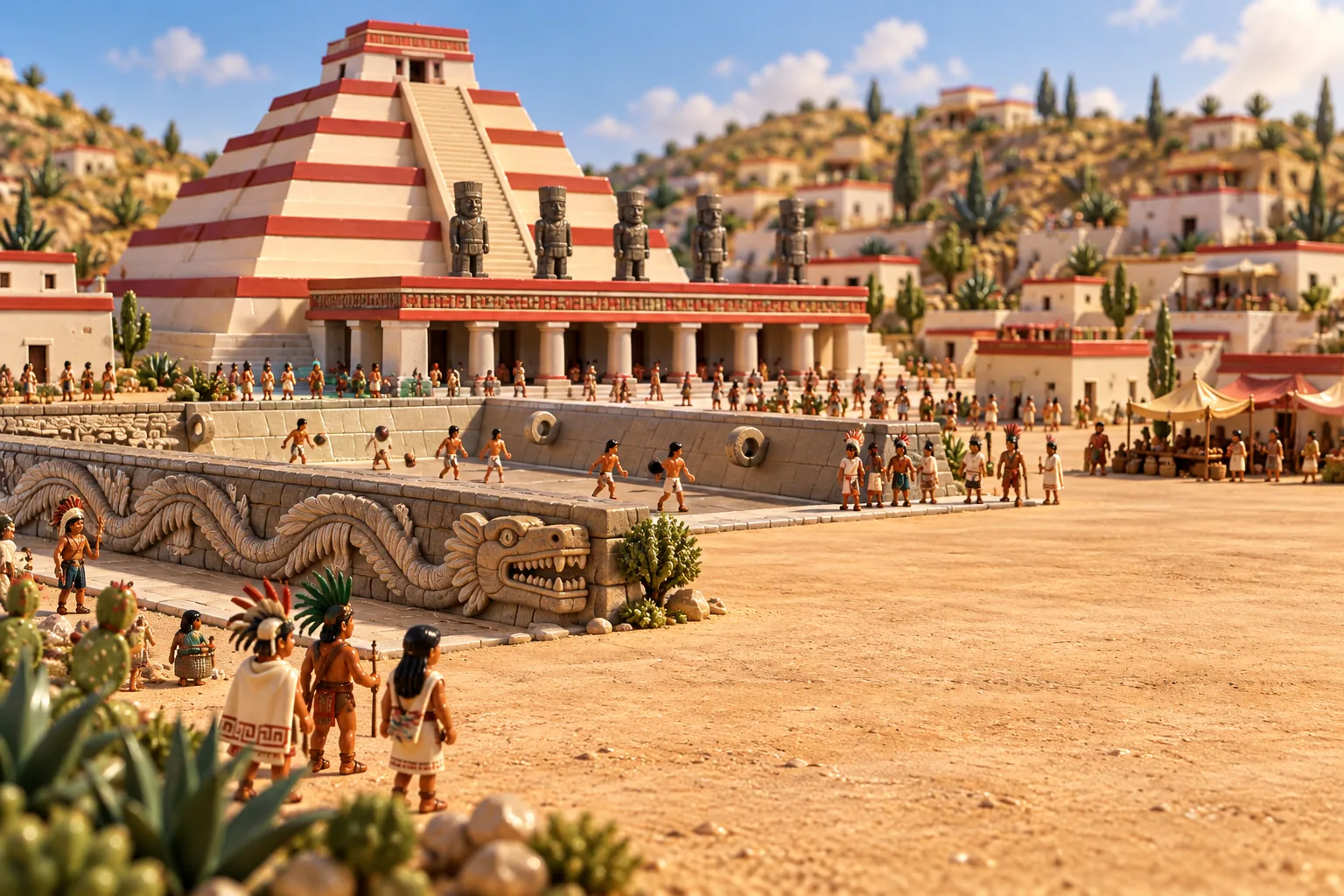
After the fall of Teotihuacan, the city of Tula in today's state of Hidalgo became the leading power of central Mexico, at its height between about 900 and 1150. Its name comes from Tollan Xicocotitlan, near the cattails. At its peak the city covered some 14 square kilometres with about 60,000 people, and pottery and buildings show influences from many directions, suggesting a mixed population.
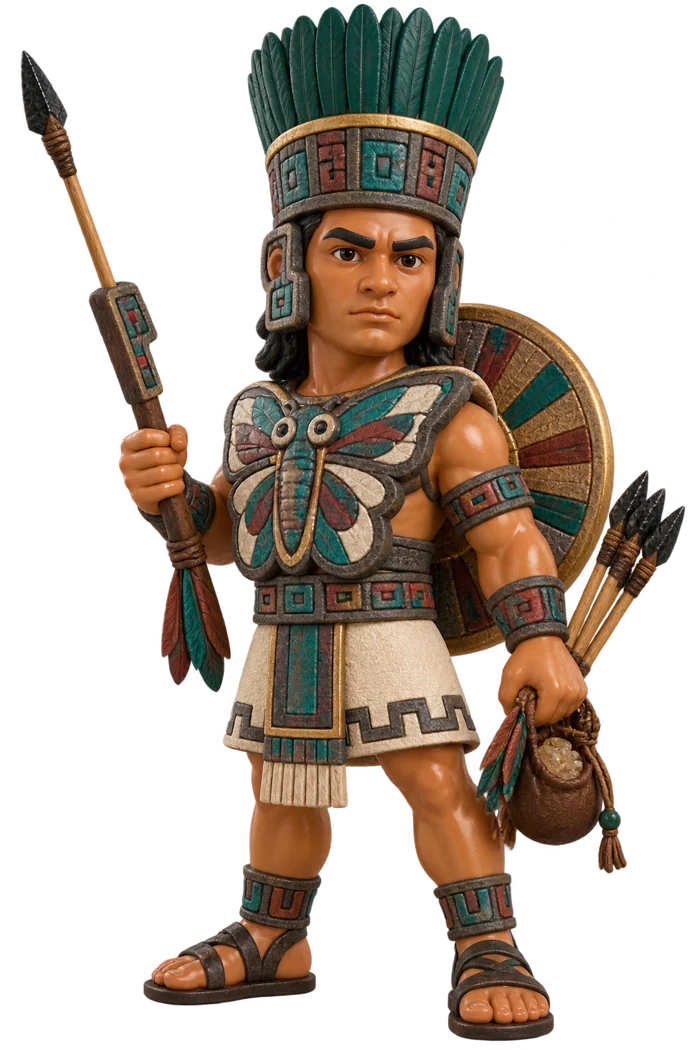
The ceremonial centre held two pyramids, two large ballcourts and colonnaded halls facing a great plaza. On top of the five-tiered Pyramid B, the Pyramid of Quetzalcoatl, stand four basalt warriors four metres high, holding spear-throwers and wearing butterfly-shaped breastplates, and a serpent wall, the Coatepantli, runs around it. The same style appears at the Maya city of Chichen Itza far to the east, and scholars still argue about why.
Tula's ceremonial centre was burned in the 12th century and many homes were abandoned by 1150. Aztec legend told of a priest-king, Ce Acatl Topiltzin Quetzalcoatl, who gave in to the temptations of the dark god Tezcatlipoca and so brought the city to ruin. The Aztecs remembered the Toltecs as the source of all arts and skills.
Read more on Wikipedia
Sources: en.wikipedia.org/wiki/Toltec, en.wikipedia.org/wiki/Tula (Mesoamerican site)

