Industrial age · state
Tokugawa shogunate
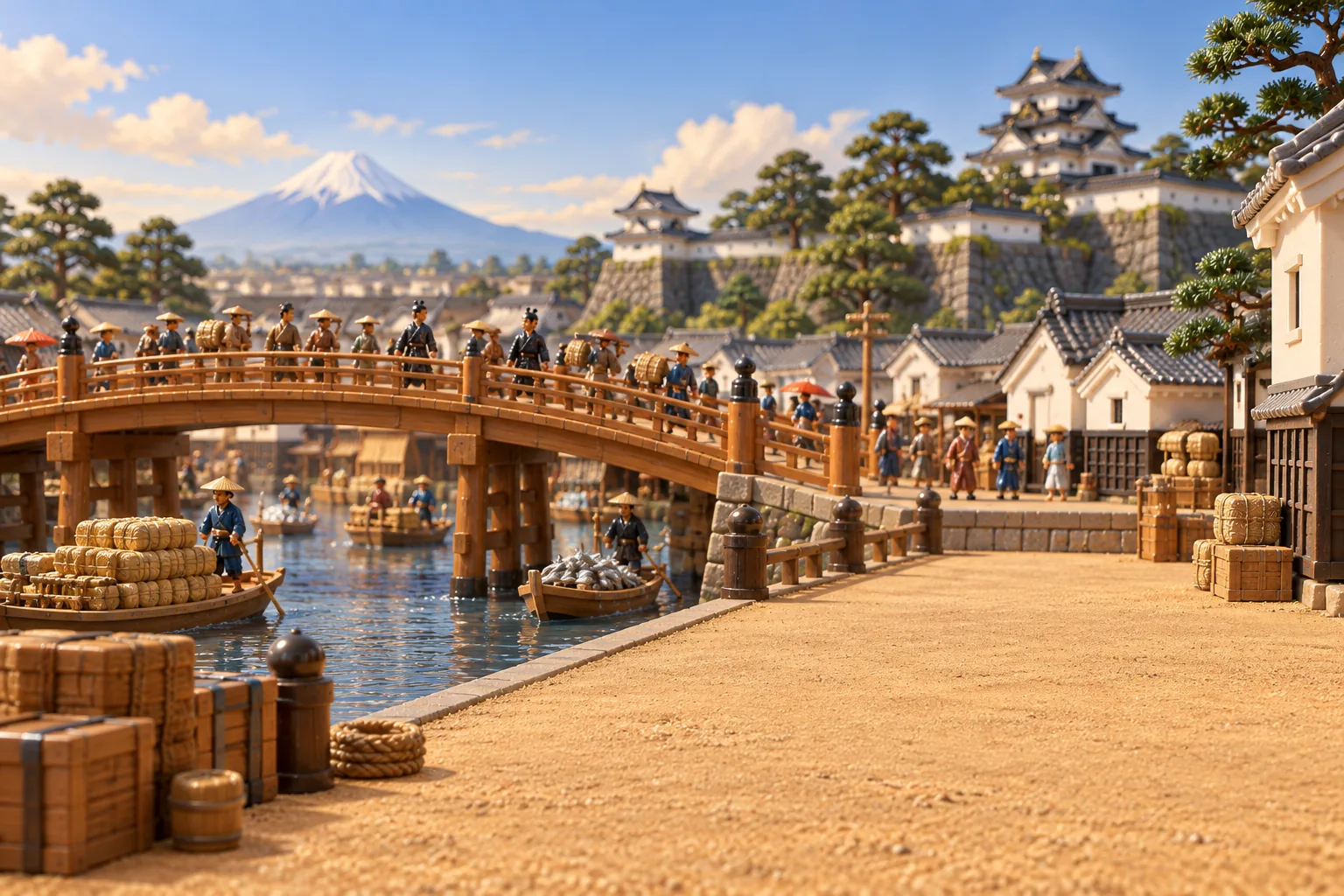
For more than two centuries the shoguns kept Japan almost closed, letting only the Dutch trade with Europe from a small island in Nagasaki harbour.
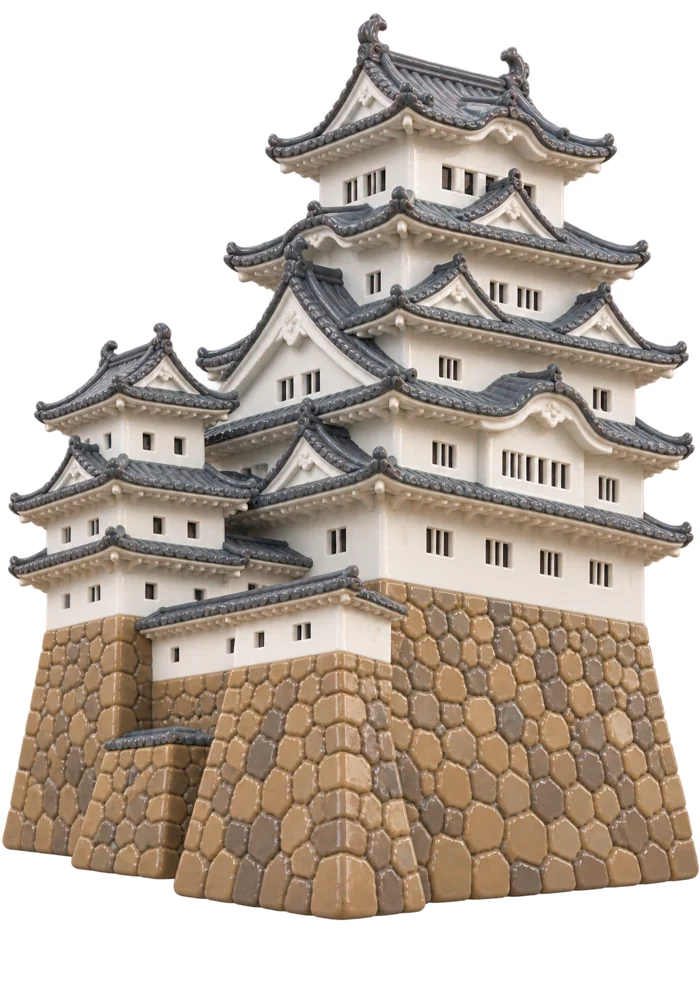
In 1600 Tokugawa Ieyasu won the Battle of Sekigahara, ending the civil wars of the Sengoku period. He became shōgun in 1603 and governed from Edo Castle in Edo, today's Tokyo, while the emperor kept only nominal authority. After the Siege of Osaka in 1615 destroyed the rival Toyotomi clan, Japan entered a long peace.
Around 270 daimyō lords ran their own domains, but the sankin-kōtai system made each of them live in Edo every other year and leave his family there as hostages. Ieyasu banned Catholicism in 1614, and between 1633 and 1639 Tokugawa Iemitsu issued the sakoku edicts: most foreigners were kept out, Japanese could not leave, and the only Europeans allowed to trade were the Dutch on Dejima in Nagasaki. Peace brought growth and a growing merchant class. In the Genroku period (1688–1704) Moronobu helped launch ukiyo-e prints, and by 1800 Edo, with over a million people, was probably the largest city in the world.
In 1853 a United States Navy fleet under Matthew C. Perry forced Japan to open to Western trade. Anti-foreign anger grew, and an alliance of daimyō and the emperor turned against the shogunate. The 15th shōgun, Tokugawa Yoshinobu, gave up power, and in 1868 the Meiji Restoration brought back imperial rule. Loyalists fought on in the Boshin War until the Republic of Ezo fell at Hakodate in June 1869.
Read more on Wikipedia
Sources: en.wikipedia.org/wiki/Tokugawa shogunate, en.wikipedia.org/wiki/Sakoku


