Middle Ages · state
Timurid Empire
A warlord who could not claim Genghis Khan's blood married into it, conquered from Delhi to Anatolia and made Samarkand the jewel of Central Asia.
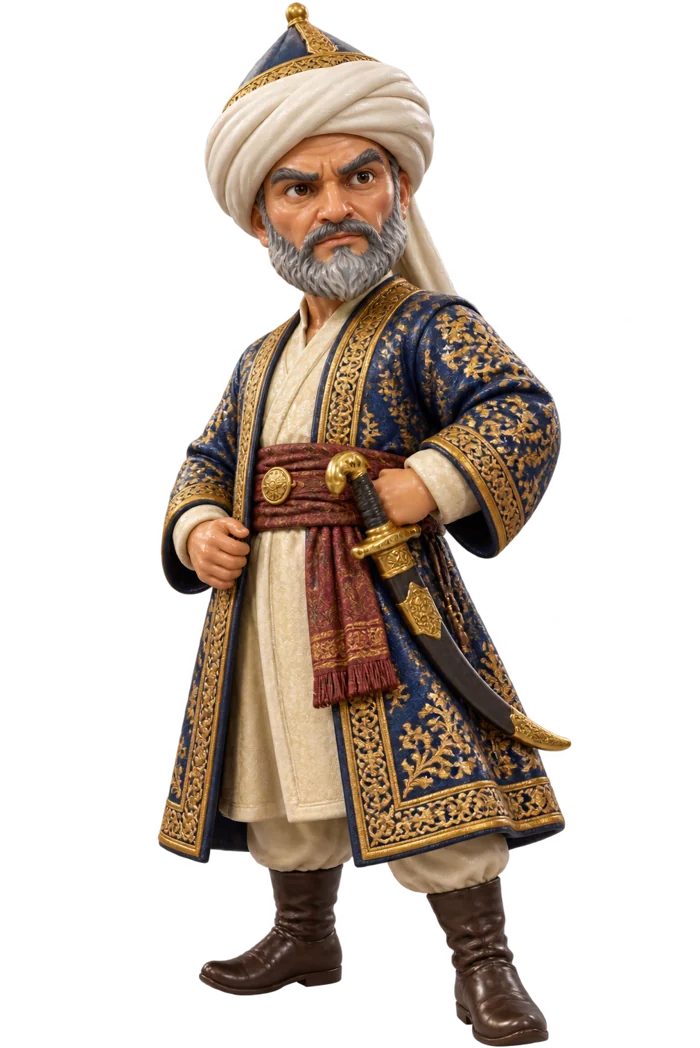
Timur, known in Europe as Tamerlane, came from the Barlas, a Mongol tribe that had become Turkic. He took power in 1370 and saw himself as the restorer of Genghis Khan's empire. Unable to claim descent from Genghis, he married the Genghisid princess Saray Mulk Khanum and styled himself Gurkani, son-in-law. He fought his great rival Tokhtamysh of the Golden Horde, took Herat by 1389 and pushed deep into Persia.
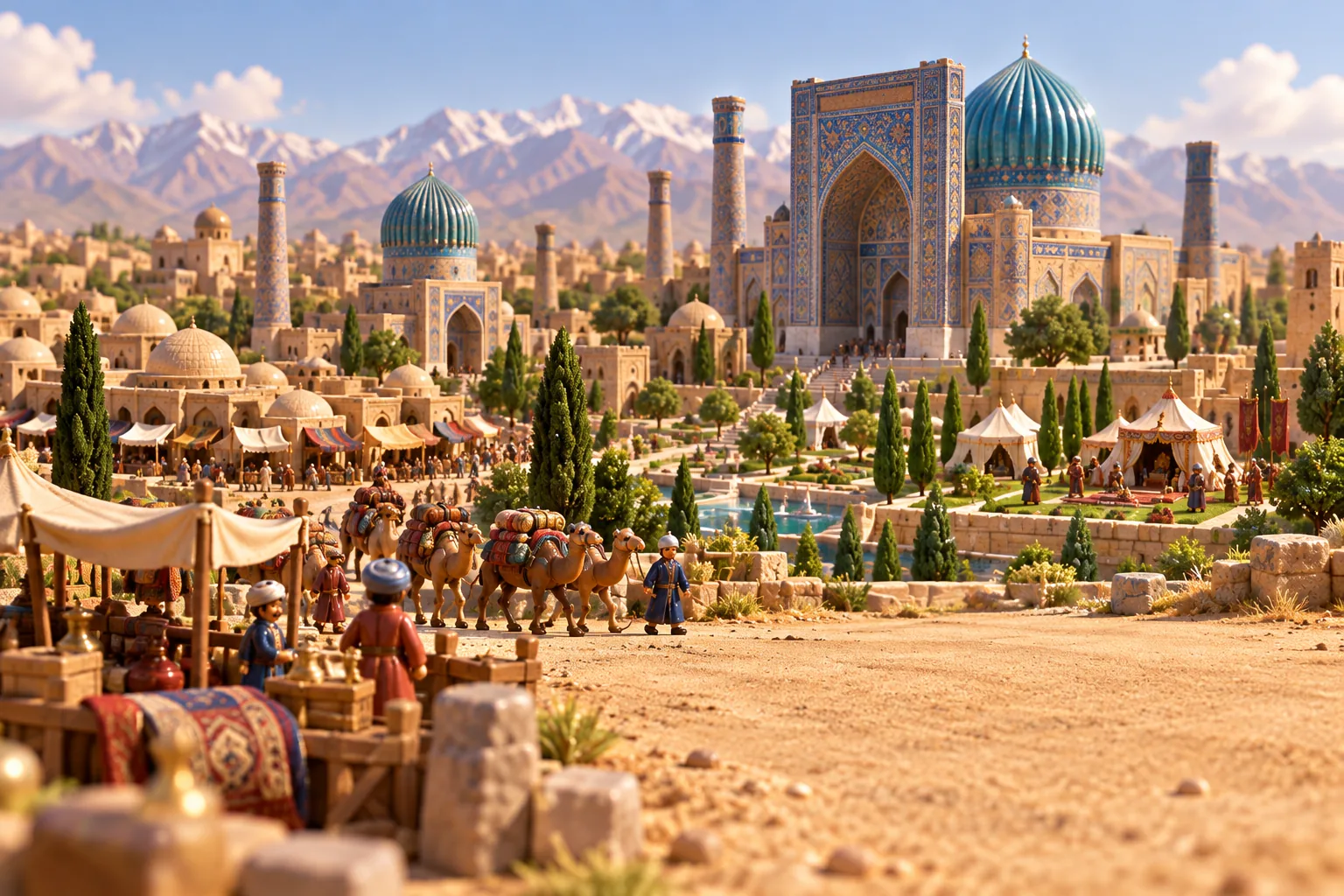
In December 1398 he defeated the armies of the Delhi Sultanate. In 1400 and 1401 he conquered Aleppo and Damascus, where the historian Ibn Khaldun met him, and he destroyed Baghdad in 1401. In 1402 he defeated the Ottomans at the Battle of Ankara. Samarkand, his capital, gained the Bibi-Khanym Mosque, built from 1399 to 1404, and Chinese diplomats from the Ming court travelled there. Timur died in 1405.
His son Shahrukh, who reigned until 1447, presided over a Timurid Renaissance of art and learning. Shahrukh's son Ulugh Beg, an astronomer and mathematician, ruled from Samarkand until his own son Abdal-Latif rebelled and had him executed in 1449. The Timurids lost most of Persia, but Husayn Bayqara's Herat flourished until 1506. By 1507 the Uzbeks of Shaybani Khan had taken Samarkand and Herat, and the Timurid prince Babur went on to found the Mughal Empire in India.
Read more on Wikipedia
Sources: en.wikipedia.org/wiki/Timurid Empire


