Middle Ages · state
Tibetan Empire
Tibetan armies took the Tang capital Chang'an in 763, and a pillar recording their 821 peace treaty still stands in Lhasa.
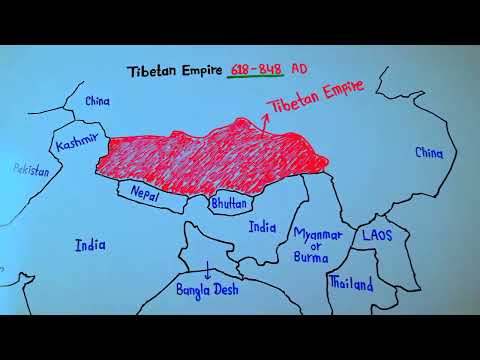
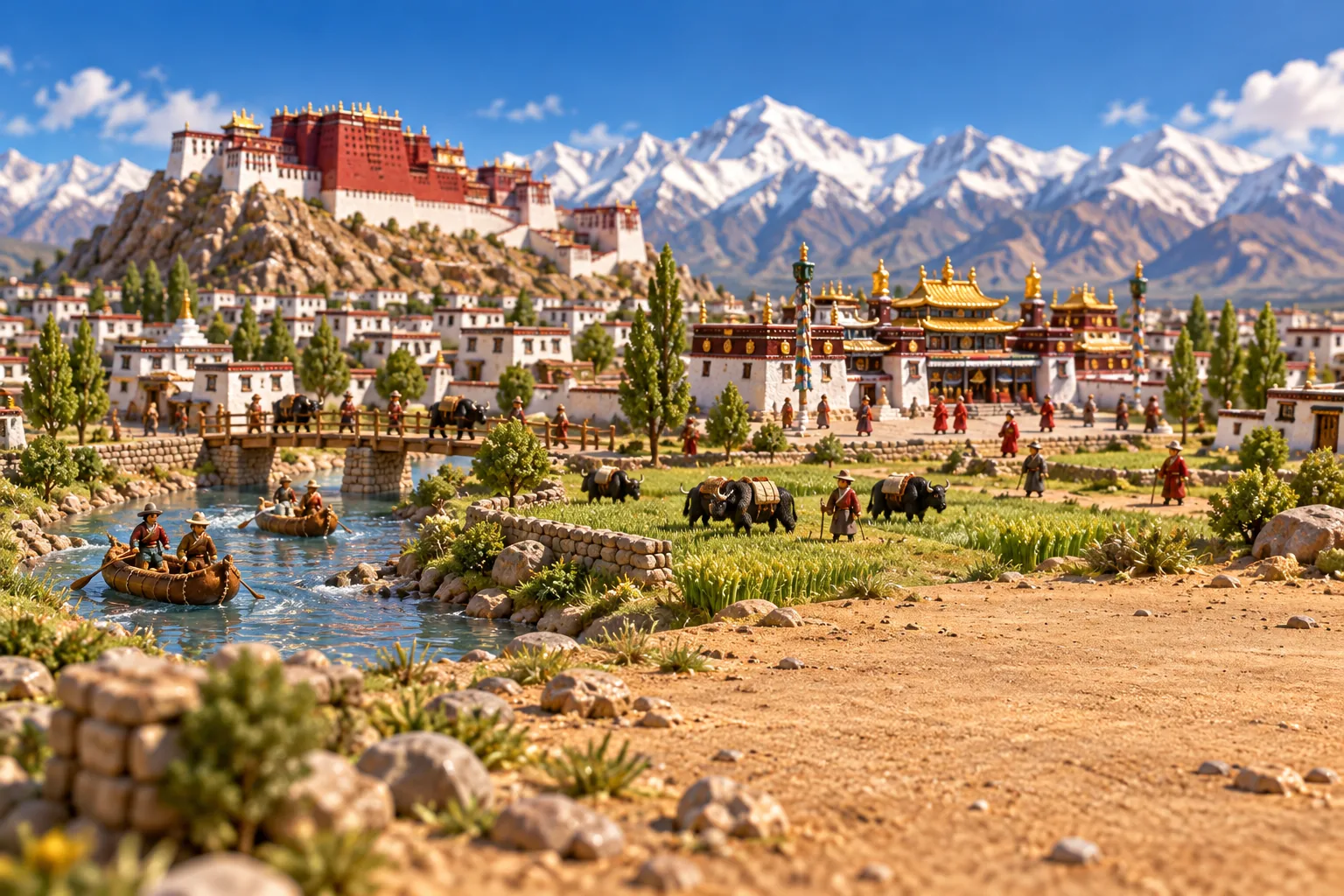
The Tibetan Empire grew out of the kingdom of the Yarlung valley. Songtsen Gampo, the 33rd king of the Yarlung dynasty, built it in the 7th century and moved the capital to Lhasa, where the kings later lived in the Red Fort. The Tibetan script was created during his reign, and in 640 the Chinese princess Wencheng set out from China to marry him.
When the An Lushan rebellion weakened Tang China, Tibetan armies pressed into its lands and reached the Tang capital Chang'an in late 763. Under Trisong Detsen the empire grew still larger, and Buddhism took root in Tibet. At its greatest extent it stretched east to Chang'an, west beyond modern Afghanistan and south into India as far as the Bay of Bengal. Under Tride Songtsen it fought a long war with the Abbasid Caliphate in the west.
A treaty in 783 fixed the border with China, but fighting went on until the Sino-Tibetan treaty of 821, inscribed in Lhasa in 823 on a bilingual stone pillar that still stands outside the Jokhang temple. In 838 King Tritsuk Detsen was murdered by his brother Langdarma, who turned on the Buddhist monasteries. Langdarma's own assassination in 842 began the break-up of the empire.
Read more on Wikipedia
Sources: en.wikipedia.org/wiki/Tibetan Empire