
Our time · politics
1989 Tiananmen Square protests and massacre
At the height of the protests, about a million people stood in Tiananmen Square, and in China the events are still among the most heavily censored subjects.
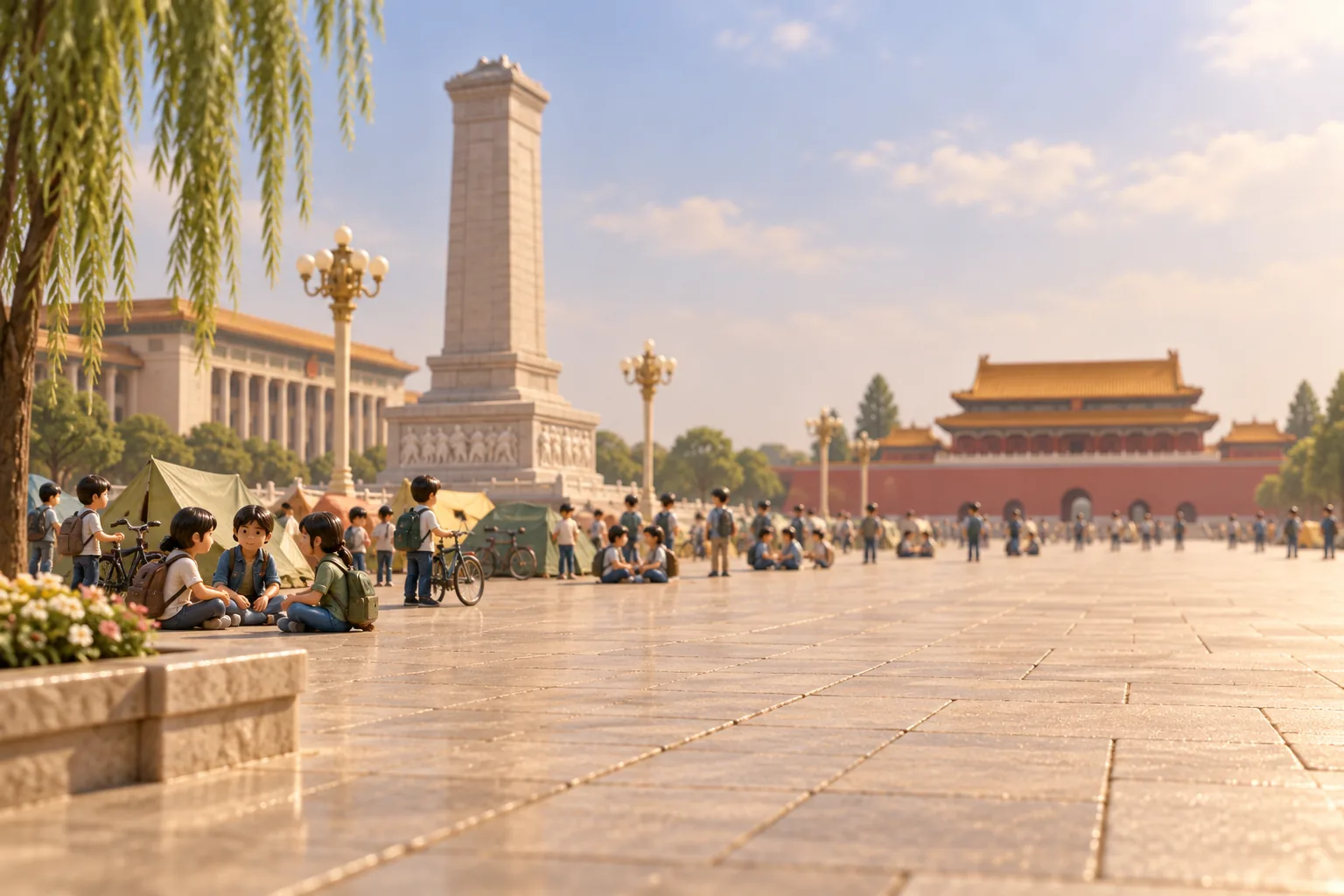
In April 1989 Hu Yaobang, a reform-minded former head of the Chinese Communist Party, died, and students gathered in Tiananmen Square in Beijing to mourn him. The mourning turned into protest. China's economy was changing fast, and people were angry about inflation, corruption and the loss of the lifetime "iron rice bowl" jobs. Students called for democracy, a free press and free speech; workers protested about prices and economic reforms. On 13 May students began a hunger strike, two days before a state visit by the Soviet leader Mikhail Gorbachev. On 17 May about a million people filled the square, and protests spread to some 400 cities.
The party leadership was divided. On 19 May the party chief Zhao Ziyang went to the square to see the students, his last public act in power. The next day martial law was declared, but crowds of ordinary Beijing residents blocked the army's way without violence. On 30 May students put up a 10-metre Goddess of Democracy made of foam and papier-mâché. On 1 June the leaders decided to clear the square.
In the early hours of 4 June troops forced their way into central Beijing along the main roads, and most of the killing took place along Chang'an Avenue in the western suburbs. Estimates of the dead range from several hundred to the low thousands. Mass arrests followed, political reform stopped, and Zhao Ziyang spent the rest of his life under house arrest.
Read more on Wikipedia
Sources: en.wikipedia.org/wiki/1989 Tiananmen Square protests and massacre