Early modern · politics
The Tokugawa shoguns
After more than a century of civil war, one family ruled Japan from Edo for 265 years, kept the samurai at peace and let almost no foreigners in.
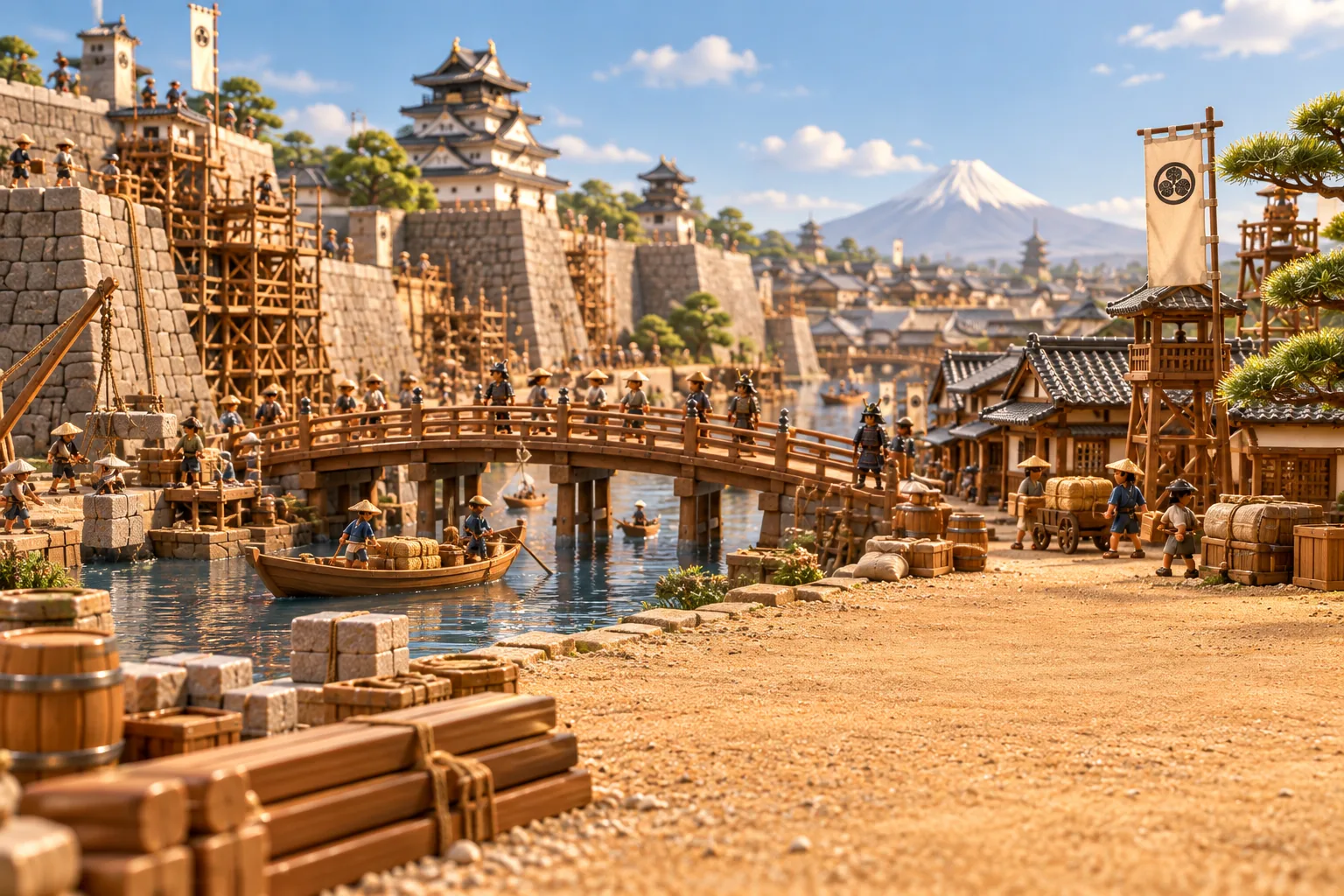
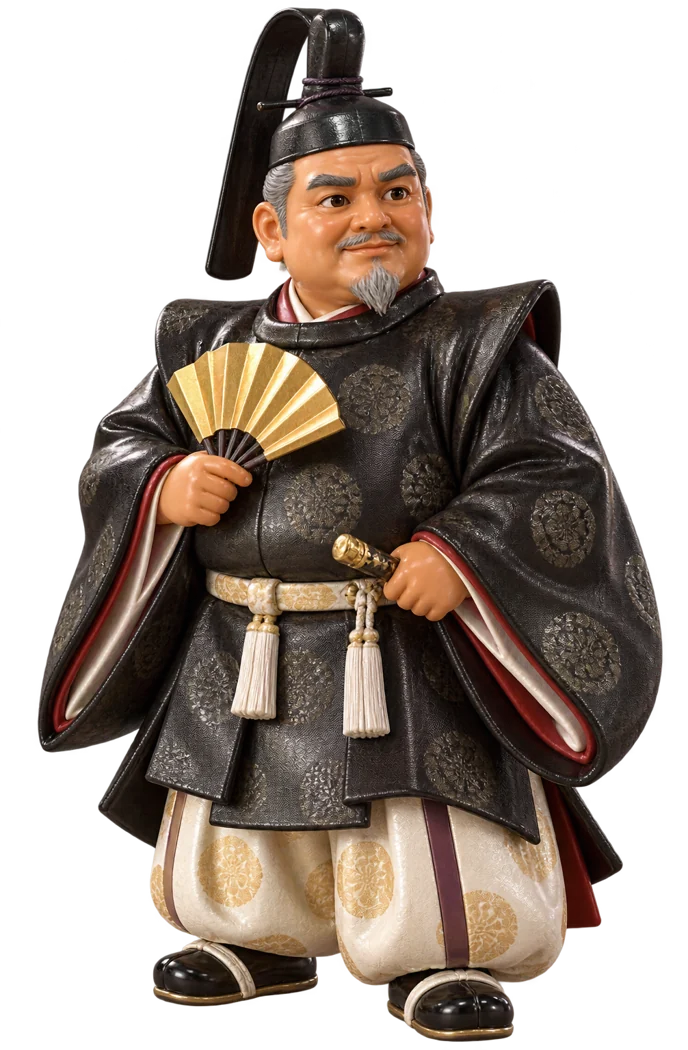
In 1600 Tokugawa Ieyasu defeated his rivals at the Battle of Sekigahara, and on 24 March 1603 Emperor Go-Yōzei named him shōgun. He was 60 and had outlived every other great warlord of his age. Two years later he passed the title to his son Hidetada while keeping real power, and in 1615 he crushed the last rival house, the Toyotomi, at Osaka. Edo, his castle town, became the real centre of power, while the emperor stayed in Kyoto.
The shoguns governed through some 300 regional lords, the daimyo, and kept them on a short leash. From 1635 each lord had to spend alternate years in Edo, and his family had to live there permanently. Fearing Christianity and foreign meddling, the shogunate expelled foreigners by 1639. Only Dutch traders remained, confined to the small artificial island of Dejima in Nagasaki harbour, while Chinese merchants were given a walled quarter in the same city.
Peace turned samurai into administrators and let the towns boom. By the mid-18th century Edo had more than a million people, likely the largest city in the world. Merchants grew rich, neighbourhood schools taught commoners to read, and kabuki theatre and ukiyo-e woodblock prints flourished. The isolation ended in 1853, when the American Commodore Matthew Perry forced Japan open to Western trade, and in 1868 the Meiji Restoration returned power to the emperor.
Read more on Wikipedia
Sources: en.wikipedia.org/wiki/Edo period, en.wikipedia.org/wiki/Tokugawa Ieyasu
