Antiquity · exploration
The Silk Road
The man who opened China to the West set out with about a hundred companions, spent thirteen years as a slave of the nomads, and came home with just one.
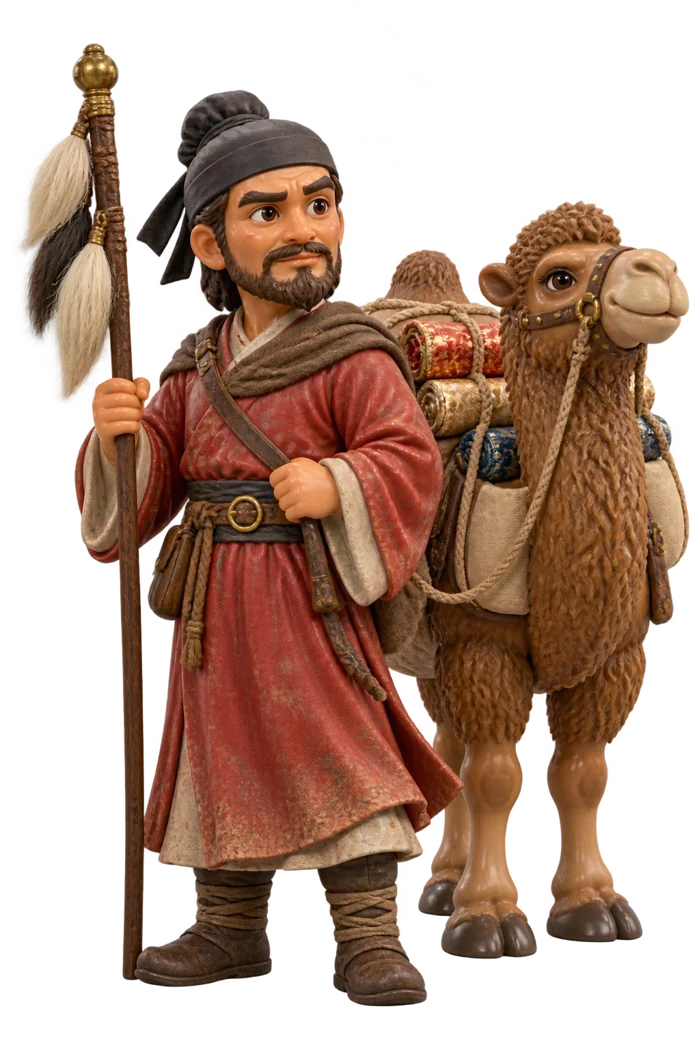
In 138 BC the Han emperor Wu sent an officer, Zhang Qian, west with a party of about a hundred men. His task was to find the Yuezhi, a people driven out by the Xiongnu nomads, and win them as allies. The Xiongnu caught him on the way and held him for thirteen years. He married a Xiongnu wife, had a son, and in the end escaped with his guide Ganfu, crossing the Tarim Basin to Fergana and on to the Yuezhi, who had settled down and no longer wanted war.
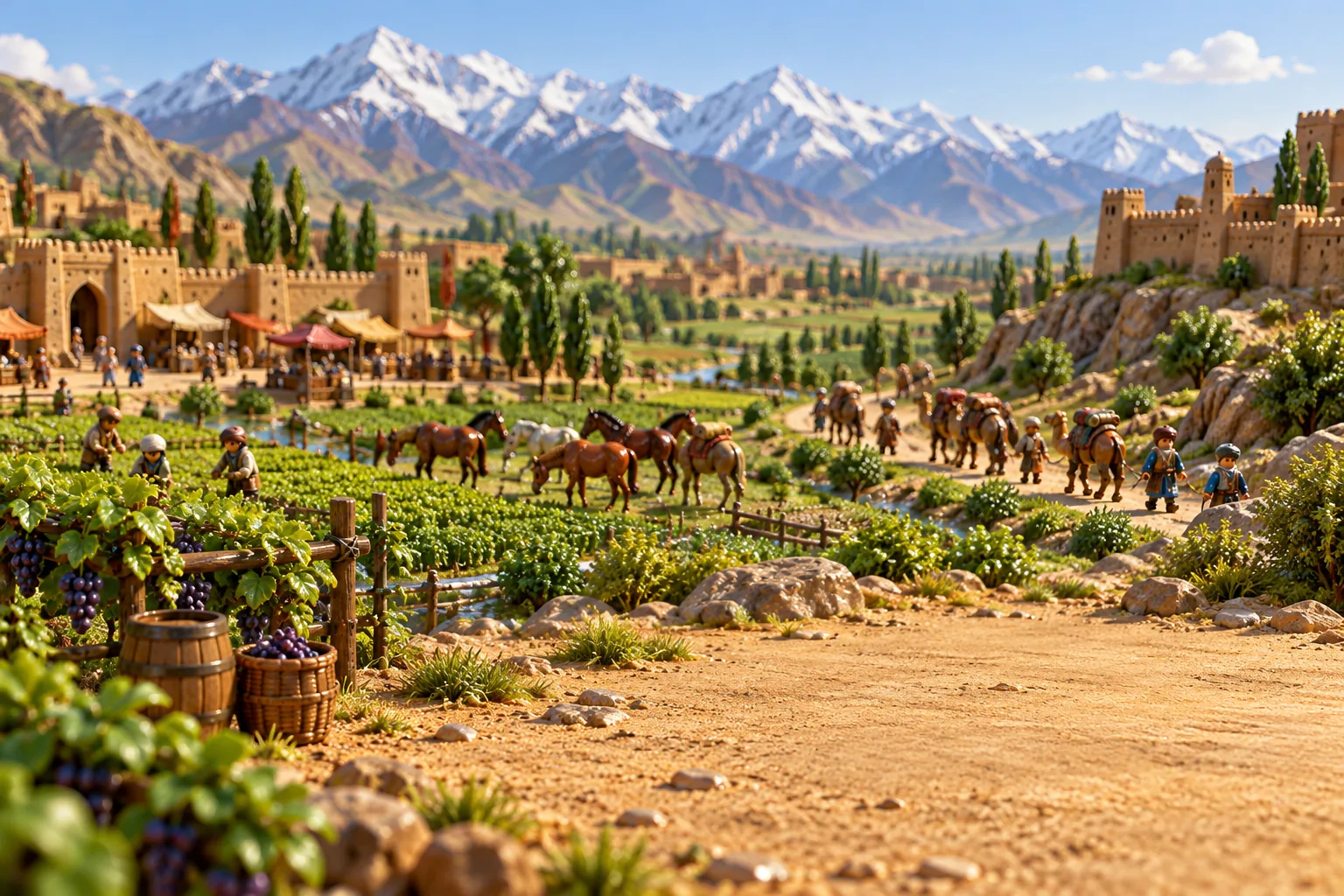
The alliance failed, but what Zhang Qian saw changed China's view of the world. When he finally got home in 125 BC, only he and Ganfu were left of the whole mission. He told the emperor of rich cities in Fergana, Bactria and Parthia that grew wheat and made wine from grapes, and of tall, powerful 'heavenly horses' that China wanted for its cavalry. Han embassies, around ten a year, began heading west, and Han armies followed, defeating the Xiongnu and pushing into Central Asia.
Han China extended the Great Wall to guard the new road. Through Parthian middlemen, Chinese silk reached the Mediterranean, and by the first century AD it was in demand in Rome, Egypt and Greece. Few people travelled the whole way. Goods passed from trader to trader, and along with silk, horses and gold came ideas: Buddhism reached China this way.
Read more on Wikipedia
Sources: en.wikipedia.org/wiki/Silk Road, en.wikipedia.org/wiki/Zhang Qian


