
Ancient world · culture
The alphabet travels
Phoenician merchants sailed the Mediterranean with a script of just 22 letters, and the Greeks who borrowed it added the one thing it lacked: vowels.
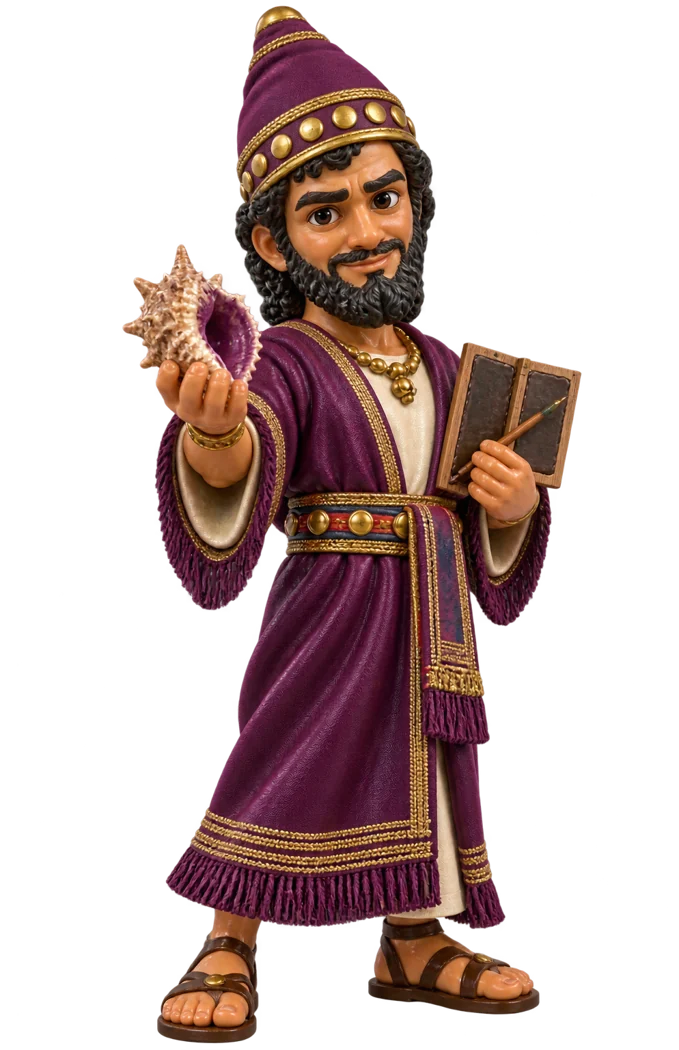
Writing had long belonged to experts. Cuneiform and Egyptian hieroglyphs used hundreds of complex signs and took years of training, so reading and writing stayed with a small elite of scribes. The Phoenicians, a trading people of the coast of today's Lebanon, used something far simpler: 22 letters, one for each consonant sound, written from right to left. Theirs was the first script with a fixed direction. It grew out of the Proto-Sinaitic script, which had in turn borrowed shapes from hieroglyphs. Each letter took its sound from a word: the sign for a house was called bet, so it stood for b.
The sarcophagus of King Ahiram at Byblos, from around 1000 BC, already shows the script fully formed. Phoenician ships carried it to their colonies around the Mediterranean, and in Carthage it was used until the 2nd century BC. From the 9th century BC other peoples adapted it, the Greeks among them. Greek needed written vowels, so the Greeks turned Phoenician letters for sounds they did not have into vowels: alp, a throat sound, became the vowel a, he became e, yod became i.
From the Greek letters came the Latin alphabet, through the Etruscans and other Italic scripts, and later Cyrillic. Another branch, Aramaic, gave rise to the Hebrew and Arabic scripts. The letters on this page are distant descendants of the ones Phoenician traders carried from port to port.
Read more on Wikipedia