Antiquity · state
Teotihuacan
Its Pyramid of the Sun is among the largest in the Americas, yet nobody knows what language its builders spoke.
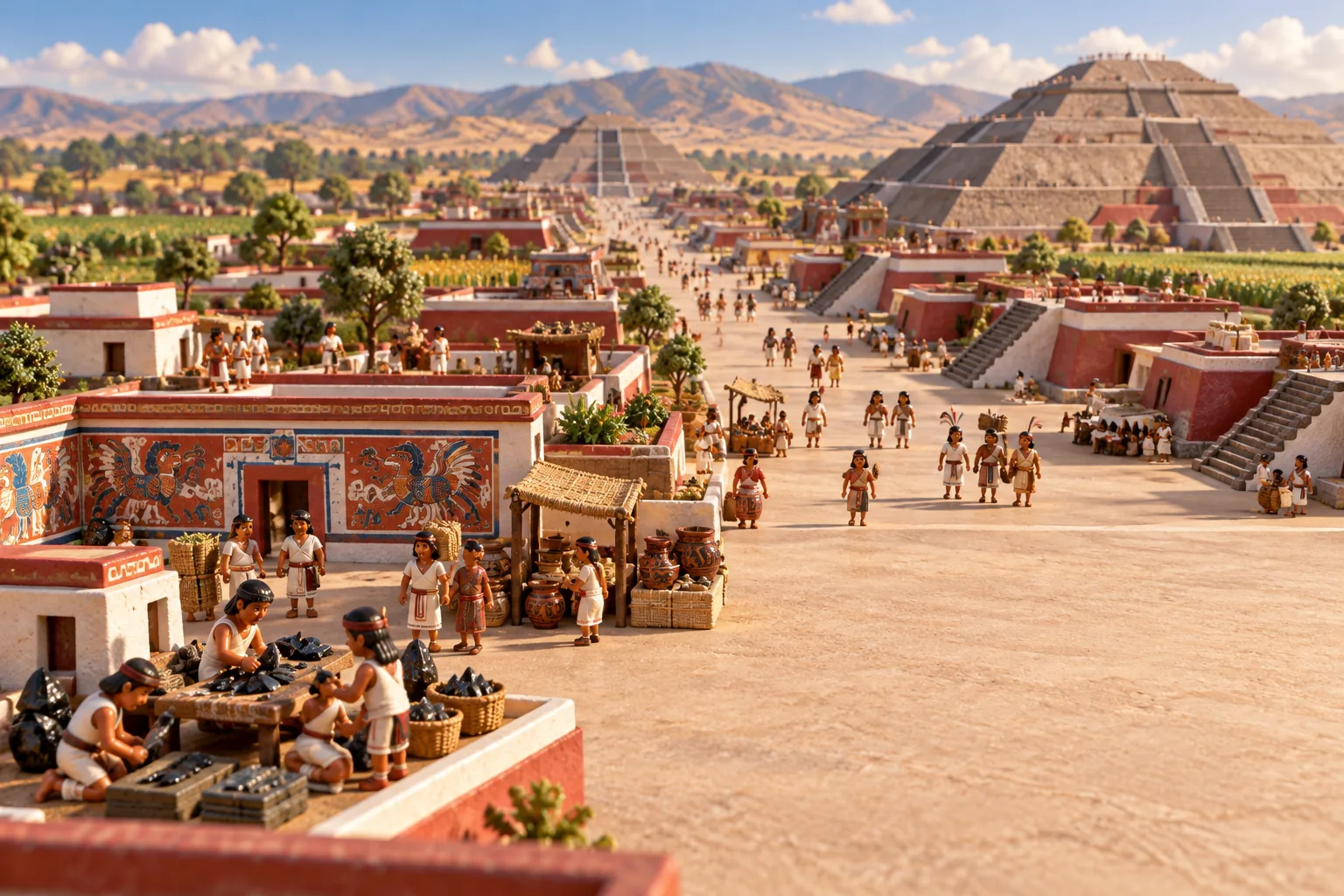
Teotihuacan lies in a side valley of the Valley of Mexico, 40 kilometres north-east of Mexico City. It was founded around 100 BC, and its great monuments were built until about AD 250: the Pyramid of the Sun, the Pyramid of the Moon, the Temple of the Feathered Serpent and the long Avenue of the Dead. At its height in the first half of the first millennium it was the largest city in the Americas, with perhaps 100,000 people living in multi-family apartment compounds over 21 square kilometres.
The city exported fine obsidian tools across Mesoamerica, and its influence reached far. In January 378 a warlord the Maya called Sihyaj K'ahk', born of fire, arrived at Tikal, 1,000 kilometres away, and replaced its king; he carried the feathered-serpent imagery of Teotihuacan. Who the Teotihuacanos were is still debated. They may have been Nahua, Otomi or Totonac, and the city clearly drew migrants from many regions.
Around 550 its major monuments were sacked and burned, and the elite houses along the Avenue of the Dead bear burn marks, perhaps from civil strife. The decline may be linked to the extreme weather of 535–536. The Aztecs found it in ruins centuries later and named it Teotihuacan, believing the gods had created the universe there.
Read more on Wikipedia
Sources: en.wikipedia.org/wiki/Teotihuacan


