Our time · person
Tenzing Norgay
At 11:30 on a May morning in 1953 a Sherpa who had already been to Everest six times stood with a New Zealand beekeeper on the highest point on Earth.
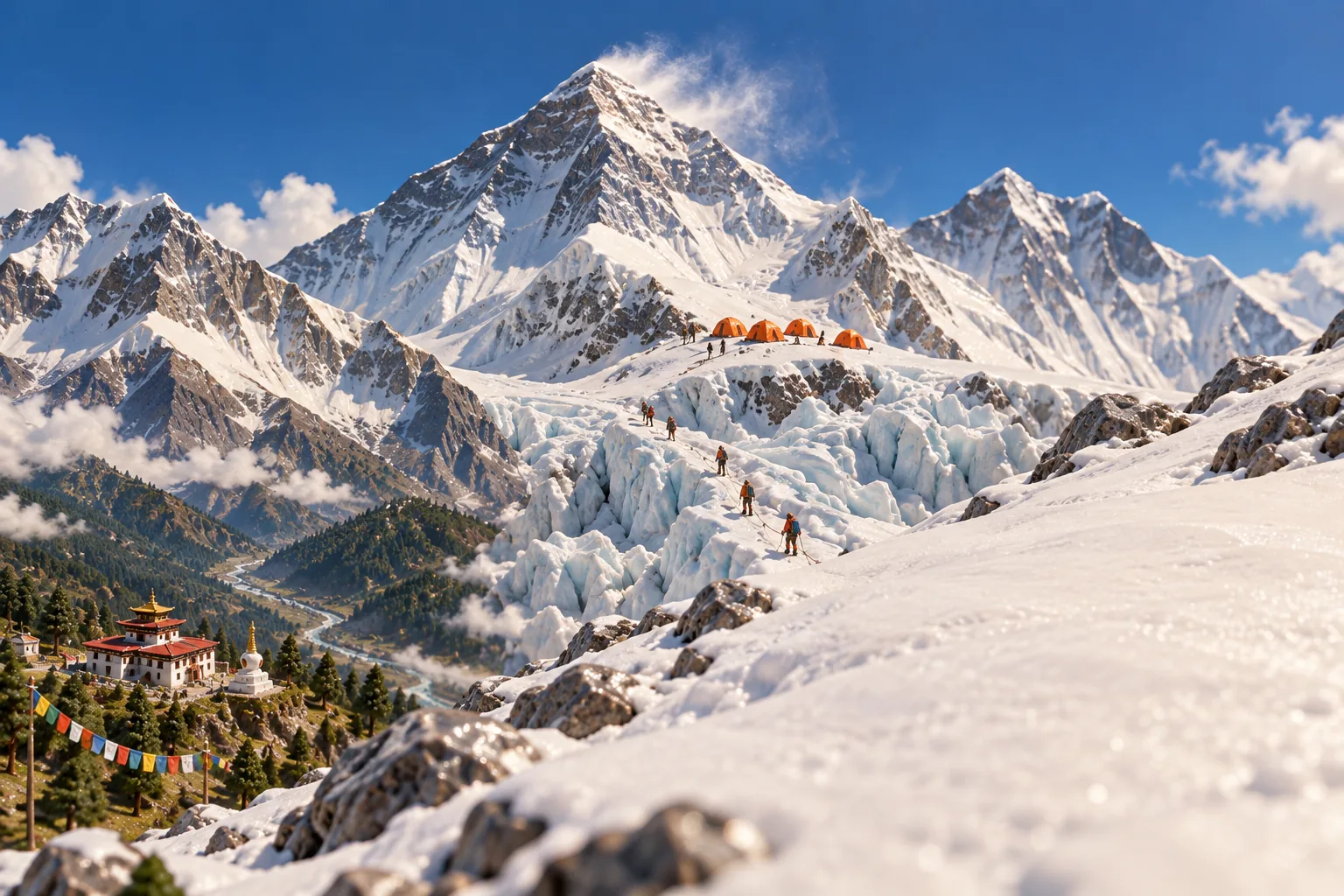
Tenzing Norgay was born Namgyal Wangdi in May 1914, the 11th of 13 children. Accounts of his early life conflict: his autobiography says he grew up in Tengboche in the Khumbu valley of Nepal, below Everest, while other accounts place his birth in Tibet. His name was changed on the advice of the head lama of Rongbuk Monastery. Sent to Tengboche Monastery to become a monk, he left, ran away from home twice in his teens, and at 19 settled in the Sherpa community of Darjeeling in India, then the starting point for Himalayan expeditions.
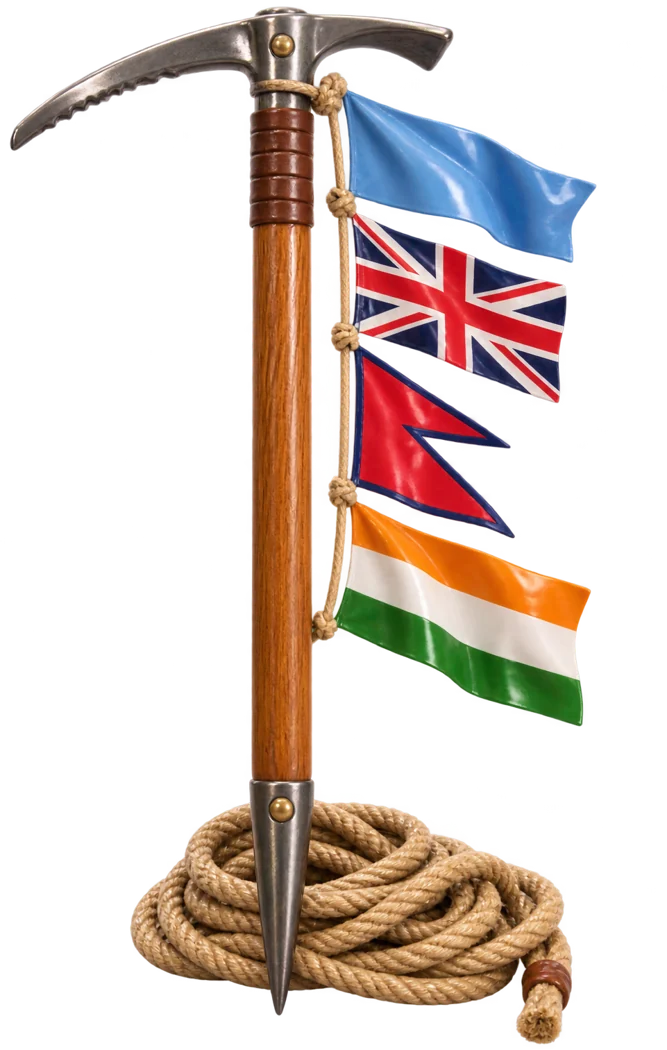
In 1935, aged 20, he joined Eric Shipton's British reconnaissance of Everest, and he worked as a high-altitude porter on three British attempts from the Tibetan side in the 1930s. In 1952 he climbed with two Swiss expeditions on the Nepalese side. In 1953 he joined John Hunt's British expedition, a team of over 400 people including 362 porters. When Edmund Hillary fell into a crevasse, Tenzing held the rope with his ice axe and saved him. Hunt sent the two of them for the summit, and at 11:30 a.m. on 29 May 1953 they reached the top, at 8,848 metres. They stayed only about 15 minutes.
Hillary and Hunt were knighted; Tenzing, not a British subject, received the George Medal. In 1954 he became the first Director of Field Training at the new Himalayan Mountaineering Institute in Darjeeling. He died there on 9 May 1986.
Read more on Wikipedia
Sources: en.wikipedia.org/wiki/Tenzing Norgay