Early modern · person
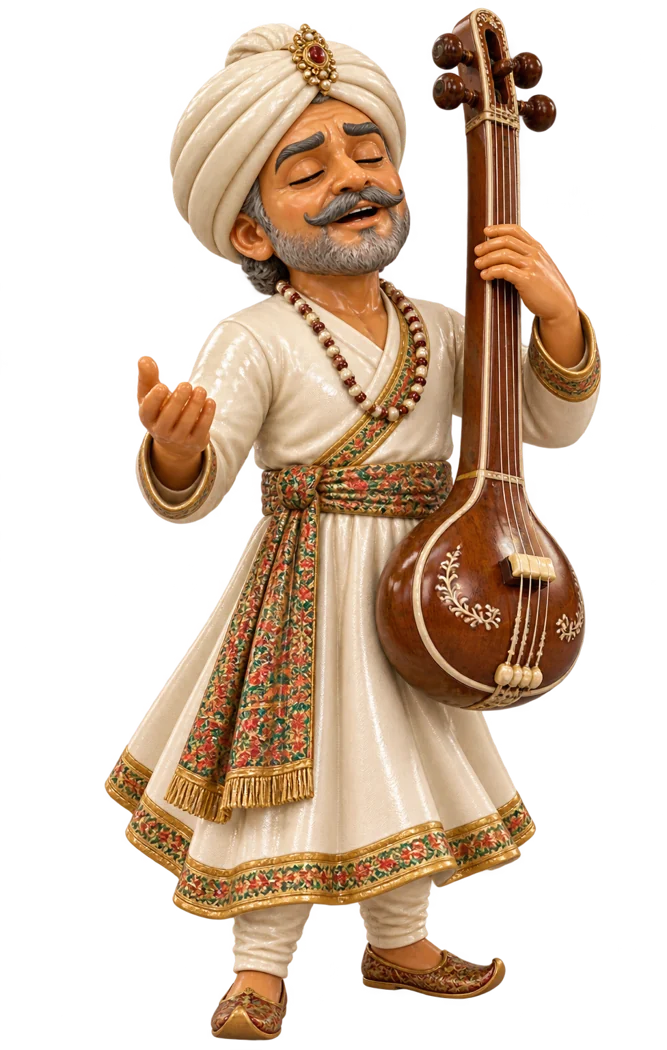
Tansen
He wanted to retire into solitude, but the king of Rewa sent him to the Mughal emperor. In 1562, at about sixty, Tansen sang for Akbar for the first time.
Tansen was born Ramtanu, probably around 1493, into a Hindu Brahmin family in Gwalior; his father, Mukund Ram, was a wealthy poet and musician. One story says he could not speak until he was five. His talent showed at six, and he studied for a time with Swami Haridas, the great dhrupad composer at the court of Raja Man Singh Tomar of Gwalior, whose ruler gave him the title Tansen. He also came under the influence of the Sufi mystic Muhammad Ghaus.
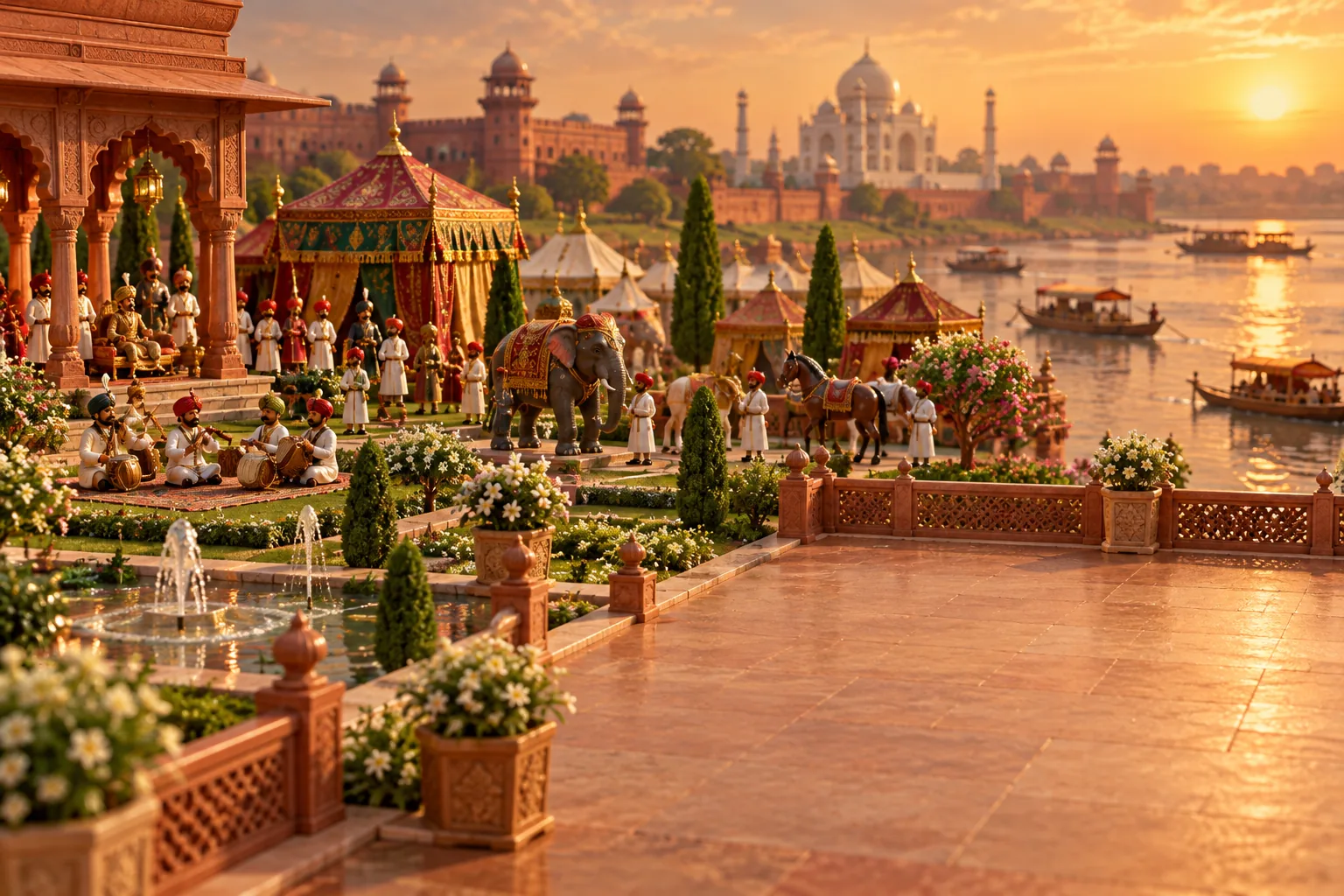
He spent most of his adult life at the court of Raja Ramchandra Singh of Rewa, his close friend, and the two made music together. His fame reached the Mughal emperor Akbar, who sent messengers asking for him. Tansen first refused, but Ramchandra persuaded him to go, and in 1562, at about sixty, he arrived at Akbar's court. Akbar counted him among the Navaratnas, the Nine Jewels of his court, and called him Mian, "learned one". Tansen composed epic dhrupads in Braj Bhasha in praise of Hindu gods and of Akbar, created new ragas and wrote the music books Sri Ganesh Stotra and Sangita Sara.
He married Hussaini of Gwalior, and their four sons and daughter all became musicians. He died on 26 April 1589 and was buried in Gwalior in the tomb complex of Muhammad Ghaus, where the Tansen Samaroh festival is held every December.
Read more on Wikipedia
Sources: en.wikipedia.org/wiki/Tansen