
Middle Ages · state
Taifas of al-Andalus
When the Caliphate of Córdoba broke apart, dozens of rival Muslim kingdoms competed for poets and paid tribute to Christian kings to survive.
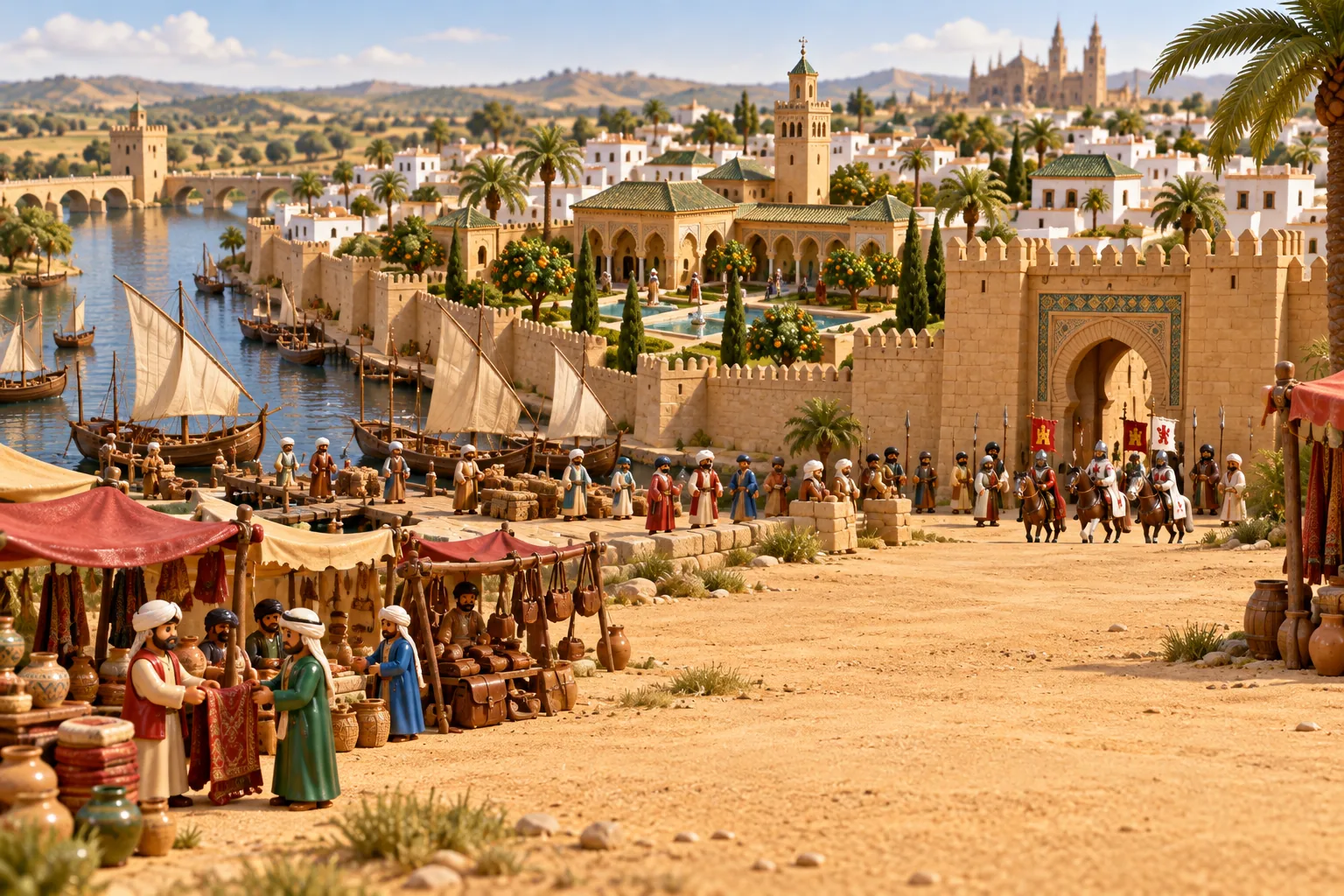
From 1009 the Umayyad Caliphate of Córdoba, among the richest states in Europe, tore itself apart in a civil war, the Fitna of al-Andalus. By 1031, when the caliphate ended, about 33 independent Muslim states had appeared in its place, the taifas. Their rulers came from rival parts of the old elite: Arabs, Berbers, local converts and the Saqaliba, former slaves from eastern Europe. Wary of calling themselves kings, many took the title of hajib, as if they served an absent caliph.
The strongest were Zaragoza, Toledo, Badajoz and Seville, whose Abbadid rulers swallowed most of their neighbours. The emirs competed for prestige as well as land, recruiting famous poets, scholars and craftsmen, and their courts became centres of learning. In war they were weak. They fought each other, hired Christian mercenaries and paid heavy tributes, called parias, to the Christian kings of the north, and even Seville paid Alfonso VI of León and Castile.
When Alfonso VI took Toledo in 1085, the taifa princes called in the Almoravids from North Africa, and together they defeated the Christians at Sagrajas in 1086. The Almoravids then annexed the taifas to their own empire. New taifas rose twice more as North African empires declined, and by the end of the thirteenth century only one Muslim state was left, the Emirate of Granada.
Read more on Wikipedia
Sources: en.wikipedia.org/wiki/Taifa, en.wikipedia.org/wiki/Aljafería