Industrial age · person
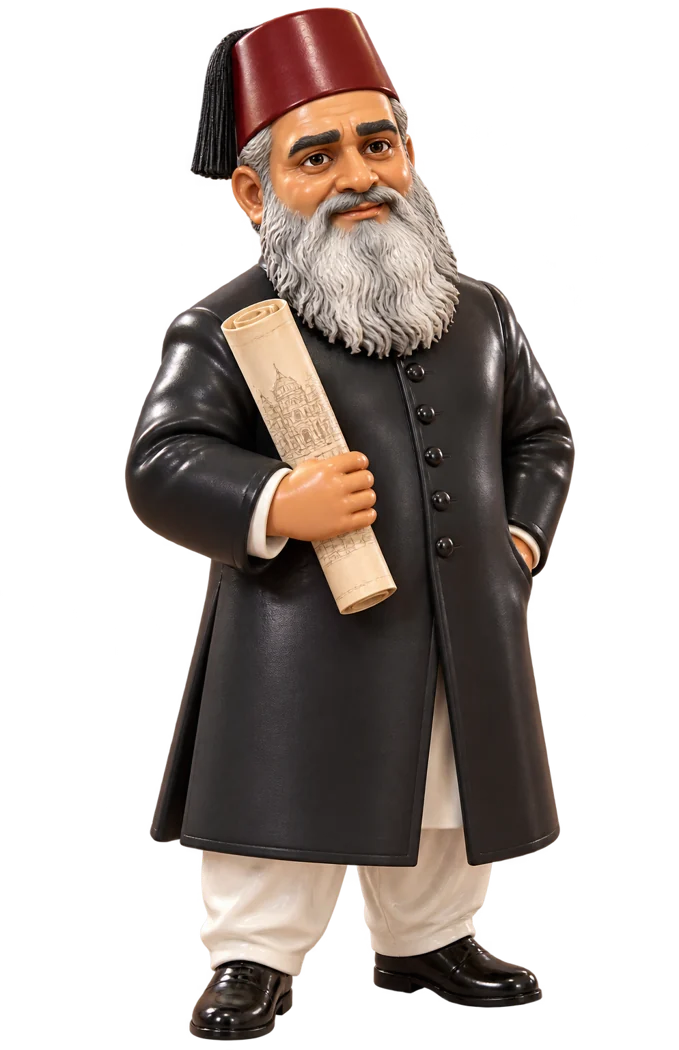
Syed Ahmad Khan
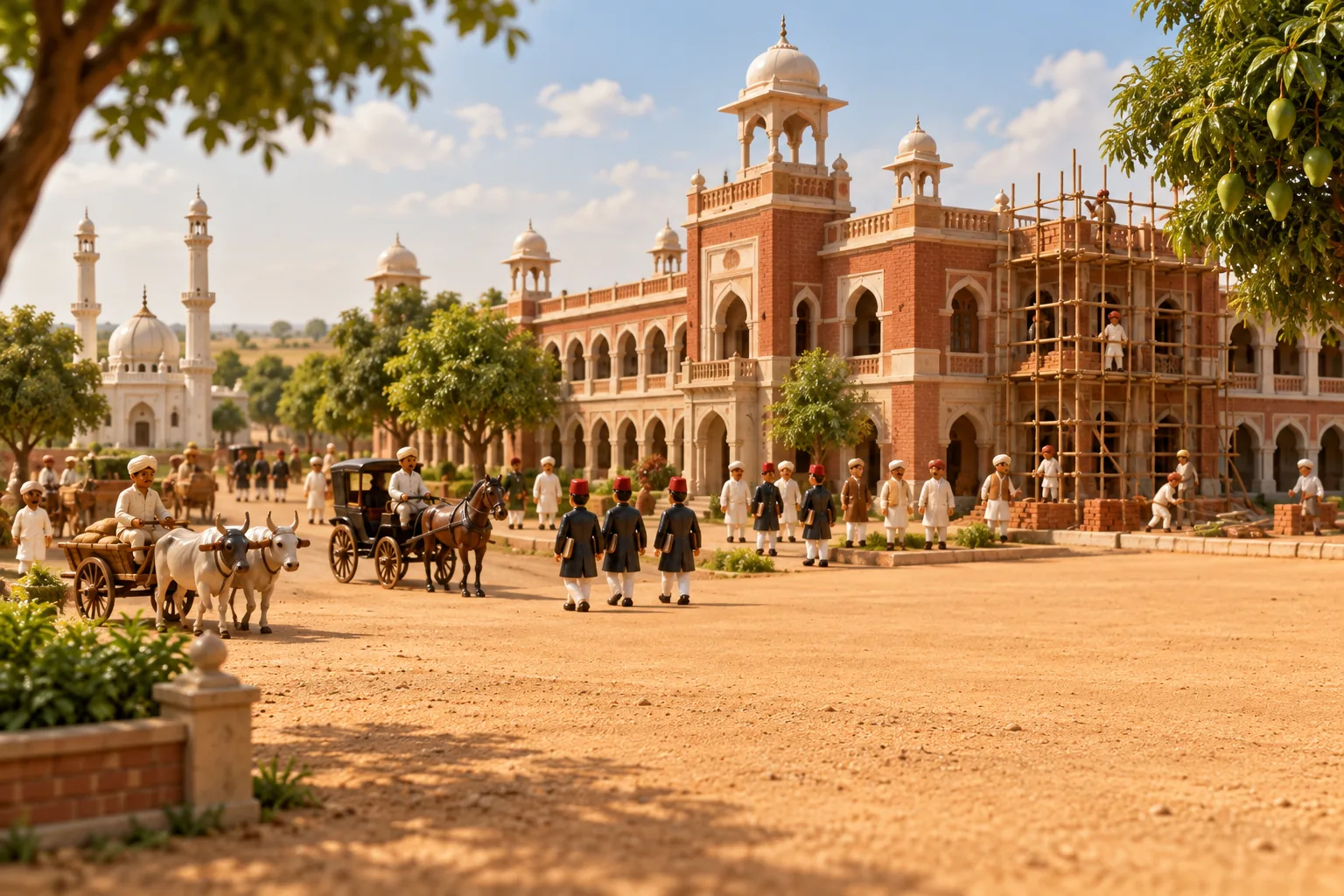
After a trip to Oxford and Cambridge he came home dreaming of a Muslim college just like them. On 24 May 1875 its first school opened in Aligarh.
Syed Ahmad Khan was born on 17 October 1817 in Delhi, the capital of the fading Mughal Empire, into a family that had served its emperors for generations. He learned Persian, Arabic, mathematics, astronomy and some medicine, and read poets such as Ghalib. After his father died in 1838, money troubles ended his schooling, and he joined the service of the East India Company as a court clerk, rising to sub-judge. In 1847 he published Asar-us-Sanadid, a study of the monuments of Delhi with some of the first lithographed book illustrations in India.
When the rebellion of 1857 broke out he was a court officer in Bijnor, where he saved the lives of British officers and their families. In 1859 he wrote The Causes of the Indian Revolt, blaming the Company's aggressive policies and its ignorance of India. He founded schools in Muradabad and Ghazipur and a Scientific Society that published modern learning in English and Urdu. In 1869 he took his sons to England, visited its colleges and returned determined to build one for Indians. On 24 May 1875 the Muhammadan Anglo-Oriental Collegiate School opened in Aligarh, and in 1877 it became a college.
He retired from the bench in 1876 to devote himself to the college, which was open to all faiths: its first graduate was a Hindu. He was knighted in 1888 and died in Aligarh on 27 March 1898. In 1920 his college became Aligarh Muslim University.
Read more on Wikipedia
Sources: en.wikipedia.org/wiki/Syed Ahmad Khan, en.wikipedia.org/wiki/Aligarh Muslim University


