Industrial age · person
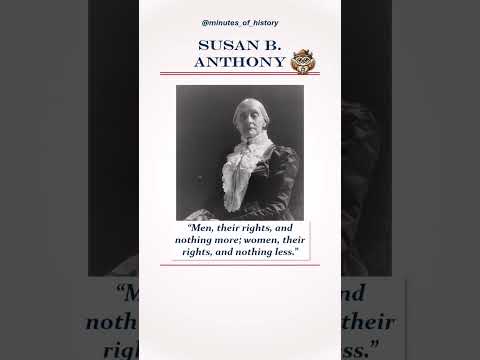
Susan B. Anthony
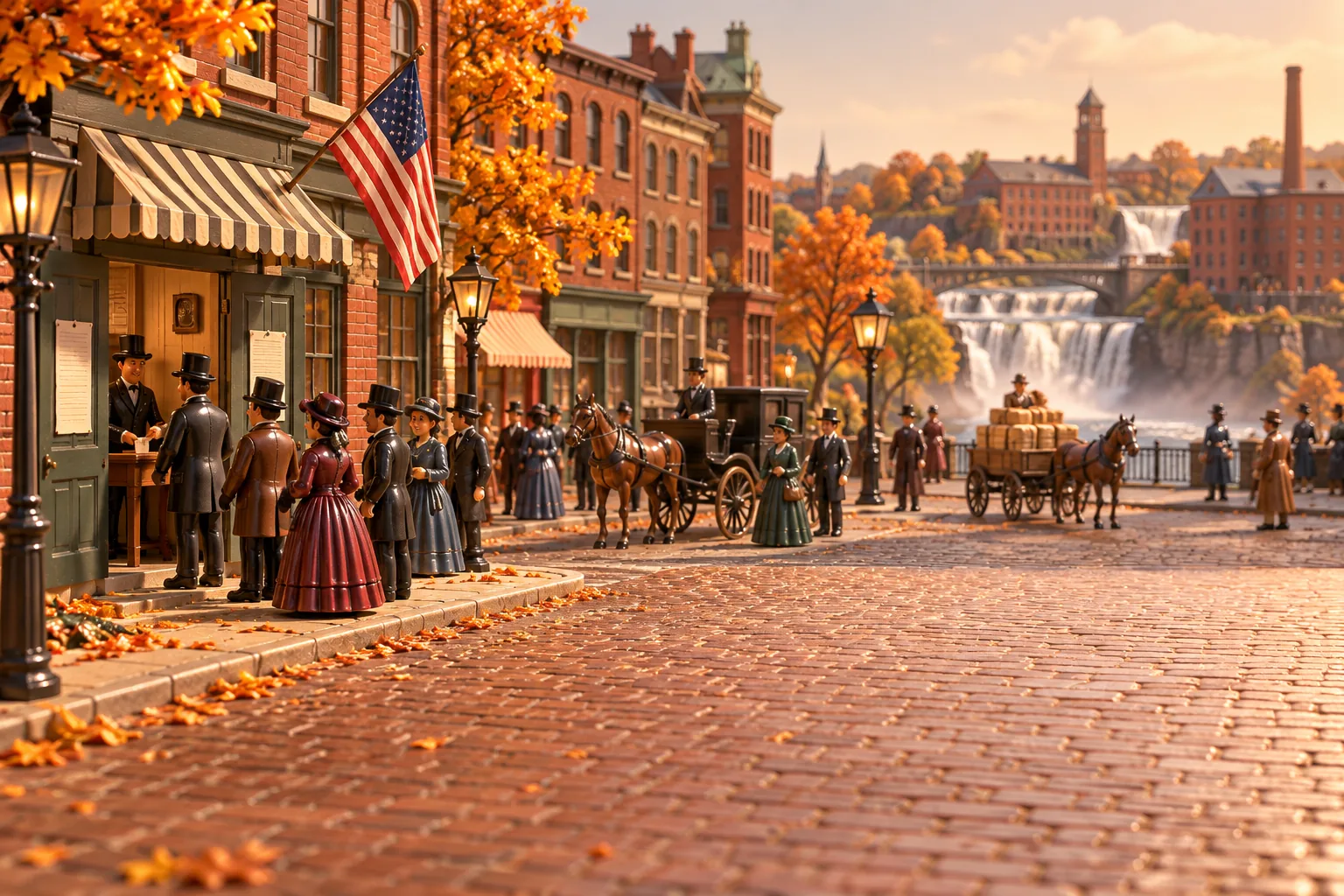
In November 1872 she talked the election inspectors in her Rochester ward into letting her vote for president; two weeks later a deputy marshal came to arrest her.
Susan Anthony was born on 15 February 1820 in Adams, Massachusetts, the second of seven children of Daniel Anthony, a Quaker abolitionist who ran a cotton mill, and Lucy Read Anthony. As a girl she added the initial B., after an aunt who had married a man named Brownell. At 17 she was collecting anti-slavery petitions, and she taught at a Quaker boarding school to help her family after her father's business failed. In 1845 the family moved to a farm near Rochester, New York.
In 1851 Amelia Bloomer introduced her to Elizabeth Cady Stanton, and the two worked together for half a century. During the Civil War their Women's Loyal National League collected nearly 400,000 signatures for the abolition of slavery. In 1868 they began the weekly newspaper The Revolution, and in 1869 they founded the National Woman Suffrage Association. In the 1872 presidential election she and fourteen other women of her Rochester ward persuaded the inspectors to let them vote. She was arrested on 18 November and convicted; fined $100, she said she would never pay a dollar of it, and she never did.
In 1878 she and Stanton had a suffrage amendment put before Congress, and she gave as many as 75 to 100 speeches a year. She died of heart failure and pneumonia at home in Rochester on 13 March 1906, aged 86, and was buried in Mount Hope Cemetery. Her amendment was ratified in 1920 as the Nineteenth Amendment.
Read more on Wikipedia
Sources: en.wikipedia.org/wiki/Susan B. Anthony, en.wikipedia.org/wiki/Nineteenth Amendment to the United States Constitution