Early modern · state
Sur Empire
Sher Shah Suri drove the Mughal Humayun out of India in 1540, rebuilt the Grand Trunk Road and gave the world the rupee.
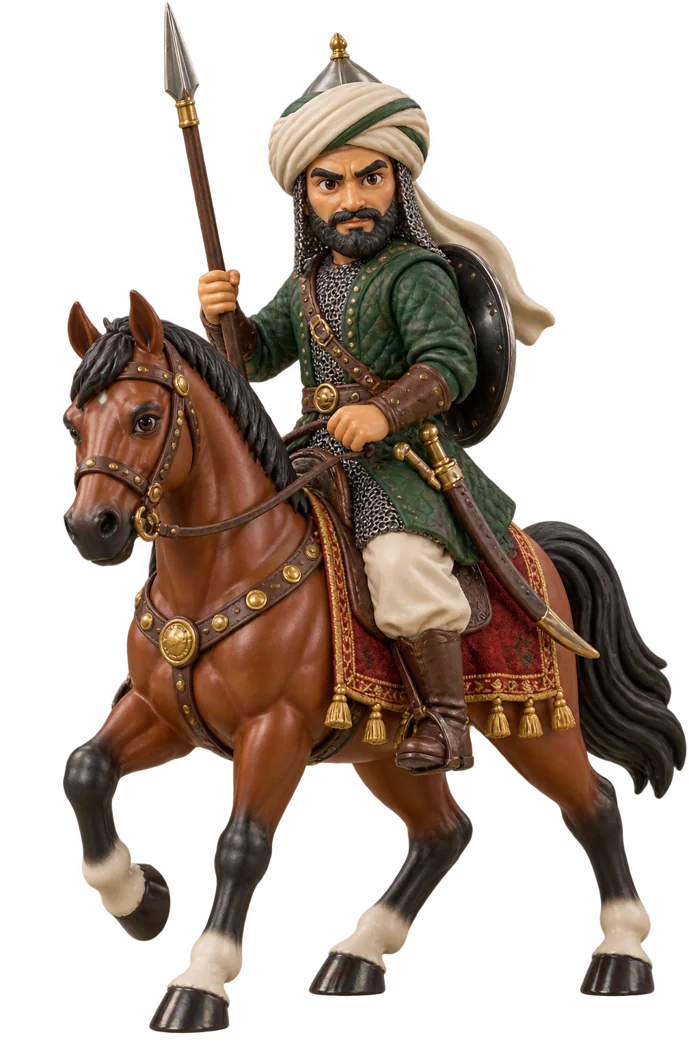
Sher Khan, an Afghan of the Sur clan, built up his power in Bihar and Bengal in the 1530s while the Mughal emperor Humayun was busy elsewhere. He took Gaur in 1538, cut Humayun off, beat him at Chausa and then at Kannauj on the Ganges in 1540, and drove him out of India. As Sher Shah Suri he ruled nearly all the Mughal lands of the Indo-Gangetic Plain, from Balochistan to Bengal, with Sasaram in Bihar as his capital.
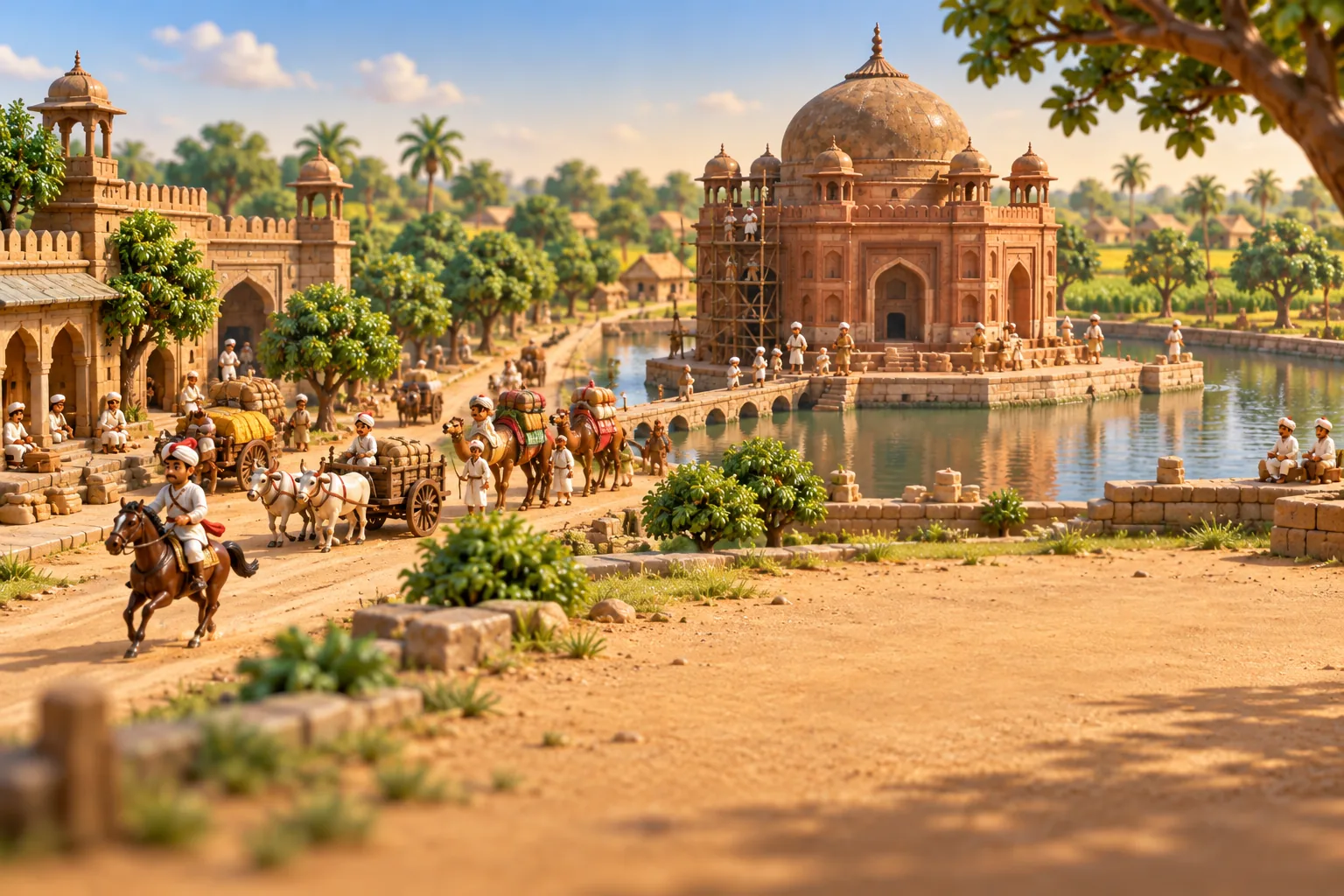
In five years he rebuilt the Grand Trunk Road, which runs from Bengal towards Afghanistan, with inns, mosques and shade trees along it, and set up a postal service of mounted relays. He made the rupee a silver coin of a standard weight of 178 grains, the forerunner of the modern rupee. He built the Rohtas Fort in today's Pakistan and a mosque in the Purana Qila in Delhi, and punished officials harshly for abuses.
In 1544 Sher Shah besieged the fort of Kalinjar, where he was badly wounded, and he died on 22 May 1545. His son Islam Shah held the empire together until 1553 and built forts against a Mughal return. After him the family quarrelled, and in 1555 Humayun came back and took Delhi.
Read more on Wikipedia
Sources: en.wikipedia.org/wiki/Sur Empire, en.wikipedia.org/wiki/Sher Shah Suri, en.wikipedia.org/wiki/Grand Trunk Road

