
Ancient world · person
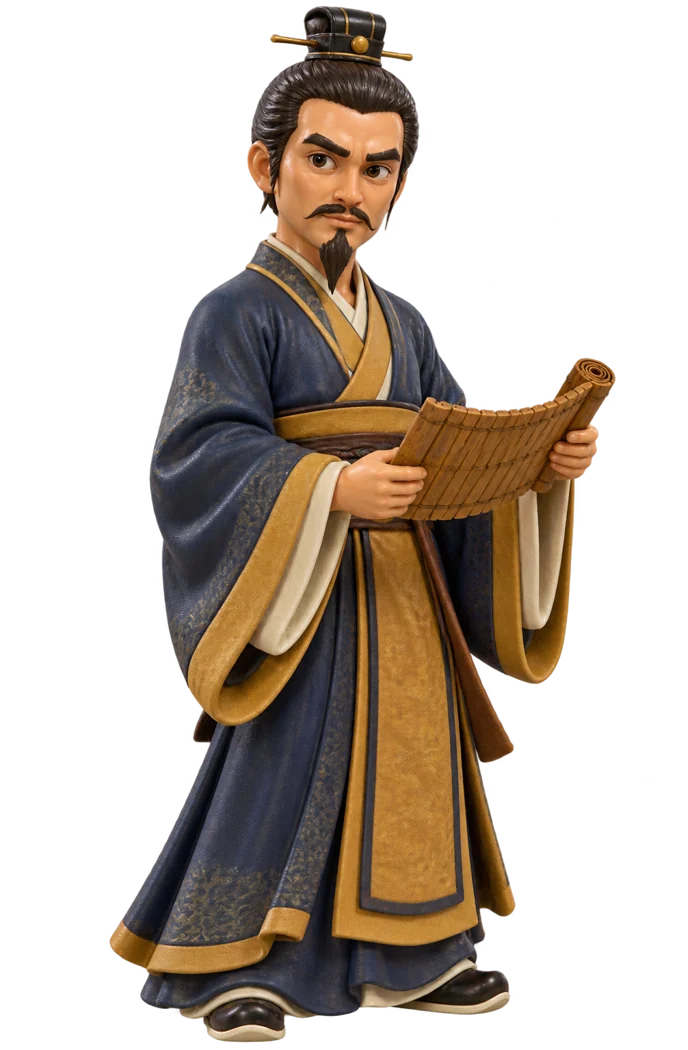
Sun Tzu
To prove he could make soldiers of anyone, the story goes, a strategist drilled the king of Wu's palace women in the courtyard until every one of them obeyed his orders.
Sun Tzu, "Master Sun", is an honorific; his birth name is said to have been Sun Wu. The only early account of his life is a short biography written around 97 BC by the Han historian Sima Qian. It says he was born in the state of Qi, in modern Shandong, near the end of the Spring and Autumn period, and traditional historians date his life to 544–496 BC.
According to Sima Qian, King Helü of Wu had read his Art of War and summoned him to show that he could train anyone, even the 180 women of the palace. Sun Tzu split them into two companies under the king's two favourites. When they laughed at his orders, he had the two favourites put to death over the king's protests, and the rest obeyed at once. Helü made him a general, and he led Wu to victory over the much larger state of Chu at the Battle of Boju in 506 BC.
From the 12th century scholars such as Ye Shi doubted that he ever existed: the Zuo Zhuan, which describes Boju in detail, never names him, and The Art of War mentions crossbows and other things from later times. Most now date the book to the early Warring States period, a view backed by bamboo slips found by builders at Yinqueshan in Shandong in 1972. In 1080 its 13 chapters became the lead text of the Seven Military Classics.
Read more on Wikipedia
Sources: en.wikipedia.org/wiki/Sun Tzu


