Middle Ages · state
Sultanate of Rum
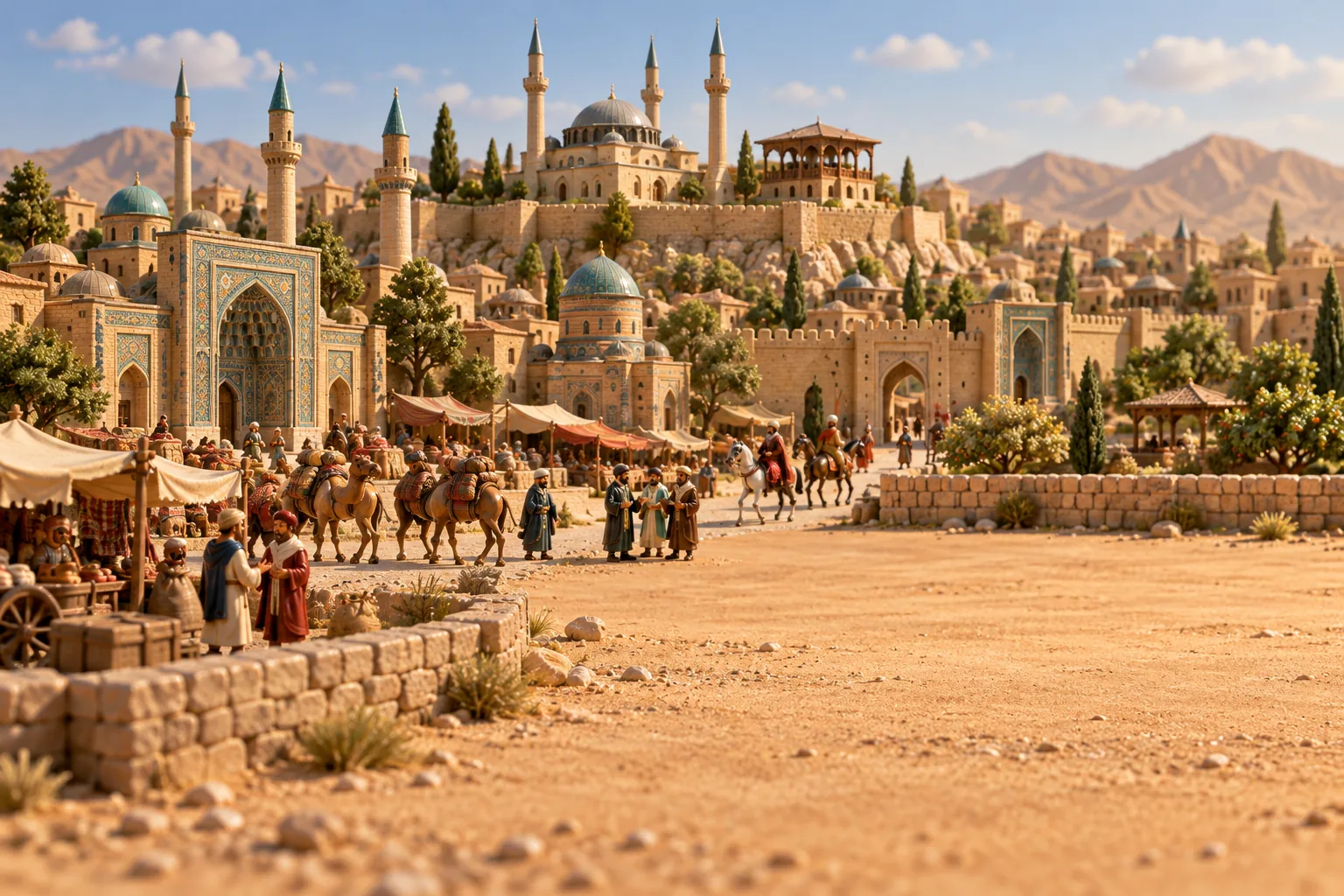
Its Seljuk sultans ruled from Konya, lined Anatolia's roads with caravanserais, and gave the poet Rumi his name.
After the Battle of Manzikert, the Seljuk commander Suleiman ibn Qutulmish, a distant cousin of Sultan Alp Arslan, took power in western Anatolia, and in 1077 his realm broke away from the Seljuk Empire. He took Nicaea from the Byzantines and made it his capital. The state's name came from Rome, through Aramaic and Parthian words for the Romans. After the First Crusade drove his son Kilij Arslan I back into south-central Anatolia, the sultans made Konya, the old Iconium, their capital.
In 1176 Kilij Arslan II defeated a Byzantine army under Manuel I Komnenos at Myriokephalon. Konya was briefly occupied by crusaders in 1190, but the sultanate recovered. Kaykhusraw I took the Mediterranean port of Antalya in 1207, his son Kaykaus I took Sinop in 1214, and under Kayqubad I, who won more of the southern coast between 1221 and 1225, Seljuk power in Anatolia reached its height. A system of caravanserais carried trade from Iran and Central Asia across the country.
The court was Persian in culture, and the poet Rumi took his name from the state. The Mongols took Erzurum in 1242, and in 1243 their general Baiju crushed the sultan at Köse Dağ. For the rest of the century the Seljuks were vassals of the Ilkhanate; the last of them, Mesud II, was murdered in 1308.
Read more on Wikipedia


