
Our time · science
Stanford prison experiment
The experiment was stopped only after a visiting psychologist, Christina Maslach, told Zimbardo that his role had turned him into someone she did not recognise.
In 1971 Stanford psychology professor Philip Zimbardo set out to study how a prison environment affects people's behaviour. The research was funded by the US Office of Naval Research. A newspaper advertisement offered male college students $15 a day for a "psychological study of prison life". Twenty-four were chosen after tests of psychological stability and randomly assigned to be guards or prisoners. An 11-metre section of the basement of Jordan Hall, the psychology building, was turned into the "Stanford County Jail".
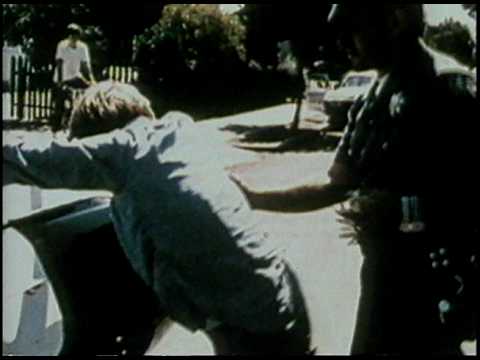
The guards wore khaki uniforms from a military surplus store and mirrored sunglasses that prevented eye contact, and carried wooden batons. On Sunday 15 August real Palo Alto police mock-arrested the prisoners at their homes. They were given ill-fitting smocks, stocking caps and a chain around one ankle, and the guards called them only by their numbers. On the second day the prisoners rebelled, ripping off their number tags; the guards answered with fire extinguishers, stripped them and sent the leaders to a special detention unit. Over the following days the guards' psychological abuse grew worse.
On the fifth evening Christina Maslach, a psychologist, visited and was distressed to see guards abusing prisoners with bags over their heads. She challenged Zimbardo, and on 20 August, day six, he ended the study. It became one of the most cited, and most criticised, experiments in psychology, and helped push universities to tighten their ethical rules for research on people.
Read more on Wikipedia