Our time · science
Sputnik 1
The first artificial satellite was a polished metal ball the size of a beach ball, and anyone with a shortwave radio could hear it beep.
In December 1954 the chief Soviet rocket designer, Sergei Korolev, proposed building an artificial satellite. In July 1955 President Dwight D. Eisenhower announced that the United States would launch one during the International Geophysical Year, and four days later a Soviet scientist said the Soviet Union would too. Korolev's first, ambitious design fell behind schedule, so his team built a much simpler one, called PS-1, and put it on top of a modified R-7, the Soviet Union's new intercontinental missile.
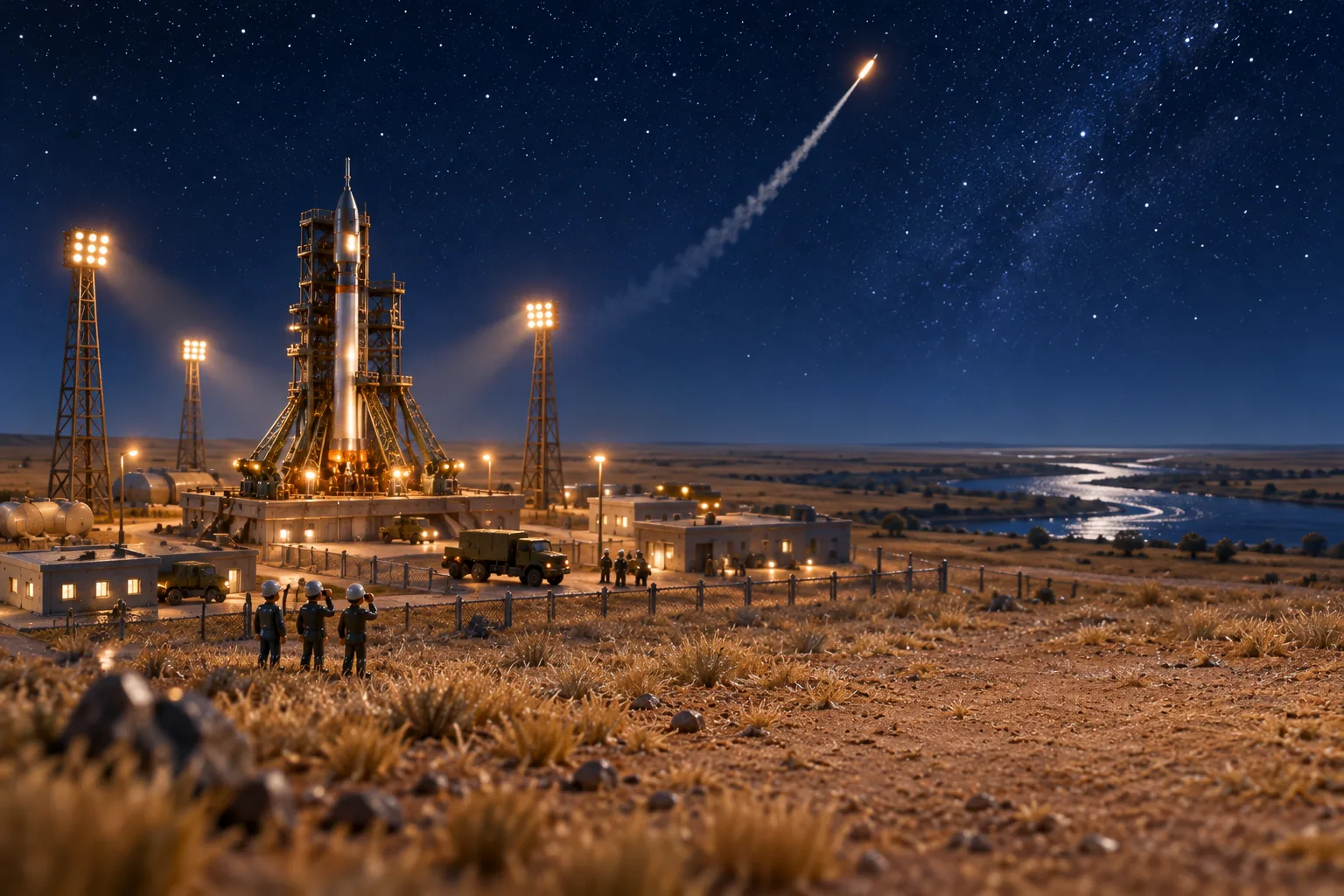
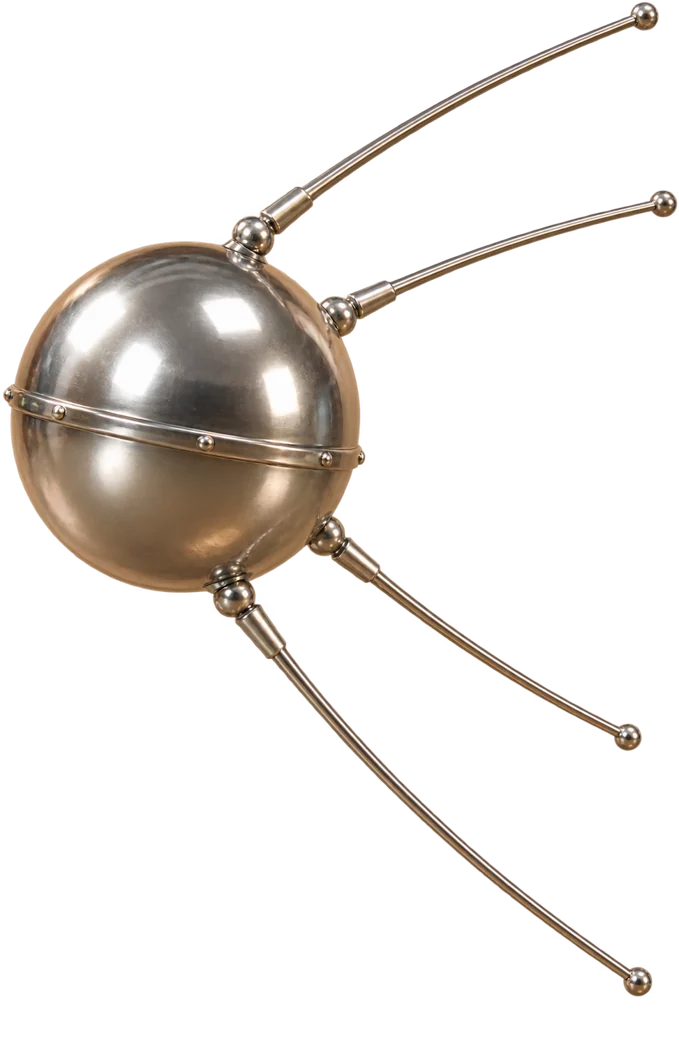
The rocket lifted off from the Tyuratam range in the Kazakh SSR, today the Baikonur Cosmodrome, at 19:28 UTC on 4 October 1957. Sputnik 1 was a polished metal sphere 58 cm across, weighing 83.6 kg, with four long radio antennas. It circled the Earth every 96 minutes at about 8 km a second, broadcasting a "beep-beep" signal that radio amateurs all over the world tuned in to. Its batteries died after 22 days, and on 4 January 1958, after 1,440 orbits, it burned up in the atmosphere.
The launch took the United States by surprise and set off the "Sputnik crisis". It started the Space Race and led to the founding of NASA and of the agency later known as DARPA. Tracking it also taught scientists about the density of the upper atmosphere and the ionosphere.
Read more on Wikipedia
Sources: en.wikipedia.org/wiki/Sputnik 1


