Industrial age · nature
Spanish flu
It took its name from the one country honest enough to report it, and within two years it had infected about a third of everyone alive.
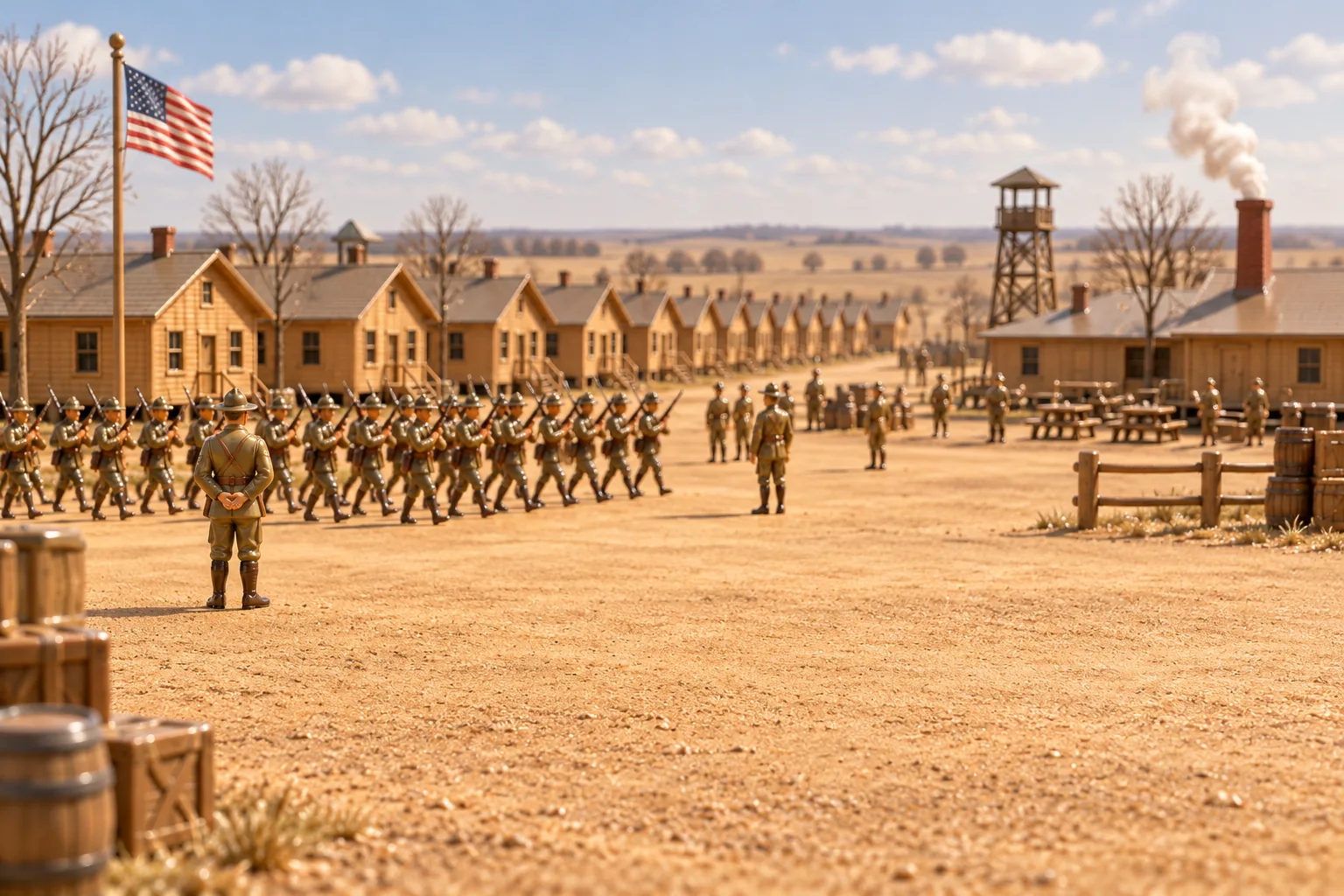
On 4 March 1918 an army cook named Albert Gitchell reported sick at Camp Funston, a huge training ground in Kansas. His case is the conventional starting point of the pandemic, although a local doctor in Haskell County, Loring Miner, had already seen a vicious flu there in January. The United States was at war, and the virus travelled with its soldiers: through the army camps, across the Atlantic and onto the Western Front by mid-April.
Censors in the warring countries kept the news quiet to protect morale. Neutral Spain had no such rules, its newspapers reported freely, and the world began calling the disease Spanish flu. A second, far deadlier wave began in late August 1918, carried by ships to Boston and to Freetown in Sierra Leone. Unlike most flu, it killed many young adults. In Philadelphia 4,597 people died in a single week in October. Doctors had no antivirals and no antibiotics, and tried aspirin, quinine, even strychnine.
By 1920 about 500 million people, roughly a third of humanity, had been infected. Estimates of the dead run from 17 million to 50 million, possibly 100 million. Islands that closed their harbours in time, such as Iceland and Australia, saved many lives, and later studies found that banning crowds and wearing masks could cut the death rate by up to half, if done early and not lifted too soon.
Read more on Wikipedia
Sources: en.wikipedia.org/wiki/Spanish flu


