Our time · state
Soviet Union
It put the first human into space and ruled half a continent, and then its own leaders signed it out of existence.
The Soviet Union grew out of the October Revolution of 1917, when Vladimir Lenin's Bolsheviks seized power in Russia. After they won the civil war, Russia, Ukraine, Byelorussia and Transcaucasia signed the treaty creating the Union of Soviet Socialist Republics in December 1922. It was a one-party state run by the Communist Party, with a centrally planned economy.
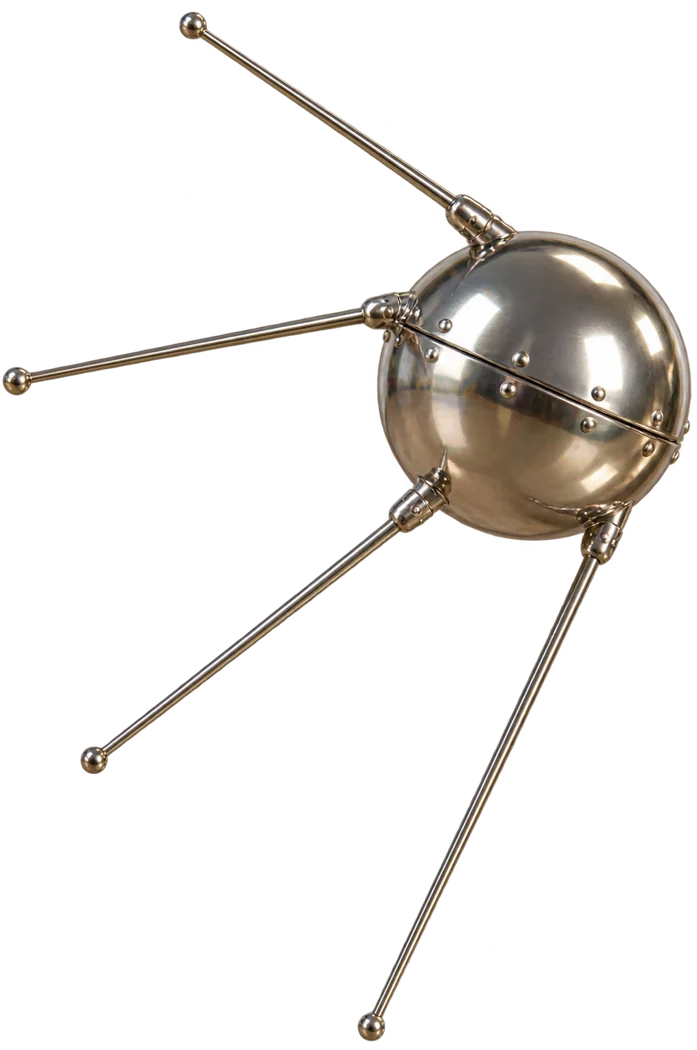
After Lenin died in 1924, Joseph Stalin won the struggle for power. His forced industrialisation and collectivisation of farming contributed to a famine in the 1930s that killed millions, the Gulag labour camps grew, and the Great Purge of the late 1930s brought executions and show trials. Germany invaded in 1941, and the country lost around 27 million people, yet the Red Army helped defeat the Axis and left the Soviet Union a superpower ruling Eastern Europe. In 1957 it launched Sputnik 1, the first satellite, and on 12 April 1961 Yuri Gagarin became the first human in space.
Under Leonid Brezhnev the economy slid into stagnation, and a war in Afghanistan dragged on from 1979 to 1989. From 1985 Mikhail Gorbachev tried to reform the system with glasnost and perestroika, but in 1989 the Eastern Bloc regimes fell and the republics began to break away. A hardline coup failed in August 1991, and on 26 December 1991 the Soviet Union was dissolved into fifteen independent states.
Read more on Wikipedia
Sources: en.wikipedia.org/wiki/Soviet Union, en.wikipedia.org/wiki/Sputnik 1