Our time · state
Socialist Republic of Romania
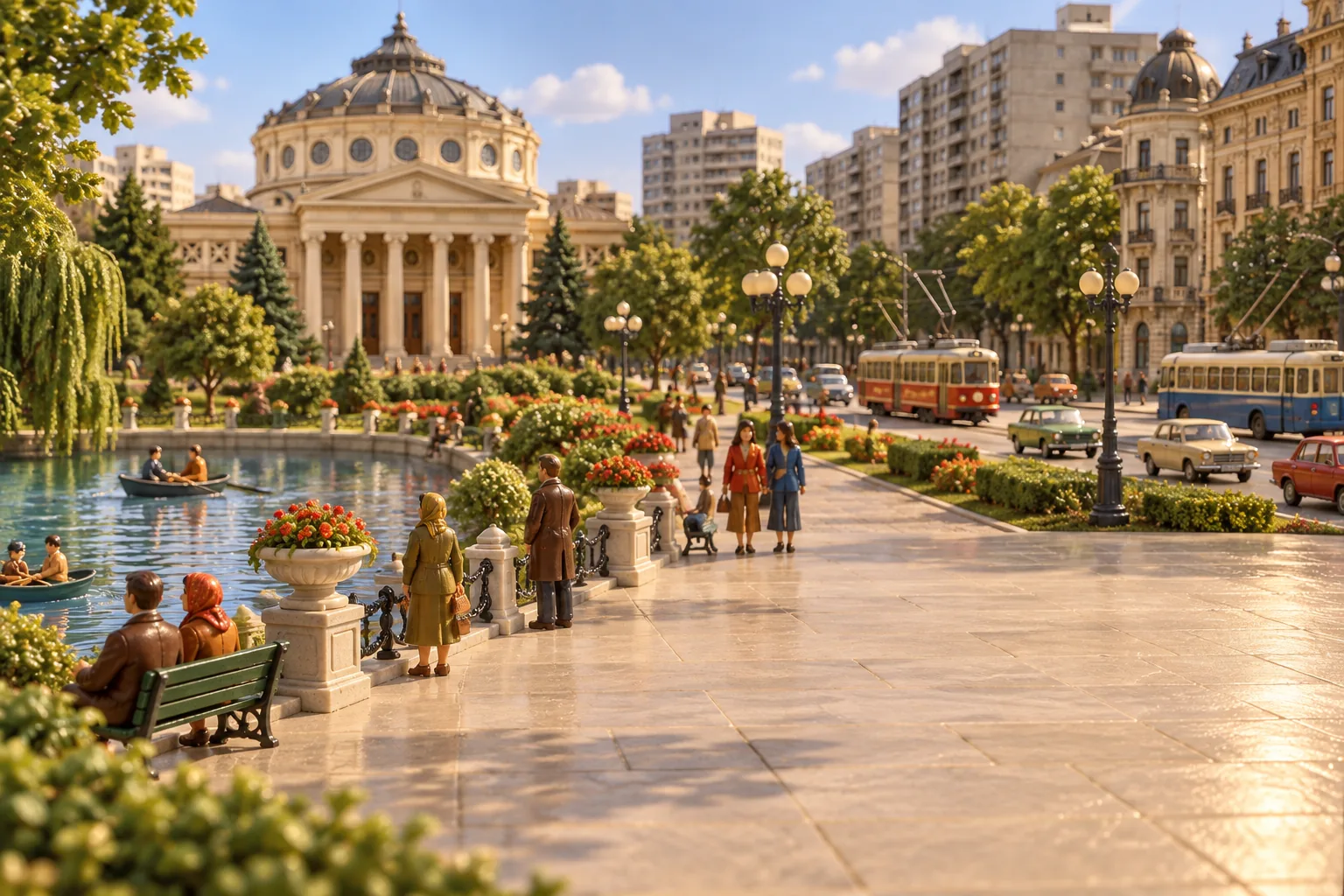
Romania defied Moscow over Czechoslovakia, then rationed its people's food and heat to pay off its foreign debt.
At the end of the Second World War Romania was occupied by the Soviet army. A pro-Soviet government took power in March 1945, and in December 1947 King Michael I was forced to abdicate and a People's Republic was declared. Soviet-Romanian companies and war reparations drained the country, and the Stalinist years of the 1950s brought mass arrests. Yet under Gheorghe Gheorghiu-Dej Romania began to go its own way, and all Soviet troops had left by 1958.
Nicolae Ceaușescu took over the party in 1965 and the country was renamed the Socialist Republic of Romania. At first he was popular: consumer goods reappeared, Western media were allowed in, and in 1968 he condemned the Soviet invasion of Czechoslovakia. Industry grew fast, the peasant share of the population fell from 78% to 49% by 1971, and illiteracy was wiped out. At the same time Decree 770 of 1966 banned abortion and contraception.
To repay Western loans, the 1980s brought harsh rationing of food, gas, heating and electricity. In 1989 Romania paid off its foreign debt of about US$11 billion. In December protests in Timișoara spread to Bucharest, where on 21 December the crowd booed Ceaușescu during a speech. The army changed sides, and the revolution ended his rule.
Read more on Wikipedia
Sources: en.wikipedia.org/wiki/Socialist Republic of Romania, en.wikipedia.org/wiki/Romanian revolution