Our time · state
Socialist Federal Republic of Yugoslavia
Tito's Yugoslavia broke with Stalin in 1948 and helped found the Non-Aligned Movement, then tore apart in war after 1991.
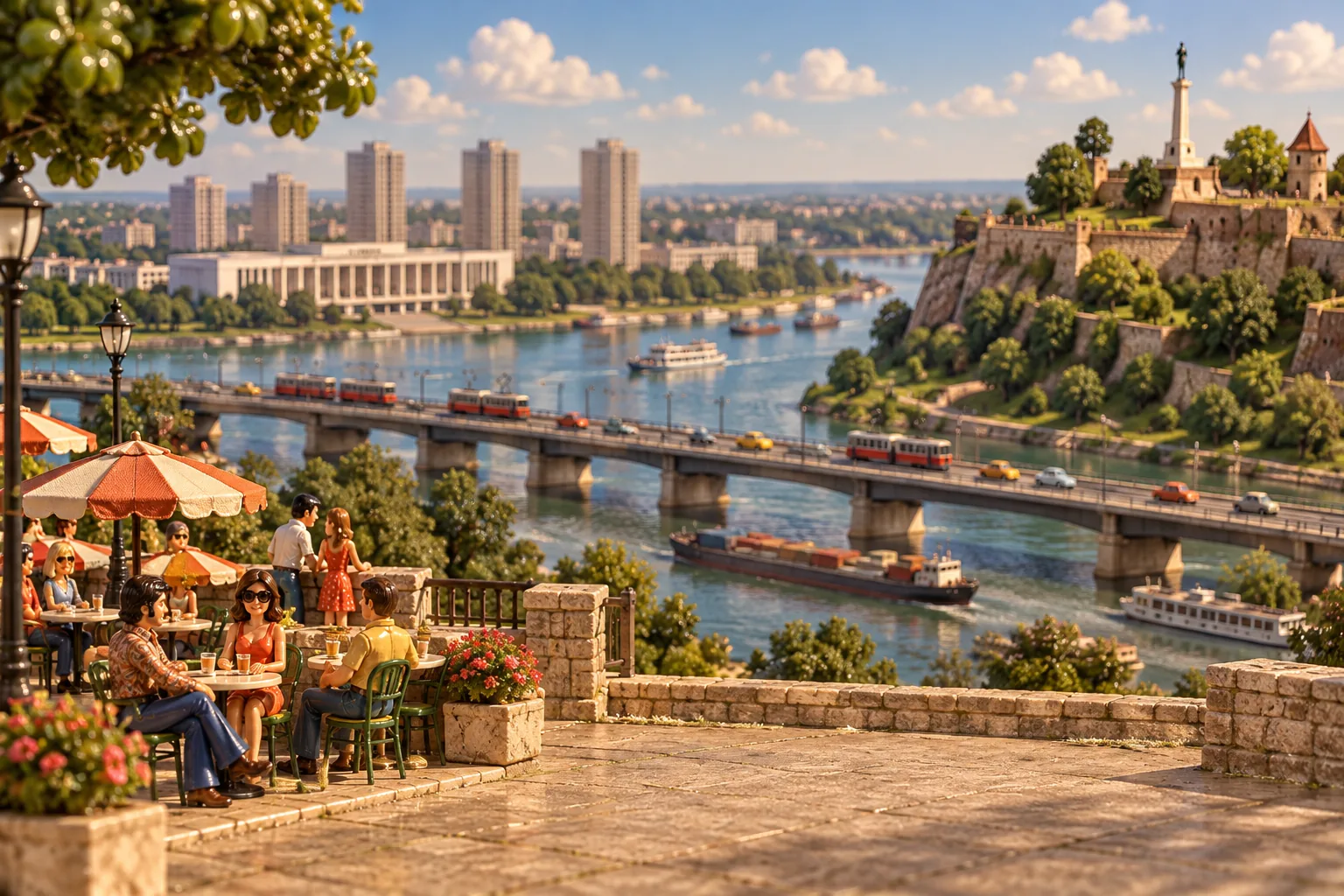
Josip Broz Tito's communist partisans fought the Axis occupiers of Yugoslavia for four years and won. King Peter II was deposed, and on 29 November 1945 the Federal People's Republic of Yugoslavia was proclaimed. It was a federation of six republics, with borders drawn along ethnic and historical lines: Slovenia, Croatia, Bosnia and Herzegovina, Serbia, Montenegro and Macedonia. The name Socialist Federal Republic of Yugoslavia came in 1963.
At first the new state sided with Moscow, but in the spring of 1948 Tito and Stalin fell out, and on 28 June the Cominform expelled Yugoslavia. Tito went his own way: workers' self-management of firms from June 1950, a market-based socialism, and neutrality between the blocs that made Yugoslavia a founding member of the Non-Aligned Movement. In the late 1950s the Zastava works in Kragujevac began building a licensed Fiat 600, the little fićo that filled Yugoslav roads for decades.
Tito died on 4 May 1980, and the economy soon slid into unemployment and inflation. Sarajevo still hosted the 1984 Winter Olympics with great enthusiasm. As nationalism rose, Slovenia and Croatia declared independence on 25 June 1991, Macedonia and Bosnia and Herzegovina followed, and the federation formally broke up on 27 April 1992 amid the Yugoslav Wars.
Read more on Wikipedia
Sources: en.wikipedia.org/wiki/Socialist Federal Republic of Yugoslavia