Our time · war
Sino-Indian War
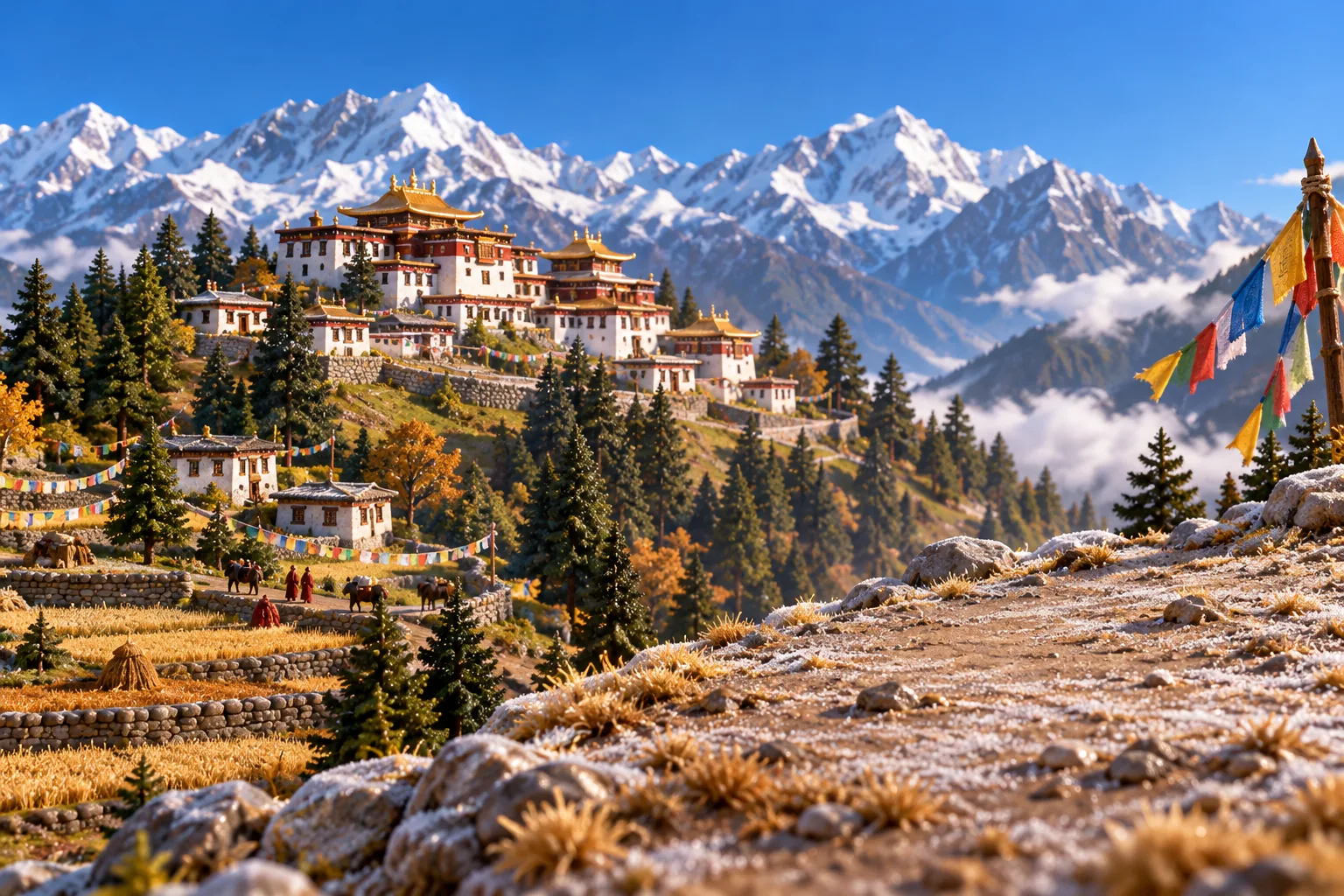
Two of the world's biggest nations fought a month-long war at more than 5,000 metres, where the cold killed soldiers on both sides.
China and India shared a long Himalayan border that had never been agreed. India claimed Aksai Chin, a cold high desert in the west, as part of Ladakh, while China built a strategic road across it linking Tibet and Xinjiang. In the east China rejected the McMahon Line, drawn by the British, and claimed the North-East Frontier Agency. Relations soured after India gave asylum to the Dalai Lama in 1959, and from December 1961 India pushed outposts forward into disputed ground in what was called the forward policy.
On 20 October 1962 China launched attacks on both fronts, some 1,000 kilometres apart. In the east, Chinese troops forded the Namka Chu river around the Indian defenders, and the Indians gave up Tawang without a fight. After a three-week lull China attacked again on 14 November, taking Se La and Bomdila, while in the west fierce battles were fought at Rezang La and Gurung Hill near Chushul. On 19 November Premier Zhou Enlai announced a unilateral ceasefire from 21 November and a pullback to the line of 1959.
Neither side declared war or broke off relations, and no ships or warplanes were used. The defeat shocked India. Defence Minister V. K. Krishna Menon resigned, Prime Minister Jawaharlal Nehru was blamed for failing to foresee the attack, and the army was overhauled.
Read more on Wikipedia